



Right now, it seems like everyone hates Jews.
And many do.
But when I walk into my Jewish school, I can’t help but notice that many of my teachers are not Jewish.
And they lead the shema, wear kippot in shul and sing Hatikva at assembly.
They mourn with, stand alongside and respect us.
But very rarely is their bravery or immense support recognised.
So, I want to recognise the quiet support of some non-Jewish teachers at [name of school withheld by request] in Melbourne and Moriah College in Sydney.
Finding their way to Jewish schools
When asked what drew them to Jewish schools, some already had a connection to the Jewish community.
“I grew up in a Christian home that taught that the Jewish people are God’s chosen people, and so I grew up already with a really strong love of the Jewish community,” says Judith Miller, an English teacher at [name of school withheld by request].
Miller, who has Jewish ancestors, describes her decision to work at a Jewish school as “a privilege.”
“You are so culturally rich. You have such a beautiful connection to one another. Just being part of that beautiful spirit that you have, the Ruach, even just being on the periphery of it is so special.”
Others chose them for the academic rigour.
“I’m half Greek Orthodox and growing up, there was always a lot of talk about how amazing Moriah College was and how, academically, it was at the top,” says Maxine Bell, the year 6 team leader at Moriah.
Bell, who has been teaching for 12 years, says she was drawn by curiosity and open-mindedness.
“People are people. Those words, Jewish, Zionist, they don’t scare me.”
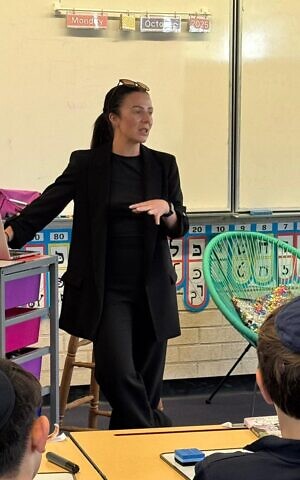
Nicole McInerney, the head of accreditation at Moriah who is Christian, says working at a faith-based school aligned with her values.
“Faith-based schools have a sense of community and pastoral care, and there’s underlying values that every part of the school makes its decision on.”
Paul Nur, a kindergarten assistant at [name of school withheld by request] with a background in linguistics, came to the Jewish community four years ago.
As a member of the LGBT community, he initially wondered if he would be accepted.
“I sent an email to my director saying that I’m non-Jewish, and also I’m a part of the LGBT community,” he recalls.
The director told him it was a silly question.
The weight of October 7
But [name of school withheld by request] and Moriah are not only Jewish schools.
They’re Zionist schools.
And after October 7, these teachers learned who their real friends were.
Miller describes coming to school that morning with vivid emotion.
“I remember sitting with some Jewish staff in our staff room and just crying with them. There were no words. There was nothing to say that would cause any comfort. But I just sat and cried and cried and cried with them and we sat there with our arms around each other.”
Jewish colleagues later told her that her presence, without words, meant more than anything she could have said.
McInerney recalls the atmosphere at Moriah that day.
“You could feel it. There was a thick cloud. Everyone was moving through this weight.”
She found herself asking students if their relatives and friends were safe.
“Did I lose friends? No. Did I learn who my real people were? 100%. I think it sparked the need to talk and to grow up. From opening up conversations, you do learn a lot about people.”
For Nur, the approach was different but equally powerful.
“I think being there and then just listening without giving any comment, that’s the most beautiful support that I can give,” he says.
“You have two ears to listen, one mouth to say something. What I only know is that you get hurt. You want me to be there. Just be ready with my two ears to listen.”
In the months that followed, the teachers adapted their approach to support vulnerable students.
“I had a lot of year eights that were feeling particularly vulnerable and emotional,” Miller explains.
“I had students talking about feeling unsafe and targeted. I tried to approach it with sensitivity and empathy.”
She made a conscious effort to remind students “that not the whole world is against them.”
Ms Miller is my teacher, and hearing her wish a ‘Shabbat Shalom’ on Fridays definitely reminds me that there is a whole community alongside us.
McInerney reassured students worried about being visibly Jewish.
“I said, ‘What does a Jewish person look like? Have a look around in our classroom alone. We’ve got blonde hair, blue-eyed, red hair, freckles, brunettes with olive skin.’ I said, ‘If I walk past you in a street, I would not be able to tell if you’re Jewish or not.'”

The personal cost of standing tall
The decision to stand with the Jewish community has not come without consequences.
“I have lost quite a few friends who have been swept into all the noise and the ignorance and the pro-Palestinian movement,” Miller says.
Friends challenged her – how can you work at a Zionist school and still have moral integrity?
“My reaction is, if that’s how you feel, and if we can’t have a conversation and agree to disagree, then we can’t be friends anymore,” she says.
“It’s worth it. It’s been my choice to cut off friendships if they just refuse to listen.”
McInerney had a similar experience.
“I have a WhatsApp group with some friends, and one of them was like, ‘Oh, I’m so proud of Australia being pro-Palestine’. I’m like, ‘Are you kidding me?'” she recounts, following the Sydney Harbour Bridge protest.
There was even a moment of unexpected support from her 14-year-old son.
McInerney describes an afternoon when “this big black ute just came past us, screaming past, and it had Palestinian flags on its windows, and my son yelled out, ‘Leave my mum’s friends alone!'”
Bell discovered unexpected lessons through the experience.
“Did I lose friends? No. Did I learn who my real people were? 100%. I think it sparked the need to talk and to grow up. From opening up conversations, you do learn a lot about people.”
Supporting through understanding
Nur uses language as a bridge to support Jewish culture.
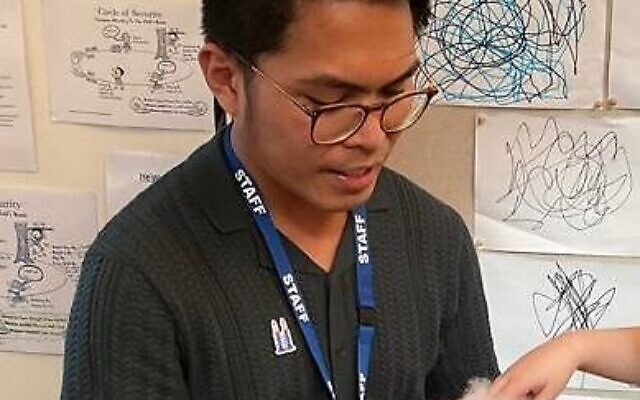
“It’s really about being curious about the language and traditions, engaging with them and showing a genuine interest.”
He often sings “Hatikva” and “Avinu Malkeinu” with the kindergarten children.
McInerney, who is Christian, has plans to visit Israel.
“I always wanted to go and see Jerusalem and Bethlehem because that’s where Jesus lived and I wanted to learn more about the history. I’m going on the JNF tour for educators this year.”
“Every community deserves to be supported. People are not supposed to be blamed because of their race, their religion, their skin colour or heritage. You need to support people for who they are, as human beings.”
She shares what she learns with her large family.
She’s even arranged for her mother’s Catholic Women’s League to visit Moriah to learn about the school and Jewish traditions.
Her 82-year-old mother, who is running for president of the organisation, faces opposition from someone who thinks she’s “too political” and “pro-Israel.”
The courage to speak up
These teachers don’t just provide support behind closed doors.
They actively challenge antisemitism when they encounter it.
McInerney describes a recent incident at her gym.
When someone referred to shoes in the crèche as “Jewish shoes,” she immediately confronted him.
“I said, ‘Dude, that’s not cool, man. The shoe doesn’t make a person.’ If you don’t say it, you’re allowing it to happen.”
Miller has become “a lot more protective” since October 7.
“When we’re talking about protest as a subject in VCE English, I’m extremely conscious when we’re having debates about freedom of speech versus protection against hate speech.”
Nur takes a different approach, rooted in respect for individual humanity.
“I’m supporting people not just because they’re Jewish. I’m supporting people because they’re kind human beings. You need to support people for who they are.”
Faith in resilience
When asked how they see the Jewish community coping, these teachers express profound admiration.
“I’ve spent a lot of time studying Jewish history and looking at antisemitism for centuries,” Miller says.
“The resilience of the Jewish people will bring them through this. Even though it’s horrible and there’s so much suffering and hatred, it’s almost like this sense of: we’ve been through this for centuries, we will continue to be resilient.”
She finds hope in her students.
“My year eight students, at 13 and 14, are standing up and saying, ‘No, I will not be silenced, and I won’t be afraid to be who I am.’ I think you will pull through this with dignity.”
Bell is awed by the community’s strength.
“They are the most connected, strongest, loving group of people that I have ever met. The way they just get on with it is insane. I don’t think I could do what they do. I don’t think I have the sense of strength within myself to just show up to work every day, to live life to the fullest. It’s incredible.”
McInerney takes her support further, having made contingency plans with her brother for any Jewish friends who might need a safe place.
“He’s got a five-bedroom house on the waterfront that can exit via the water. I told my colleague, ‘You just call me. I’ll come and get you and we’ll take you to a safe place.'”
Looking forward
These teachers remain committed to their work and to the Jewish community.
“I’m proud to be pro-Israel,” McInerney declares.
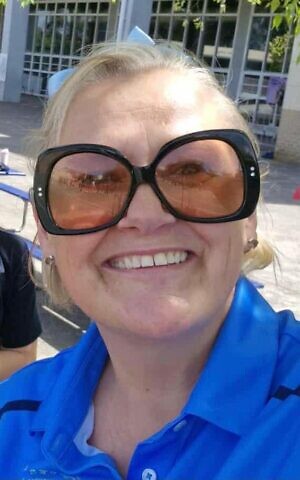
“I will do everything I possibly can and educate as many people as I can. Even if it’s just one small thing, to give someone the strength to not skirt around an issue, but to say what the issue is, regardless if it’s going to upset someone.”
Bell sees her role in broader terms.
“We’re growing a whole generation of Australians who are going to make this world great. We do need cultural diversity, religious diversity, people who can communicate, problem-solve, who can disagree respectfully.”
She emphasises that the Jewish community’s investment in education creates an ideal environment.
“The Jewish community is amazing because they invest in their kids, their people, their education, and they love fiercely.”
Miller reflects on how the experience has changed her.
“It’s reinforced the importance of community and connection. That sense of connection and belonging is so strong in the Jewish community that it’s reinforced the importance of that in my own life too.”
Nur sees universal lessons in his experience.
“Every community deserves to be supported. People are not supposed to be blamed because of their race, their religion, their skin colour or heritage. You need to support people for who they are, as human beings.”
It takes immense courage to stand alongside the Jewish community and Israel.
And these teachers do so with empathy, kindness and because it is the right thing to do.
They are the quiet majority who support us.
So next time you see a non-Jewish teacher working at a Jewish school, say thank you.
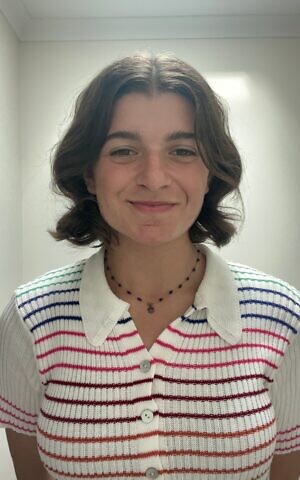 17 year old Noa Gomberg, a student at [name of school withheld by request] wrote this feature item as part of her recent journalism internship at the Australian Jewish News.
comments