



Pahlavi accepts Coalition invitation to visit Australia
The exiled crown prince has accepted a Coalition invitation, in a visit an Iranian community advocate says would help protect Australia's Jews
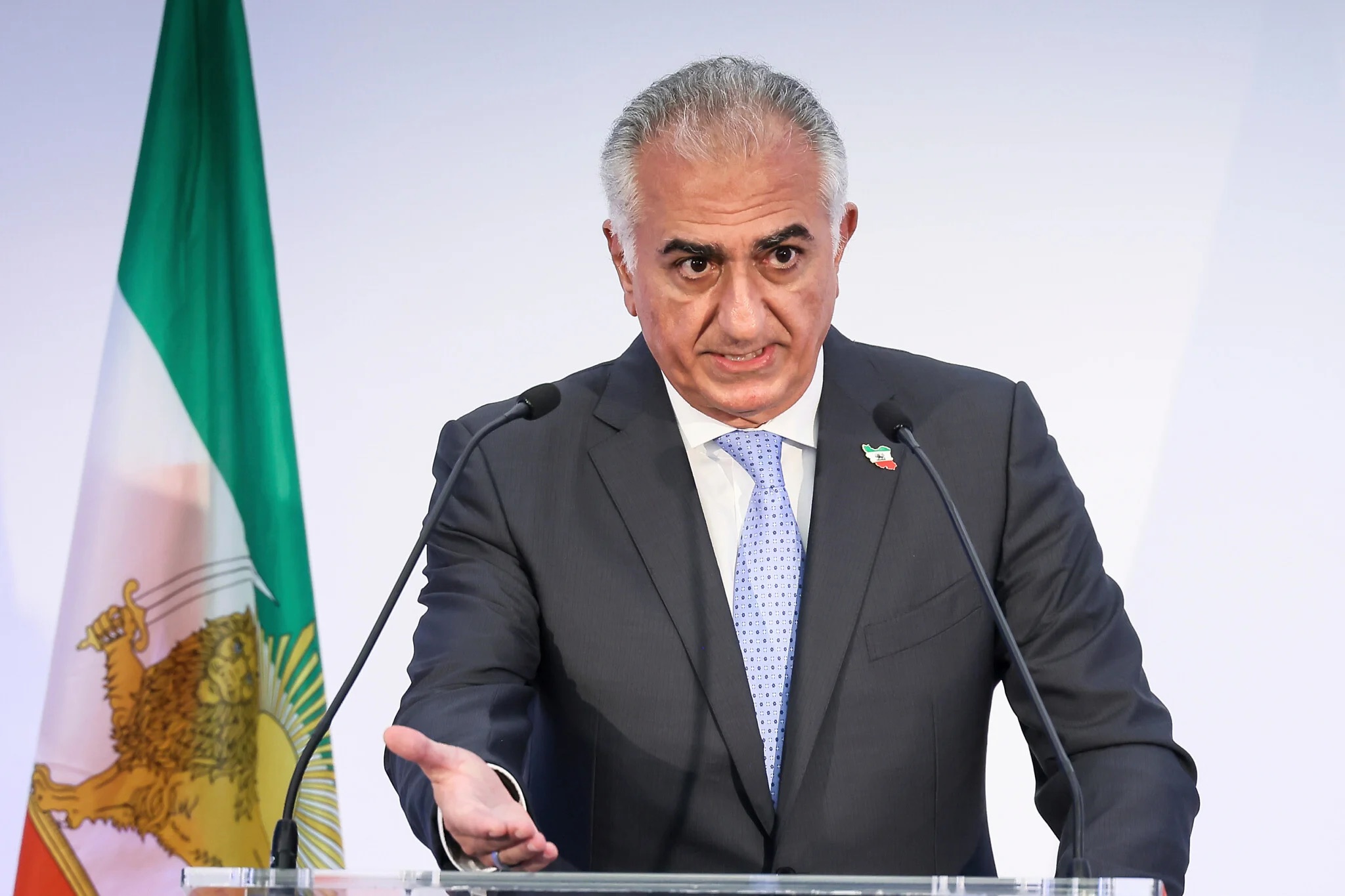
Iranian opposition figure Reza Pahlavi has accepted a Coalition invitation to visit Australia, in a move an Iranian community activist says would help protect the Jewish community.
Shadow foreign affairs minister Ted O’Brien said senior Coalition MPs and senators would meet Pahlavi virtually to begin with in the coming weeks to discuss the situation in Iran, the aspirations of the Iranian people and his advocacy for a democratic transition to a secular Iran.
“For decades, the Iranian people have suffered under a brutal terrorist regime that represses its own citizens, exports terror abroad and denies its people basic freedoms,” O’Brien said. “Many Iranian-Australians look to Mr Pahlavi as an important voice of hope for a different future and the Coalition believes those calls for engagement deserve to be heard.”
O’Brien said engagement did not amount to Australia choosing Iran’s future leadership.
“Iran’s future belongs to the Iranian people. It is not for Australia to determine who should lead Iran or what form its future government should take,” he said. “But we should be prepared to listen to credible voices advocating for a peaceful and democratic alternative to the regime in Tehran.”
He said the Coalition hoped Pahlavi would meet parliamentarians from across the political spectrum at Parliament House, as well as members of the Iranian-Australian community around the country.
Member for Berowra Julian Leeser, who joined O’Brien in issuing the invitation, said his electorate was home to the third-largest Persian community in Australia and that thousands of Persian Australians had signed a petition calling for the visit.
“For years, I have stood with Australia’s Persian community in their fight for freedom, democracy and the rights of women and girls in Iran,” Leeser said. “I will always stand with the Iranian people in their fight against a terrorist regime that attacked Australia.”
In August last year, the Prime Minister revealed that Iran had directed the firebombing of the Adass Israel Synagogue in Melbourne and the arson attack on Lewis’ Continental Kitchen in Sydney. Australia expelled the Iranian ambassador, suspended operations at its embassy in Tehran and moved to proscribe the Islamic Revolutionary Guard Corps (IRGC) as a terrorist organisation.
A spokesperson for Foreign Minister Penny Wong told The AJN, “Iran’s political future should be determined by the Iranian people. Australia stands with all Iranians, across all segments of society, in their fight against oppression.
“For decades, the Iranian regime has been a destabilising force in the world – through its nuclear program, support for armed proxies, and brutal acts of violence and intimidation both at home and abroad.”
Iranian community activist Ali Beikzadeh told The AJN that members of the Iranian diaspora had been working towards a Pahlavi visit for several years, and that recognising him as a leader for the Iranian people had become a matter of urgency for Western countries.
Beikzadeh said the push had gained urgency this year. Protests began in Iran in late December, when merchants struck over the collapsing value of the rial, and spread nationwide within days, with many demonstrators calling for an end to the regime. The regime shut down internet access on January 9 and crushed the demonstrations in a crackdown that Supreme Leader Ayatollah Ali Khamenei acknowledged had left “several thousand” dead. A report compiled by Iranian doctors put the toll at about 16,500. Security officials said around 3000 people were arrested; rights groups have estimated the death toll being many tens of thousands.
Beikzadeh said a visit would allow Australian authorities to receive advice on the IRGC and what he described as regime sleeper cells operating in Australia. “Obviously, many antisemitic attacks, attacks against the Iranian diaspora community, and generally threatening the safety of the broader Australian community,” Beikzadeh said.
He said the Iranian community had warned Australian authorities before October 7 to designate the IRGC and to be wary of how the regime was operating on Australian soil, and that those warnings went unheeded. “Only post October 7 did we start to see an amplification of attacks against the Jewish community, in addition to the Iranian community,” he said, adding that he and others had been repeatedly threatened.
Beikzadeh said a visit would carry particular significance for Jewish Australians, noting Pahlavi travelled to Israel in 2023, before October 7. “We weren’t ever enemies. We are not enemies today, and we will never be enemies in the future, the Iranian and the Jewish peoples,” he said. “We have a profound history together … if you go deeper historically and culturally and philosophically, and even theologically, we are well aligned with one another.”
He said a visit would be symbolic in that it would lead to greater protection of the Jewish community, which he argued was most threatened by the regime’s operations in Australia.
Beikzadeh said one of Pahlavi’s core missions was to urge Australia to cut all ties with the regime as far as practicable, including closing its embassy in Canberra, something Leeser has also called for.
He said the best outcome would be bipartisan support for the visit. “The next stage is the Labor government, the government in place, to actually accept this invitation to bring him in themselves as well,” Beikzadeh said.
comments