



In the days after the Bondi Beach Chanukah attack – the deadliest antisemitic act on Australian soil – something extraordinary began to happen at the memorial site.
Flowers arrived. Hundreds of them, then thousands. Bouquets were placed by Jewish families still numb with grief, by non-Jewish neighbours and strangers who had driven from Newcastle and further still, just to leave something behind. One woman, 85 years old and unable to travel from Adelaide, posted a bumblebee pin. She wanted it to be part of this.
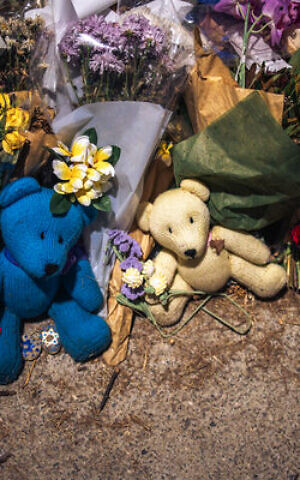
By the time Waverley Council moved to deinstall the temporary memorial near Bondi Pavilion, the flowers had grown into approximately three tonnes of colour, fragrance and love. There were hand-painted stones, teddy bears, cards, candles and personal items, including a pair of shoes belonging to Matilda left by her family.
The question of what to do with all of it and how to honour what had been given would fall to a remarkable group of people who refused to let any of it be lost.
“There is a positive unity story that can be told through these tributes. Each one is a token of love and support…” Shannon Biederman
Shannon Biederman, senior curator at the Sydney Jewish Museum, was among the first to understand the weight of that responsibility. Like so many in the Jewish community, December 14 had been planned as a night of celebration. She had registered for Chanukah by the Sea – her family went every year – but that morning, a series of small things had conspired to change their plans. Parking in Bondi was always tough. They received another invitation. The kind of ordinary friction that, in retrospect, feels like anything but. She was out with friends when the news began to come in. When she heard about Matilda, her heart broke. Biederman has a 10-year-old child too.
When the call came asking whether the museum could help with the deinstallation, she said yes, despite the museum being closed for major renovations, with no storage of its own available. What followed was a scramble across a long Christmas weekend: countless phone calls to organise trucks, flower-drying solutions and storage units willing to accept perishable items. When the deinstallation morning finally arrived, the skies opened up. Biederman says the rain felt appropriate.
The flowers were packed into large black tarpaulins for transport. The museum had tried to source clear ones, aware of how the imagery would read – but in the short notice and with limited budget, it wasn’t possible. The tarpaulins looked, as artist Nina Sanadze later described, like body bags. It was a haunting start to what would become a profoundly healing process.
Sanadze is a Melbourne-based Jewish artist whose practice involves collecting materials from sites of public trauma. She had been watching the Bondi memorial grow, and she knew she had to respond.
“The flowers struck me as the material for my next installation,” she told The AJN. “Not only were they a public monument, but they were an expression of love and support for the Jewish community. They are the prayers, they symbolise the dead. But also there is hope in them. They are the tears expressed not only by the Jewish community, but by the broader community. And we need to hold on to that.”
Sanadze had already been working with Sydney Jewish Museum head curator Roslyn Sugarman on an upcoming exhibition. But after Bondi, Sanadze realised this needed to be abandoned. Instead, her focus needed to be on the flowers.
Sanadze was commissioned to produce a commemorative Bondi flower artwork for the museum. The artist envisions the artwork as a multi-space, experiential installation made up of many elements.
“I’m not going to make one artwork with the flowers,” she explained. “It’s going to be many, many things. These flowers are so strong in telling the story of grief.”
But first, the team had to deal carefully with the tributes.
“Art is a way of repairing the world,” Sanadze explained. “Turning these flowers, which are in different stages of decay and drying, into evidence and messages of love and hope.”
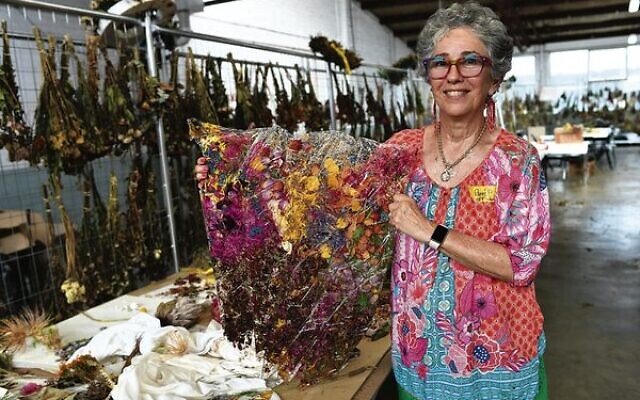
To save the flowers, Sanadze needed help. And that is where Renee Pinshaw came in. The two women were introduced through a mutual contact at a wedding in Perth, and within days, Pinshaw became volunteer recruiter extraordinaire.
“I just went through my contacts,” she recalled. “With that message, the contacts went viral among Jewish people my age. Of the people who actually turned up, 80 to 90 per cent of them were word of mouth.”
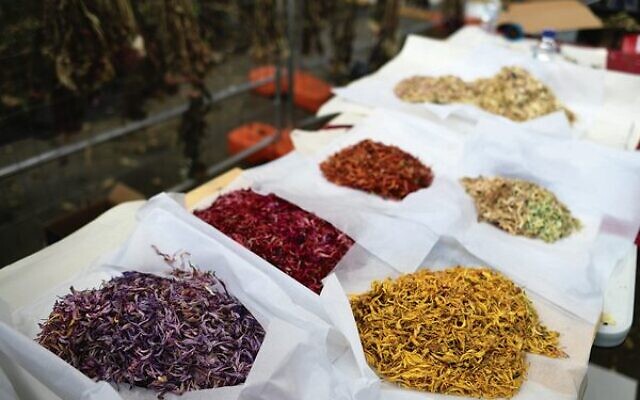
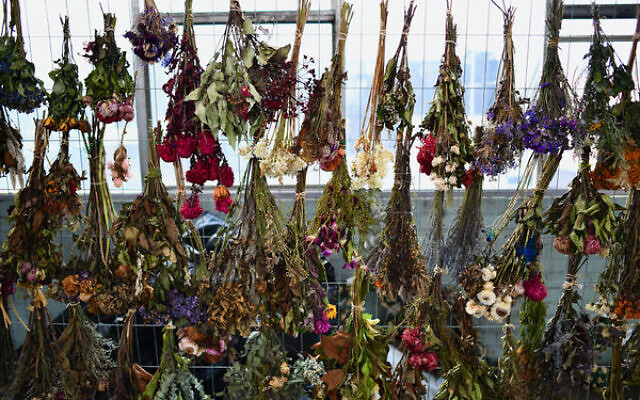
Flower species were identified and kept together. Petals were pulled and ironed, sunflower pollen was processed into pigment. Some fresh flowers were enclosed in silicone to preserve them in near-perfect condition. Even the fallen leaves had to be catalogued. Nothing was to be wasted.
“They are the prayers, they symbolise the dead. But also there is hope in them. They are the tears expressed not only by the Jewish community, but by the broader community. And we need to hold on to that…” Nina Sanadze
The flowers that had begun to rot, including roses whose insides had turned to mould, have been saved in their own way. Sanadze has encased their cores in resin, creating artworks that resemble, she says, an eternal flame, moving in colour from white and yellow through to deep red. The decayed and composted material will ultimately be used to make seating in the museum. Even in decay, the flowers are finding new life.
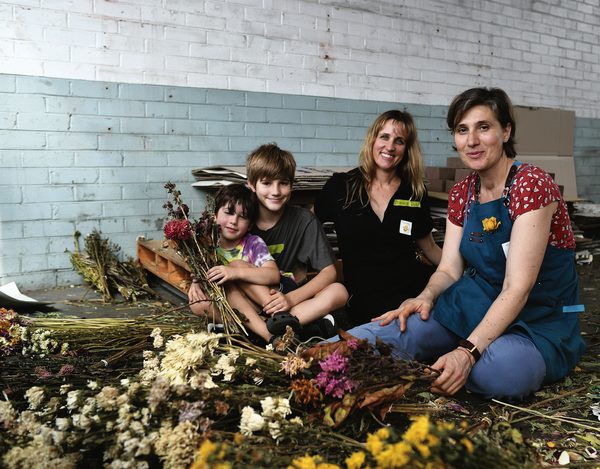
One hundred and sixty volunteers ultimately passed through the warehouse. Up to 50 showed up on any given day, some travelling long distances. The atmosphere was unlike anything anyone expected.
People sat around long tables, sorting petals, pressing flowers, snipping stems. Artists among the group handled more delicate pressing work; florists contributed specialist expertise; a botanist from the Royal Botanic Garden came to search for seeds. Succulents were taken home to be regrown.
The work was unglamorous. Hours of sorting petals, picking up fallen leaves, separating sticks by size. But the environment that grew around it was, by all accounts, something close to magical. Conversations moved between grief and laughter, between the personal and the political. First responders were invited in at a separate time to sit with the flowers. Children came and made beautiful arrangements.
“The concentration and the meditation you could see on their faces,” Pinshaw said. “A lot of them were artists. Everyone was just so willing to give.”
Biederman’s own son spent nine hours one day pulling leaves from roses. The warehouse was hot, despite fans and dehumidifiers running constantly, and in the early stages, volunteers worked wearing masks as the scent of decaying flowers was intense. But nobody complained. Nobody left early. People booked in for the following week before the week they were on had even ended.
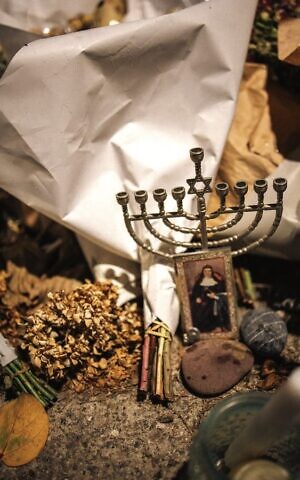
The flowers were far from the only things left at the Bondi memorial. The Sydney Jewish Museum has catalogued approximately 1500 other items including 220 stuffed animals, 39 stuffed bees, sporting memorabilia from local teams, crochet flowers, Lego flowers, artworks and felt hearts hand-sewn by members of the public. Chanukiot and dreidels, and Christmas items. Candles. Not just yahrzeit candles, but Catholic ones too. Cards written in German, French, Mandarin and dozens of other languages. A pair of 10-year-old Matilda’s shoes, left by her family.
“I really liked the craft items,” Biederman told The AJN. “The ones where people spent time making something.”
The museum is still working through the full collection. Sugarman and Biederman has been in contact with families of victims, some of whom have found comfort simply being in the space with the objects. One woman, whose father was murdered in the attack, had been unable to attend any of the vigils. Yet, sitting among the memorial items brought her a measure of peace. Families have been offered specific items left for their loved one, including cards, that Biederman notes, were written to individual victims.
The Melbourne Jewish Museum has also been in discussions about receiving part of the collection, so that communities across the country can hold their own memorial space.
“Even though it happened in Sydney,” Biederman explained, “it impacted everyone in Australia, and particularly all of the Jewish community.”
What has been strange, yet interesting for Biederman is how the museum has had to pivot to memorialising things in real time.
“We’re so used to the Holocaust in history and having space and time,” Biederman said. “We haven’t even really heard from the killers yet. The motivations, the official statements haven’t even been released yet. It’s not even history.”
Sanadze has been thinking about what to call the project. The name she keeps returning to is Petal by Petal. It speaks to the painstaking physical work, the hours spent on a single flower, a single petal, but also to something larger.
“It’s the care taken to save the flowers,” Sanadze explained. “But also the steps that will take to heal and transform, to be together and move forward. Step by tiny step, like petals.”
She does not yet know exactly what the final commemorative pieces will look like. That, she says, is by design – the flowers themselves are guiding her, and she wants the community to remain involved in the creation. One thought she had is that seeds left over from the drying process may one day be replanted.
Beyond the installation, Sanadze has developed a small badge – a yellow flower with the words “We stand with you”, taken directly from cards left at the memorial. Proceeds from their sale will go to a charity connected to the Bondi attack. It is, she says, another way for the community, and for Australians more broadly, to keep showing up.
“The work continues and needs to be done. More people need to stand up, speak up and show support.”
For Sugarman, Biederman, Sanadze and Pinshaw, the grief the community is feeling is shared. Which is why the communal element of the project has been so important and so therapeutic. When Biederman first visited the Bondi memorial, she felt awe. So did Pinshaw, when she walked into the warehouse and saw hundreds of strangers working in near-silence, absorbed in their tasks.
“I’ve met a whole lot of new people I never knew,” Pinshaw said. “There was no discussion about who’s Jewish, who’s not. They were younger, they were older. It was just everybody who had a love of colour and flowers. And love for what had happened and the people it happened to.”
Biederman explained that the memorial coming down when it did, sooner than many in the community had wanted, caused real hurt. But, the knowledge that everything would be preserved helped.
“The idea that it was going to be saved really helped a lot of people. To know that all of these expressions of love aren’t going out into the ether,” she said. “There is a positive unity story that can be told through these tributes. Each one is a token of love and support.”
Until the museum reopens, the work continues and the memories are held, waiting to be shared with the world.
comments