



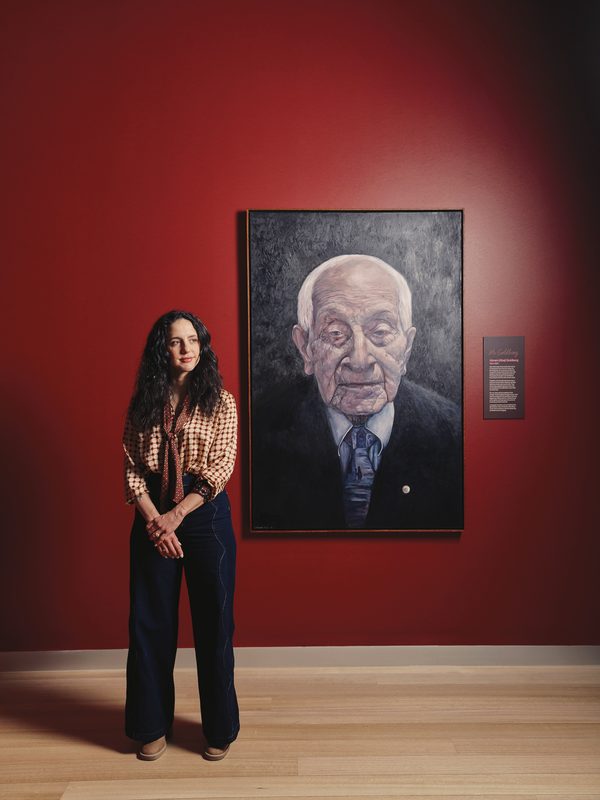
A new exhibition at the Melbourne Holocaust Museum is preserving the faces and stories of Holocaust survivors through 16 intimate oil portraits.
Portraits of Survival, painted by artist Anita Lester, opened amid rising global antisemitism and concerns about the fading presence of firsthand Holocaust witnesses.
“In a time marked by rising global antisemitism and the fading presence of firsthand Holocaust witnesses, Portraits of Survival offers a critically important opportunity to engage with living memory,” Ellen Bradley, curator at the Melbourne Holocaust Museum said. “As survivors age and their stories risk being lost to time, this exhibition invites us to bear witness, to listen, and to carry forward their legacy.”
The exhibition features 16 oil paintings of Holocaust survivors, each created through a careful process of video recordings and photographic references.
The works represent not just artistic tributes but what Bradley describes as “urgent reminders of the humanity behind history”.
Dr Breann Fallon, CEO of the Melbourne Holocaust Museum, emphasised the contemporary relevance of the exhibition.
“Portraits of Survival is a powerful reminder that Holocaust survivors are not only part of our past – they are part of our present and their experiences carry fundamental learnings for our shared future,” she said.
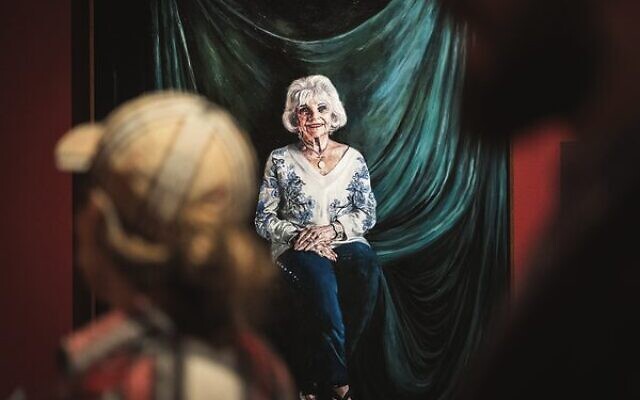
Lester came to the project through personal experience.
After painting Holocaust survivor Abe Goldberg for the Archibald Prize, she was commissioned by friends to paint their grandparents who were survivors.
The project expanded when the Melbourne Holocaust Museum embraced the concept.
“I sort of realised there was this weird lack of dialogue within our generation, which is the third generation, around the Holocaust,” Lester explained. “And I just thought this was like a very direct, very kind of understandable way of having this conversation with the broader community.”
Lester’s journey to creating Jewish art came after experiencing antisemitism firsthand in 2021.
During a Gaza conflict flare-up that year, she publicly identified herself as Jewish, Israeli and a Zionist on social media, responding to posts from friends she found disturbing.
“That was sort of the beginning of the end for me, as far as being accepted in the creative community in any sort of open way,” Lester said. “I got dropped from my booking agent, my publishers, and I stopped getting booked for shows.”
Despite the professional costs, Lester has embraced her role as a voice in the Jewish creative community. “I think there needs to be more voices that are moderate and creative, because there aren’t many of us and a lot of us feel very abandoned by the creative community.”
For Lester, the portrait process involved careful consideration of the survivors’ advanced age. Rather than traditional sittings, Lester videoed the survivors and worked from photographic references taken by collaborator James Macpherson.
The paintings were composites rather than direct copies of photographs, allowing Lester to capture personality and story beyond mere physical likeness.
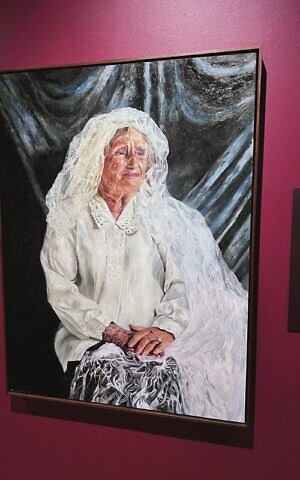
Photo: Bruce Hill
One particularly moving portrait features Sally Felzen wearing her wedding veil, which she had not worn since her wedding day. When the veil was placed on her head during the sitting, the emotional impact was immediate.
“She immediately had this very visceral reaction, which we could all feel in the room. And everyone was crying,” Lester recalled. “When I was looking through the videos and the photo references, I was looking for that look in her eyes … that nostalgia and sadness.”
Not all survivors were comfortable seeing themselves in Lester’s expressionistic style, which emphasises deeper lines and dramatic contrasts. “A lot of them really didn’t like the way that they came across and how old they looked,” Lester acknowledged. However, family members often helped the survivors understand the importance of the documentation.
The exhibition’s impact extends beyond the Jewish community. Lester noted that many visitors have connected the portraits to their own family memories.
“A lot of people have come to me and said, this makes me think of my grandma or my grandfather or my uncle or whoever, and it sort of brings them back to their own memories,” she said.
For Lester personally, the project deepened her connection to her own family history.
“I got to know my grandfather and members of my family through meeting these people and painting these people and understanding their experience,” she reflected.
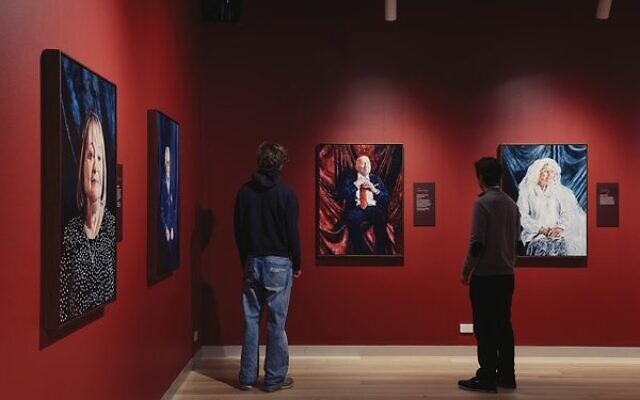
For Bradley, the exhibition is both artistic achievement and historical documentation.
“Curating this exhibition has been a humbling experience. It’s a privilege to help share these stories, and to honour the survivors and their families who entrusted us with their memories,” she said. “Through these portraits, we hope visitors will not only learn about the Holocaust but feel the weight and warmth of individual lives lived with courage.”
The exhibition represents a critical moment in Holocaust remembrance, capturing living memory while survivors are still present to share their experiences.
As Bradley noted, it offers “a chance to connect with voices that may soon fall silent, and to reaffirm our collective responsibility to remember, educate and stand against hate”.
Portraits of Survival is at the Melbourne Holocaust Museum until January 18, 2026. For more, visit mhm.org.au/portraits-of-survival
comments