



You are speaking directly to the Jewish community through us. What would you like our community to know?
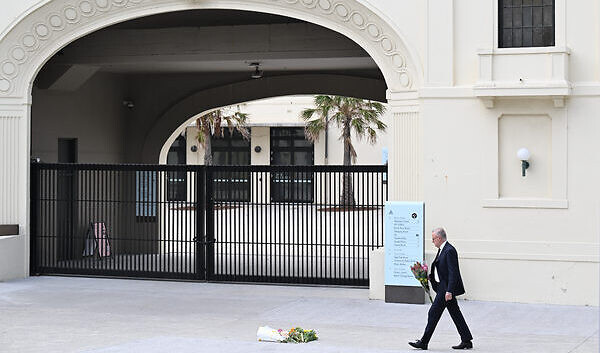
That I am bloody angry about what happened on Sunday night. Targeting the Jewish community at what should be a festival of light and hope and joy just reinforces the extent of the outrage and the atrocity. An antisemitic terror attack at an iconic Australian location is just devastating. And an attack on Jewish Australians is an attack on who we are as Australians. We will not stand for it. We will take whatever action is necessary.
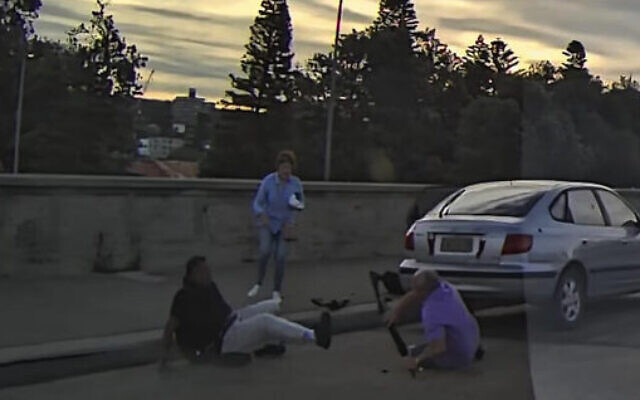
At the same time, we see some heroic stories. Boris and Sofia Gurman lost their lives. Reuven Morrison lost his life, and Ahmed El Ahmed managed to survive. I visited him in hospital yesterday. He’s an extraordinary fellow.
There are nights that tear at the nation’s soul, and Sunday night was one of them, and in a moment of darkness, we must be each other’s light. And Chanukah, of course, is a celebration of that. We need to hold on to the character of the country that we love, and not allow the terrorists to submit us to division, violence or hatred. We’re braver than those who seek to make us afraid.
There are other heroes as well. Of course, the people who I’ve met in the hospitals at St Vincent’s and at Royal Prince Alfred Hospital … it shows the best of Australia, of compassion and people wanting to help their fellow Australians at what is such a difficult time. So to the Jewish community, Australians are standing with you and embracing you.
There has been a lot of criticism over the last two years over the government’s response to the rise in antisemitism, beginning on October 9, 2023, at the Opera House. Do you think the government has done enough?
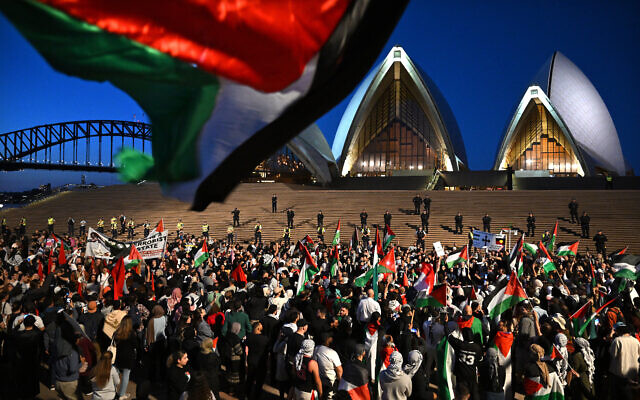
Governments can always do more. That’s the truth. But I condemned the October 7 event. I condemned it unequivocally, supported Israel’s right to defend itself. Before the Opera House demonstration, I did interviews in the media, called for it to not go ahead and to be stopped. On Tuesday morning after the event, I condemned it on breakfast TV.
I’ve called out antisemitism consistently. I’ll continue to do so. I’m someone who set up Students Against Racism in partnership with Jewish students and others, way back in the 1980s when there was a rise of a fascist presence on campus at Sydney University. I opposed BDS and led the campaign to overturn it on Marrickville Council, working with people like [ECAJ co-CEO] Peter Wertheim and others in the community. I’ve consistently opposed antisemitism. It’s part of who I am.
We have undertaken a range of actions. Clearly, there are people in the community who feel that that is not enough, and I respect that. I’m continuing to engage. Clearly, more needs to be done, but we appointed the antisemitism envoy. We adopted the IHRA definition. We established Operation Avalon with the AFP to deal specifically with acts of antisemitism. We outlawed the Nazi salute and hate symbols for the first time. When we received evidence that the Iranians were behind the commissioning, essentially, of criminals to engage in actions of disruption, we expelled the Iranian ambassador within 24 hours. That was the first time since World War II any ambassador has ever been expelled from Australia.
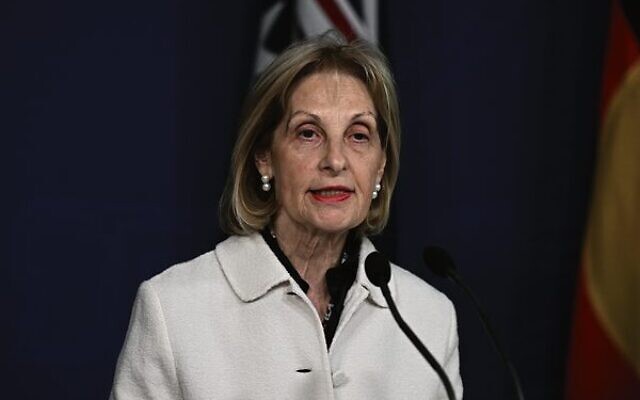
Jillian Segal’s report came out in July, and the government said you would be waiting for the Islamophobia report to come out before responding and –
I haven’t said that. I have not said that, and we haven’t been doing that. What we’ve been doing is acting on the report. We’ve adopted the IHRA definition. On legislation addressing antisemitism and hateful conduct, we’ve criminalised hate speech advocating violence. We’ve criminalised doxxing. We’ve outlawed the Nazi symbols.
On education and university reform, we’ve appointed a national student ombudsman. We’re reviewing the Tertiary Education Quality and Standards Agency Act. We’re developing a university report card that will be published halfway through 2026. Every institution will receive that.
We have extended the security arrangements for the Jewish community. Whenever any recommendation has come in, or any request, they have been approved in record time. In MYEFO [Mid-Year Economic and Fiscal Outlook], further funding has been included that was done before Sunday night.
On culture and arts, we’ve funded the increase for the Sydney Jewish Museum. We’re establishing the National Holocaust Education Centre in Canberra, the Holocaust Institute in Western Australia. $18 million to the Jewish Arts Quarter in Melbourne.
On reviewing the strength of immigration and citizenship matters, the Department of Home Affairs is doing a review of all the relevant training packages to make sure that modules on assessing applicants involve inciting or promoting hatred. We have stopped people who have promoted antisemitic views coming to Australia.
This is a dynamic document. The challenge of antisemitism isn’t about saying right, job done. It will be an evolving document that we will continue to engage with, including through the envoy. We’ll have more to say as a result of Sunday, which will require further analysis.
Will Sunday spur the government to do more from the report? Media reports said the Premiers had to raise the report in your meeting with them.
Nonsense. It’s just nonsense. The statement that went from National Cabinet was written by me. The first thing that it begins with is “the Prime Minister convened National Cabinet following the evil antisemitic terrorist attack.” National Cabinet pledged to eradicate antisemitism, hate, violence. It referred to one of the recommendations in the report about the National Hate Crimes and Incidents Database.
The community is grateful for security funding, but it shouldn’t be needed. Our kids should be able to walk into school without armed guards. What can be done to actually change the culture in Australia, where ‘globalise the intifada’ has become a mainstream saying?
Jewish people absolutely have the right to feel safe and to be able to practise their faith and to practise cultural practices as well, and it enriches all of us through that as Australians.
There’s a need for education across the board. That’s why we’re dealing with the Tertiary Education Quality and Standards Agency, but also at a lower level, in terms of getting to young people, educating them about the Holocaust, educating them about antisemitism. That is why we’ve funded these cultural institutions.
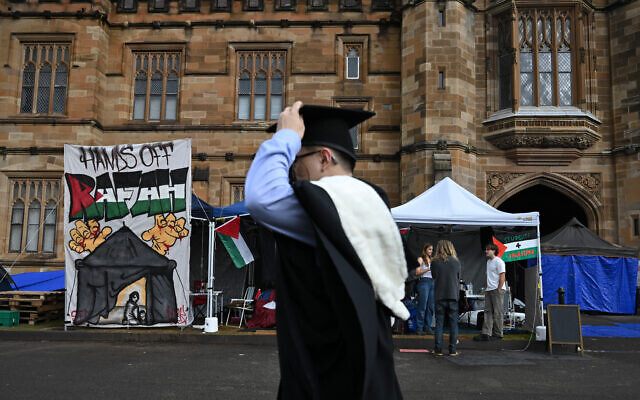
An important element will be the National Holocaust Education Centre in Canberra. School students in primary school come to Canberra. Going there, getting that national consistent approach will be really important.
The other thing is to look at is how do we strengthen laws so that people promoting hate – is there anything we can do to make sure strong action is taken? We’ve got the hate speech laws for hate speech that leads to violence. Is there a need to tighten that? I’m up for that completely, and so is the government. Some of that will be through state legislation, where a lot of criminal law comes from. There’s no place for someone who is inciting hatred against fellow Australians.
Narratives and rhetoric around Israel and Gaza have helped to feed the culture of antisemitism. The government has taken some positions which many in the Jewish community feel has actually helped to fuel the flames. What is your response?
People should be able to have respectful debate, including about international issues, without bringing conflict here to Australia. My electorate office in Marrickville was forced to close and we’ve been forced to find new premises because of the rhetoric aimed at my staff, accusing the government of genocide effectively and accusing my staff who are just there to help people with social security and Medicare and migration issues.
As an Australian government, we support peaceful resolution in the Middle East. We have been strong supporters of President Trump’s plan, and we’ll continue to do so. Australians want to see conflict end, and they want to see conflict not brought here. That is a clear position that we have taken as an Australian government.
So you reject that the government has contributed to the fire with rhetoric and positions on the war in Gaza?
The government has taken a position of wanting to see a peaceful resolution of conflict, and Australia has, on a bipartisan basis, for a long period of time, supported a two-state solution in the Middle East. That remains the Australian government’s position. We want to see long-term reduction in conflict in the Middle East, peaceful resolution, Israel’s right to exist within secure borders and for peace to occur for both Israelis and Palestinians.
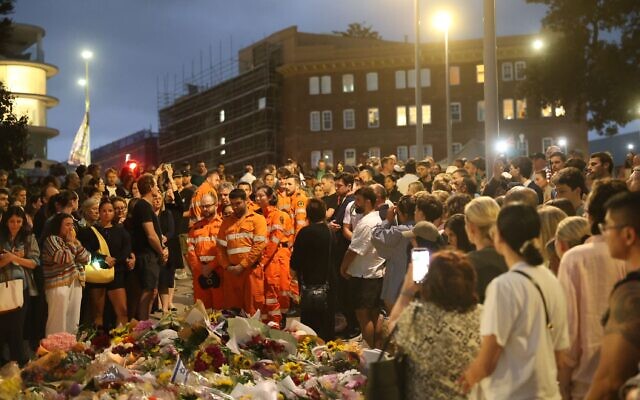
The government’s recognition of Palestine as a state – many in our community felt that was appeasing terrorism. The result was Bondi.
The terrorists support one state. They are the enemy of Palestinians and Israelis. Hamas don’t want a two-state solution. Hamas want no recognition of Israel. That is their objective, and part of what the world was saying in coming together was to reject that as well. I want to see Israel recognised by all of the countries in the region as part of ensuring that security can occur.
Any final thoughts?
Thank you for the opportunity to talk with you and feel free to reach out anytime. This is going to be a difficult period, and my job is to bring Australians together, to provide support for Jewish Australians at this difficult time, but to unite the nation and to look for how we can emerge from this dark period and the atrocity on Sunday evening, emerge into the light. The message of Chanukah is never more important than at this time.
comments