



Rare cancer under the microscope
Rare cancers make up a quarter of diagnoses but receive less funding, fewer treatments and are often diagnosed late.
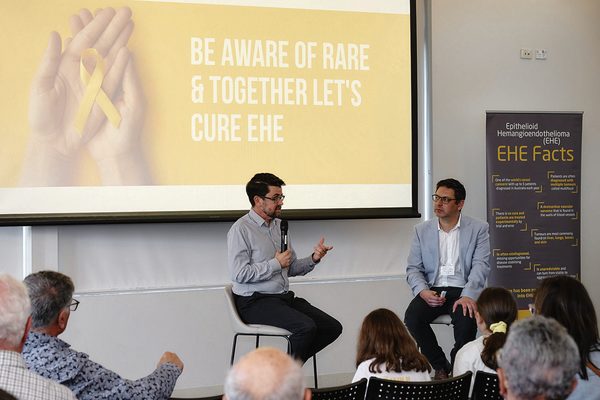
Around 1 in 5 cancers are classified as rare. They make up a quarter of all cancer diagnoses and cause around 30 per cent of cancer deaths. However, given they are considered rare, they receive less funding and research, fewer treatment options, and are often diagnosed too late. Patients can be left with uncertainty, limited support and poorer outcomes.
Epithelioid Hemangio-endothelioma (EHE) is one of the rarest cancers in the world, with fewer than 1 person per million diagnosed each year. It starts in the cells that line blood vessels and can occur anywhere in the body. There is no standard cure, and treatment options are limited.
Jonathan Granek was diagnosed with EHE in 2009 when he was only 26 years old. He shared his personal story on Sunday at an event to raise awareness about EHE. Granek said that it took many months of medical tests before he was able to receive a diagnosis of stage 4 EHE, and was then given a grim assessment by his doctor.
“She went on and clarified there was no established treatment regimen to cure me, that existing therapies available were relatively toxic and known to only have limited effect before tumours became resistant. The rate of progression of disease was unpredictable, but I would almost certainly experience a shortened lifespan as a result of my disease.”
Granek expressed the personal weight of the diagnosis, “I felt like I was in very deep water, without a life raft and no paddle. I was 26 years old, and was just starting out my adult life, and suddenly I felt like it was already ending. The diagnosis shattered my engagement, changed friendships and forced me to reimagine my future.
comments