



Redemption in the past and future
There is so much more to Pesach than simply celebrating its key theme – the Exodus.
As is evident from the Torah reading on seventh-day Pesach, this particular festive date commemorates the crossing of the Yam Suf (literally “Sea of Reeds” but often translated as the “Red Sea”). The drowning of the Egyptian pursuers was the final aspect of the Exodus – the Israelites were now truly free to head for the Promised Land.
The focal point of that Torah reading is of course the song beginning with the words “Az yashir Moshe u’vnei Yisrael”. Yet while this is commonly (mis)translated as “then Moses and the children of Israel sang” the word “yashir” is actually in future tense – so that the phrase really means: “Then Moses and the children of Israel will sing.” Say the Sages: “From here we see evidence of the resurrection of the dead on the basis of a Torah verse.” For there will come a time – the Messianic era – when once again Moses and B’nei Yisrael will sing.
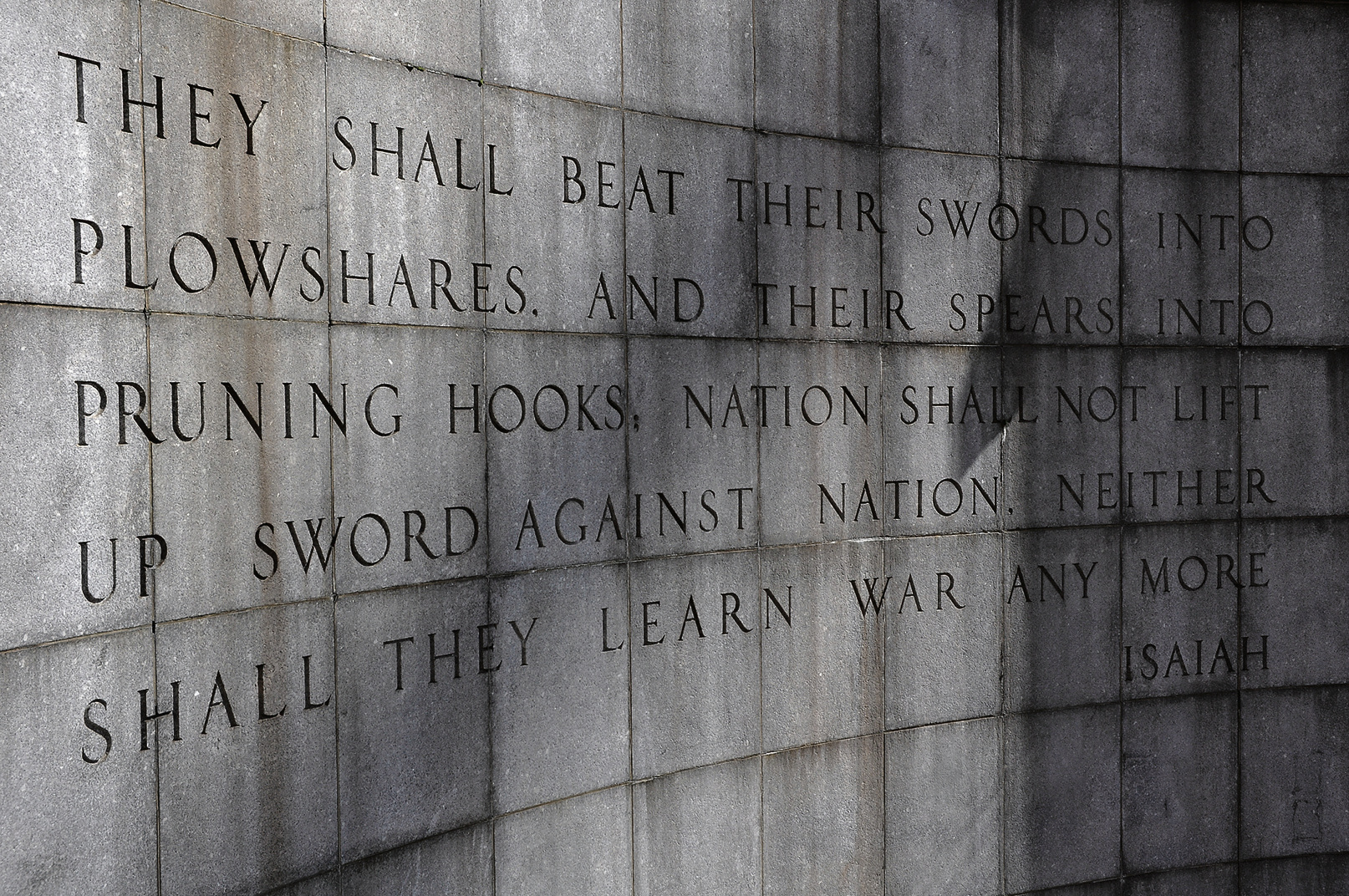
And as we move to the last (eighth) day, the messianic theme is further strengthened. In words many of which are familiar to us and some which are even inscribed on the walls of the United Nations headquarters, the haftarah tells of the prophet’s messianic vision:
“V’yatza choter migeza Yishai – and a staff will grow forth from the source of Yishai (father of King David) … And a spirit of Hashem will rest upon him … And a wolf will dwell with a sheep and a leopard will lie down with a kid … and a little child will lead them … the Earth will be filled with knowledge of Hashem as water covering the seabed” (Isaiah 11:6).
And if that is not enough to emphasise the messianic theme of the last days of Pesach, you might turn to the machzor and examine the poetic insertions into the Maariv services of both the seventh and eighth evenings (regrettably not recited in all synagogues) that were composed well over a millenium ago. Their theme? A comparison of the miraculous events that happened at the time of “Pesach Mitzrayim – the redemption from Egypt” and those which will occur at the time of “Pesach l’atid – the future [and final] redemption”.
All of which brings us to a custom which in the contemporary era is considered by many as “minhag Chabad – a Chabad custom”, yet clearly has ancient roots and actually provides a classic example of the way many minhagim have developed in our tradition over the ages.
Among Chabad circles today it is common to sit down towards sunset on the eighth day of Pesach for a meal referred to as “Seudat Moshiach – the Moshiach’s meal”. The concept of a third meal (Seudah Shlishit) in addition to those of the evening and lunchtime is normally only applicable to Shabbat and not to a festival day. However, given the significance of eating matzah on Pesach – the only formal Torah-based mitzvah in a post-Temple era requiring consumption of a particular food – among many circles (including non-Chassidic circles such as those of followers of the Gaon of Vilna), it became customary towards the end of the eighth day of Pesach to wash hands for a final meal with matzah that was often referred to as “Ne’ilat hechag – the closing of the festival”. However, given the Talmudic expression that “B’Nisan nig’alu uv’Nisan atidin l’higa’el – in Nisan they were redeemed and in Nisan Israel will be redeemed in the future”, and in light of the messianic overlay to the last days of Pesach referred to above, over 250 years ago the founder of the Chassidic movement, the Baal Shem Tov, began to refer to this meal as Moshiach’s seudah.
But barely a century ago an additional feature was added to this celebration, namely the drinking of four cups of wine. Four cups are drunk at the seder to symbolise four expressions of redemption. Following his return to Egypt from Midian, Moses (Shemot 6:6-7) was instructed to tell the children of Israel that God promises: “Vehotzeiti” and I will take you out from Egypt; “v’hitzalti” and I will save you from the servitude; “v’go’alti” and I will redeem you; “v’lakachti” and I will take you for me for a people; and finally, “v’heveti etchem el haaretz”, and I will bring you to the land”. Albeit that we are not all in the land during this time of exile, we celebrate the other four expressions with four cups of wine while also placing on the table but generally not drinking a fifth cup – that of Elijah who will announce the messianic advent.
In 1906, the then Lubavitcher Rebbe, known as the Rashab, instructed the students in Yeshivat Tomchei Temimim to similarly drink four cups at this Moshiach’s seudah, thereby again symbolising redemption past and our longing for that of the future. This is the source of what has since become a widely popularised normative Chabad custom.
May we all enjoy the final days of the festival and experience the redemption in the near future.
Shabbat shalom v’chag sameach
Yossi
comments