



Reflections on the month of Sivan
Positives and negatives combine through so much of our calendar, reflecting the realities of Jewish history and survival.
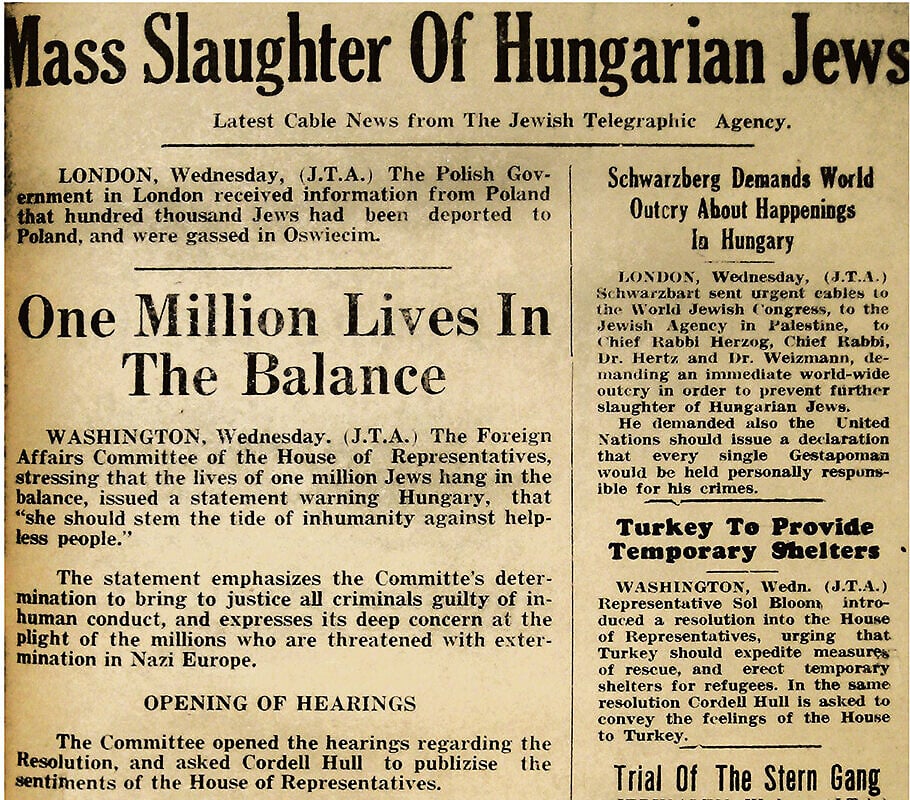
Twice a year the Jewish world enters into a period of semi-mourning when weddings are banned and various other restrictions apply. One is the Omer period now just past; the other is the Three Weeks that will commence during the month of Tammuz. In between these two lies the month of Sivan, in which we still currently find ourselves.
On a prima facie basis Sivan should have no negative connotations. After all, in Sivan we received the Torah at Sinai – the event happily commemorated on Shavuot both spiritually (through Torah learning) and physically (with cheesecake and blintzes). Yet such is not the case.
Regular shule attendees may have noted that on the Shabbat that we blessed Rosh Chodesh Sivan the Av Harachamim prayer commemorating martyrdom was recited, even though it is not normally recited when one blesses Rosh Chodesh or on other festive occasions. Why? For it was at this time in 1096 that pillaging Crusader hordes, en route to the Holy Land in the name of Christianity, decimated the Jewish communities of the Rhine Valley. This event is known in our calendar as Gezerat (the decree of) Tatn”u – the letters taf, taf, nun, vav making up the Hebrew year (4)856 – 1096. (“Gezerah” – a decree – is a word often used for unfortunate events.)
And then there were other terrible historical events in Sivan. This week’s AJN is datelined Sivan 20. Sivan 20 – chaf Sivan – was for three centuries marked as a fast day in Europe. To this day some siddurim carry an order of service including Selichot to be recited on this date. Why? Because this date which had already seen 31 martyrs burned at the stake in France in 1171, entered our calendar to commemorate what is known as “Gezerat Tach veTat”. “Tach” and “Tat” make up the Hebrew years (5)408/9 – 1648/9, when hundreds of thousands of Jews were murdered or displaced from their homes as a result of a Cossack rebellion in Ukraine led by Bogdan Chmielnicki, that turned into a Ukrainian war of liberation from Poland and simultaneously became the worst event in the history of the European Diaspora prior to the Holocaust. Sadly, to this day its instigator and leader is commemorated across the Ukraine as a nationalist hero.
But those events of the distant past aside, Sivan has also more recently been a month of horrific tragedy. When I was younger we all vaguely knew that the Hungarians in our community (most of whom, sadly, have now passed on) had a yahrzeit in or around Sivan. In an era when such matters were not widely spoken about we may not have fully understood why this was so, but it was a fact that greeted us in shule through Hungarians saying Kaddish and leading services from the amud (lectern) as is customary on a personal yahrzeit. Why?
comments