



Reflections over the holiday season
Today, facing surging antisemitism, we must actively harness these inherited strengths.

Passover (Pesach), the Jewish festival of liberation, compels us annually to reflect upon journeys – from narrow confinement to expansive freedom.
The Hebrew word for Egypt, “Mitzrayim,” meaning “narrow places”, is not accidental. It captures precisely the constrictions, both physical and spiritual, from which our ancestors courageously escaped. Today, as antisemitism once again rears its head globally, this metaphor of narrowness seems especially poignant. But history reminds us, repeatedly, that no narrow place has ever fully contained us.
At Passover, we retell the story not only to remember suffering but also to celebrate the astonishing resilience that has carried Jews forward through countless epochs of trial. What qualities have sustained us on this journey? Education, perhaps chief among them, has safeguarded our intellectual heritage, nourishing the Jewish spirit even in the harshest exile. It is no accident or quirk of fate that 22 per cent of Nobel Prize recipients are Jewish or had a Jewish parent, despite Jews constituting only 0.2 per cent of the world’s population.
Family bonds have been our safety net, weaving together generations across centuries. Faith, whether whispered in secret or boldly proclaimed, has anchored us amidst life’s storms. And humour, irrepressible Jewish humour, has disarmed oppressors and empowered us to face calamity with hope.
“Our backs are strong from carrying the weight of our travels,” as the saying beautifully goes. Indeed, the burdens we bear historically have not diminished us; they have fortified our character. Jews are not victims of history – we are creators of our own destiny. Let us mark this Pesach not just as a remembrance of what we escaped from – but as an affirmation of who we continue to become.
Today, facing surging antisemitism, we must actively harness these inherited strengths. We can no longer remain passive bystanders, accepting injustice as inevitable. Instead, we must step forward as upstanders, speaking out with clarity and conviction, showing solidarity through tangible, compassionate actions.
As the Jewish community commemorates this season of liberation, our Christian friends mark Easter, a festival rooted deeply in themes of rebirth, renewal and hope.
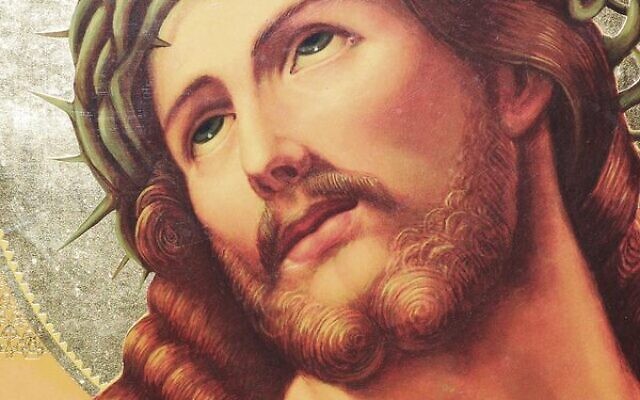
Easter represents a spiritual awakening – a profound belief in the possibility of transformation, second chances and redemption. Yet this same season calls upon Christians to confront honestly the darker chapters in their history, particularly the shadow cast by 2000 years of Church antisemitism that once emerged from the pulpits and pews of the Christian world.
Easter is a potent reminder not only of rebirth but of the need for moral awakening – for recognising past wrongs and courageously reaching out to repair them.
Today, more than ever, as Jewish communities feel vulnerable, isolated, increasingly targeted, terrorised and traumatised, Christians have an essential role to play as allies and partners.
This season challenges you, our Christian neighbours, to reject the legacy of silence or complicity. It calls upon you to step forward boldly, becoming vocal advocates and protective friends to your Jewish siblings, recognising that our fates remain inseparably bound.
What can becoming an upstander look like? Perhaps it begins by reaching out directly – writing clearly and firmly to your elected representatives, demanding they take decisive action against antisemitism. Perhaps it means physically standing alongside us at our places of worship, our schools, or community institutions – your quiet presence an unambiguous statement of solidarity. Or perhaps it starts in smaller, deeply personal gestures – reaching out to Jewish friends, offering comfort, asking honestly and openly, especially because of the isolation the Jewish community feels: “How can I support you right now?”
Together, Jews and Christians can model a new narrative of unity – transforming painful histories into profound alliances. Your commitment, at this crucial juncture, has the power to redefine our shared future. As Jews celebrate liberation from narrow places, Christians celebrate rebirth and renewal. Let these intertwined celebrations remind us that we can, together, expand beyond division, beyond narrowness, beyond ancient hurts and modern prejudices.
This Passover and Easter season, let us all pledge to move from the sidelines into courageous action. Let us commit not merely to surviving troubled times, but to becoming active architects of a shared, hopeful future. Let us choose not simply to endure but to emerge more whole, compassionate, and unified. Let us be reminded of our responsibilities – to ourselves, to each other, and to the society we share. Let us collectively widen these narrow places, transforming crisis into opportunity, fear into hope, silence into solidarity.
In doing so, we embody the deepest teachings of both Passover and Easter: that narrowness is never permanent, and that renewal, hope, and genuine solidarity are always within our reach.
Let our reflections ignite action, compelling us to emerge from today’s narrow places wider, stronger and more unified.
Adam Slonim is the presenter of Behind the Headlines radio and podcast.
comments