



Religious freedom is under attack
RELIGIOUS people are facing challenges to expressing their devotion in public.
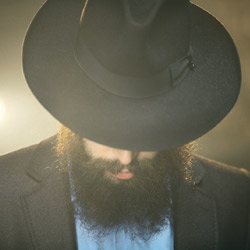
THE matter of religious freedom, and more specifically, the right to overtly show one’s commitment to a religious belief, is increasingly under attack.
Governments in Western Europe are progressively banning the wearing of the Muslim women’s full-length covering -— the burka -— whether all the time, or in certain, government-run places.
A Canadian taxi driver was forced to court in April for displaying a mezuzah in his cab, and in the United States, the Federal Appeals Court was called in to decide whether a Jewish family could keep a mezuzah on their apartment door.
In Canada, long-time taxi driver Arieh Percowicz found himself opposite a judge after refusing to take personal items, including a mezuzah, a picture of the Lubavitcher Rebbe and a copy of the prayer for the road, out of his cab.
According to reports, Percowicz had been driving for more than 40 years with the religious items, plus other personal trinkets, in his car, when the local taxi authority started issuing him with fines.
The 66-year-old has challenged the fines on the grounds that it is his right to display religious items.
The authorities see it differently, though, with Montreal bylaws prohibiting drivers from having items in their cars that are not required for taxi driving.
“Why do I have to hide my ¬≠religion or my expression?” he asked a Canadian news organisation. “Why am I different than the Quebec National Assembly, where they have the cross above the speaker’s head and that’s okay?”
Women of Islamic faith are facing another formidable challenge, as Belgium’s Lower House of Parliament voted last month to ban the burka — the full-length dress that covers a Muslim woman’s body and face.
Only two Belgium Members of Parliament abstained from the vote, with politicians arguing it was necessary for public security and to protect women from oppression.
But human rights organisation Amnesty International slammed the Belgian decision.
“A complete ban on the covering of the face would violate the rights to freedom of expression and religion of those women who wear the burka or the nikab as an expression of their identity or beliefs,” John Dalhuisen, Amnesty International’s expert on discrimination in Europe, said.
According to Amnesty, under international human rights law, the only legitimate grounds for restricting the rights to freedom of expression and religion are the preservation of public security, order or morals, and the protection of the rights of others.
Meanwhile, in neighbouring France, a ban on conspicious religious symbols, including Muslim headscarves, kippahs and Magen David jewellery, was instituted in public schools in 2004.
And French President Nicolas Sarkozy has shown interest in extending the ban. Despite obvious limitations on the religious rights of citizens, French opinion polls suggest most people support the ban.
Then, late last year, Judge Diane Wood, who was considered by US President Barack Obama for nomination to the US Supreme Court, ruled that a Jewish Orthodox family, the Blochs, from Chicago, had a federal claim of religious ­discrimination against a building code that prevented them from hanging a mezuzah on their front door.
After taking the case through America’s courts, the Blochs were finally permitted to retain their mezuzah in respect of their religious rights.
NAOMI LEVIN
comments