



Remembering the Maggid of Mezeritch
In the world of Chassidism, dates associated with the passing of great leaders serve to focus our thoughts on their respective legacies.
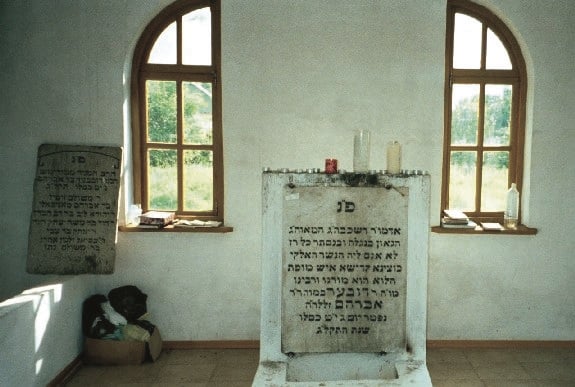
Yud Tes Kislev – Kislev 19 – is widely known as a date celebrated in Chabad circles as the day that their first Rebbe, Rabbi Shneur Zalman of Liadi was released from incarceration for activity against the Czarist government that could even have led to his execution. Inasmuch that his release set the movement off with greater vigour, it is treated by Chabad as the Rosh Hashanah for Chassidut – the beginning of a new epoch in Judaism.
Some 20 years ago I attended a Yud Tes Kislev farbrengen in the Torat Emet Beit Midrash in Meah Shearim. The atmosphere in that complex serving a Chabad community with 19th-century roots was somewhat different to such events worldwide – among the older established chassidim of the Yerushalmi “old Yishuv” the emphasis was not on the Rebbe Menachem Mendel Shneersohn and his work worldwide but on the first Rebbe, the Baal HaTanya himself and his contribution to Chassidut. The shtreimels and even the traditional Yerushalmi yellow caftans worn by some made for a very different atmosphere from that which most of us normally experience at Chabad functions.
But then after a while I went for a walk down Rechov Meah Shearim. As I approached the large complex occupied by the group of Yerushalmi Chassidim known as Toldos Aharon I saw large numbers in festive dress standing around outside. From inside came the sounds of singing – so I asked one of the bystanders what was going on. Yud Tes Kislev, he responded. Seeing my puzzled look which he realised was surprise that a group very different from Chabad celebrated the day, he added that it was the Maggid’s yahrzeit. I went inside to see the Beit Midrash decorated and lit up with hundreds of Chassidim young and old singing and listening to their Rebbe’s messages.
And before I provide further explanation let me add that the following morning around 7am when I headed for Shacharit at the Amshinov complex in Bayit Vegan, the suburb of Yerushalayim where I was staying, I also saw many in festive Chassidic dress milling around while sounds of singing were coming from an upper floor. It turned out that there too was a celebration of the Maggid’s yahrzeit that had carried on throughout the night. In fact the time was approaching when they would recite bircat hamazon after the all-night tish with the Rebbe, and, I was told, if I went back downstairs, davvened shacharit and then came back up I would be in time to get “kos shel bracha” (the cup of blessing) – some much coveted wine from the Rebbe as the marathon celebration came to an end.
So what is that all about?
The person referred to as the Maggid is Dov Ber ben Avraham, the Maggid of Mezeritch – popularly known as the Mezeritcher Maggid, or simply “the Maggid”. His significance lay in that he was the link between his teacher the Baal Shem Tov (who he succeeded as leader of the nascent Chassidic movement) and those who followed him, the first generation of formal Chassidic leaders. He effectively formalised the new movement that differed significantly from the Jewish world that preceded the Chassidic advent.
But first, what is a maggid?
The term “maggidim” applies to preachers who travelled from place to place in Eastern Europe in the 18th century visiting and addressing communities who had no resident spiritual leader. While their approaches varied, there were many who (with the best of intentions) saw it as their role to castigate the often simple folk, to impress upon them the need to comply with Torah rules and repent from having avoided such.
But the Mezeritcher Maggid (and of course many of the Chassidic maggidim who followed, of whom the most outstanding in this regard was Reb Levi Yitzchok of Berditchev) had a very different approach that endeared him to the people.
Like the Baal Shem Tov before him, the Maggid taught and moulded into the Chassidic outlook that the love of your fellow Jew (ahavat Yisrael) is the key to true love of God. The meaning of ahavat Yisrael, the Maggid declared, is to love the worst sinner in the same way as the most righteous person.
The Maggid is regarded as a key exponent of the mystical philosophy underlying the teachings of the Baal Shem Tov, and through his teaching and leadership, a key architect of the Chassidic movement.
His inner circle of disciples became famed leaders who would leave an imprint on the broader Chassidic world: Aside from Rabbi Shneur Zalman of Liadi they included Reb Nachum of Czernobyl, Reb Elimelech of Lizensk and his partner Reb Zusha of Hanipol, Reb Levi Yitzchok of Berditchev, Reb Aharon of Karlin and Rabbi Menachem Mendel of Vitebsk.
After his death, that third generation of leadership disseminated Chassidism albeit with their different approaches, beyond Ukraine, to Poland, Galicia and Russia and even Eretz Israel.
I conclude with a classic example of the way the Maggid’s mode of teaching differed from that of other maggidim. The late Rabbi Chaim David Perlow, who served Melbourne’s Yeshivah community in 1956-78 compiled a book of Chassidic stories as recounted by elders of the Chabad community of preceding generations.
In Pirkei Avot (2:1) we read “Da ma l’ma’alah mimach – know that which is above you, the all seeing eye, the ear that hears …”. Traditionally that could be interpreted as a warning – watch what you do or you will be caught (and possibly made to pay for your sins).
The Maggid gave it a very different emphasis. Da ma l’ma’alah – “know that what is above” is “mimach” – it is from you. You on Earth have the capacity to effect change in the spiritual worlds on high. It was such an approach empowering every individual that endeared him to the populace and ensuing generations.
His memory is indeed blessed.
Shabbat shalom,
Yossi
Yossi Aron OAM is The AJN’s religious affairs editor.
comments