



Returning to Israel and remembering to breathe
"We tend to forget just how remarkable and resilient this country is."
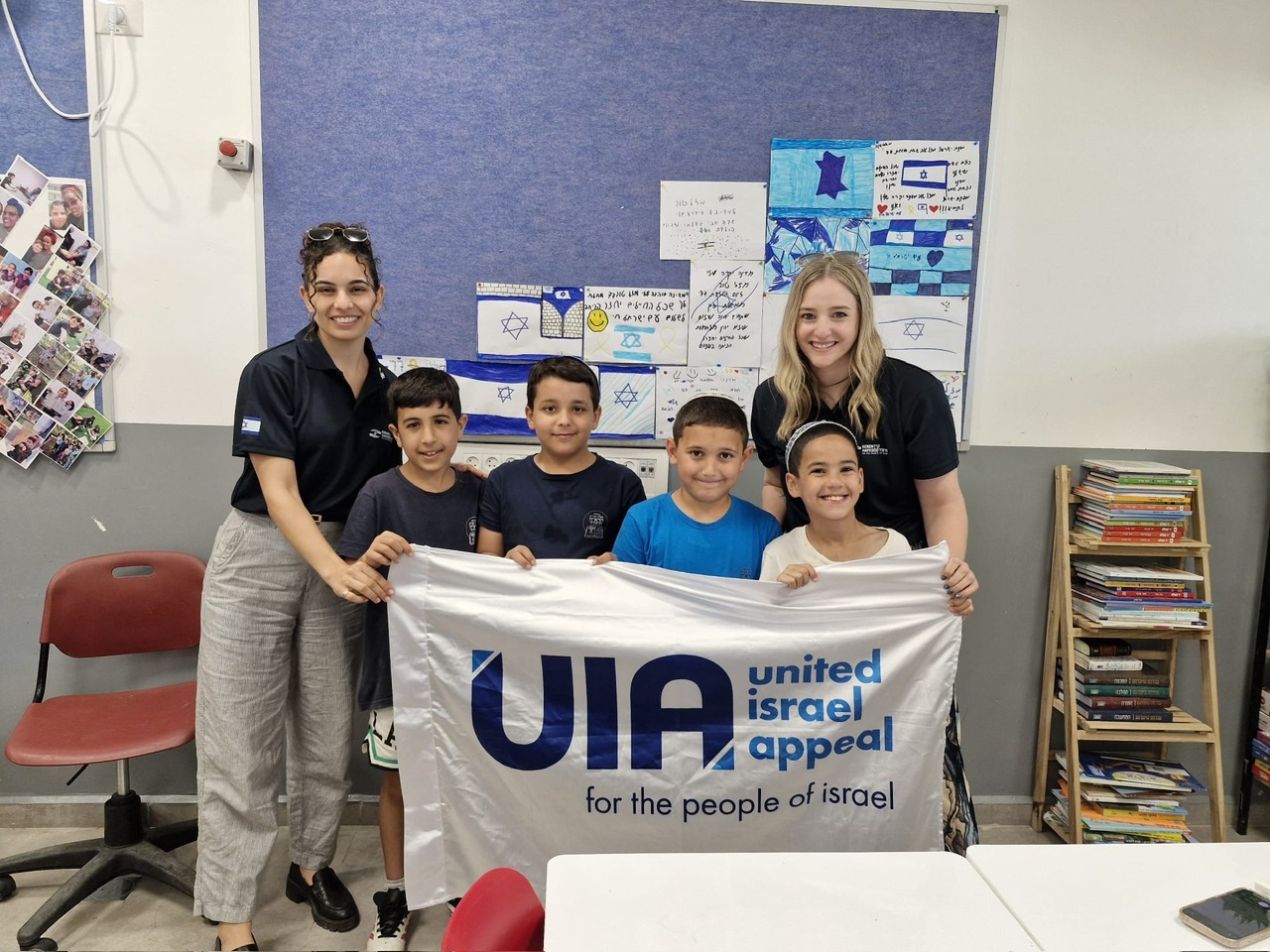
My flight into Israel was lively. Somewhere between a Jewish wedding (minus the food) and the waiting room at Monash Clayton. By that I mean, no one was in their assigned seats, everyone was walking around, about 15 different languages were being spoken, including lots of hand gesturing to complain about the lack of food and also to play Jewish geography. But then, as we began to fly over Israel, the entire flight went silent. Suddenly no one was talking. Even the babies stopped crying. The beautiful Colombian Christian woman next to me (flying to Israel to study the Old Testament) was clutching the cross at her neck and only broke the silence to marvel that, “the buildings are all sparkling” (solar panels on every roof). I’m not sure if the silence was out of fear – exactly one week prior a Houthi Missile had hit the grounds of Ben Gurion airport – or out of awe – that we were all finally finally arriving into Israel after so many cancelled flights and trips and travel warnings. As the wheels touched the ground and everyone began to cheer, clap and even sing, I let out a breath that just then I realised I’d been holding for over 18 months.
Three months previously, I had had Rachel Goldberg Polin’s words “hope his mandatory” tattooed on my right arm as a reminder to hold onto hope – tikvah. A hope that is as fundamental to my DNA as it was to those who held onto it for 2000 years in exile. Since then, I have been doing everything I can to hold onto that hope when the fear sets in and when the Australia I thought I knew has, at times, been unrecognisable. When I worry what it will be like to raise my kids as proud Jews in this climate. I’ve been trying my best to hold onto that hope but just then I realised, I’d also been holding my breath.
Arriving in Israel, it felt like the weight began to lift off my shoulders. Every day I felt lighter despite all the food and the Magen David necklaces that I continuously, and somewhat compulsively, had been adding around my neck.
With every day and every “only-in-Israel” experience, it felt easier to breathe as hope filled my lungs. Being in Jerusalem for Yom Yerushalyim and seeing the streets filled with hundreds of thousands of people waving their Israeli flags without fear, dancing in the Shuk with the unbreakable Israeli youth and being at the Kotel to witness tekes hashba’ah the swearing in ceremony where new IDF soldiers receive both their gun and their Tanach – it was clear that hope was and is alive in our homeland. Despite the trauma, the sirens and what anyone else in the world has to say about it’s ongoing existence. The hope is everywhere and apparently it’s contagious.
During this particular trip to Israel, the 8th trip I’ve booked but only the third that has gone ahead, I had the privilege of meeting some of the strongest women imaginable. Women who literally light up with purpose when they talk about their lives, their jobs, their families and their communities. Women who have not just crept right into my heart but have each helped me breathe easier while rebuilding my hope in their own unique way.
It was only on my second-to-last day, that I felt the breath catch in my throat and the hope falter in my chest. On the 600th day since October 7th I went to Kfar Aza and there I witnessed first hand the very worst of what humanity is capable of. I entered one of the most devastated of the Southern Kibbutzim guided by Mazi Alon – who is easily the strongest women I have ever met. A women who lost her husband and her home in 34 hours of hell. Who saw and heard every single thing that happened just outside her safe room window on that day including the murder of her bravest neighbours. And yet, in Mazi, the hope is still alive. Mazi still smiled as she guided me gently through the devastation. Making sure to not only tell the story of each person who lost their life there but also the story of how wonderful their kibbutz life was. She even showed me the kibbutz “dummy tree” where parents hang their children’s pacifiers as they transition out of babyhood. Abandoned for over 18 months and set against a background sprayed with bullets and spray-painted markings – even this sweet tradition was a reminder of the lives that were shattered here.
comments