



When the Academy Museum of Motion Pictures finally opened its doors in Los Angeles in 2021, a glaring omission sparked immediate outcry. Amid galleries celebrating Black pioneers, Latinx stars, and the history of the Oscars, the men who actually founded the studio system were invisible. It took a letter signed by over 300 Hollywood leaders to remind the institution that “an inclusion effort that excludes Jews is both steeped in and misunderstands antisemitism”.
Only in 2024 did the museum rectify this with its permanent exhibit, Hollywoodland, which details how a group of Eastern European Jewish immigrants, fleeing poverty and persecution, transformed a dusty California outpost into a global Dream Factory.
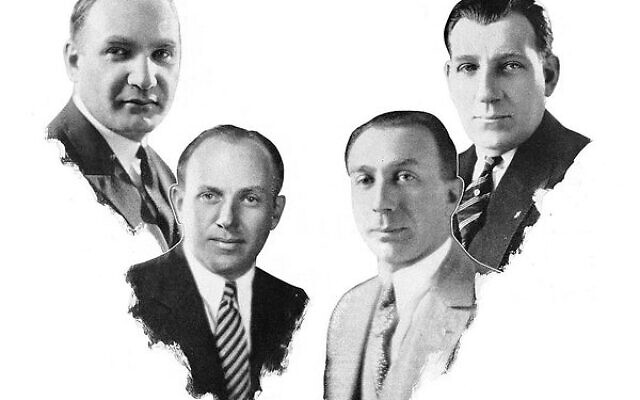
Photo: Wikimedia Commons.
For the Australian Jewish community, the debate around inclusivity in Hollywood is a reflection of the paradox of Jewish life in the Diaspora, as we navigate a global surge in antisemitism.
And, as Australian producer Michael Weisler, founder of Glow in the Dark, puts it, we’re at a point where we can no longer afford to be passive.
“We cannot rely on others to tell our stories; we have to take responsibility for our own image,” Weisler told The AJN, noting that for too long, the Jewish narrative has been shaped by those outside the community.
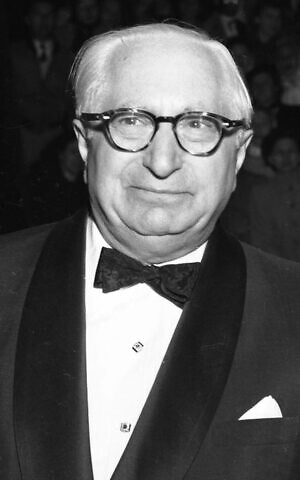
Photo: Wikimedia commons
The story of Hollywood is, at its roots, a Jewish immigration story. The founding moguls were almost universally Eastern European Jews. Adolph Zukor (Paramount), William Fox (Fox), Louis B. Mayer (MGM), and the Warner Brothers. These men arrived with names that simply weren’t acceptable in mainstream America. Schmuel Gelbfisz became Samuel Goldwyn, Lazar Meir became Louis B. Mayer, Wilhelm Fried Fuchs became William Fox.
As historian Neal Gabler argues in his book, An Empire of Their Own: How the Jews Invented Hollywood, the men were driven by a desperate hunger for assimilation. Barred from old-money industries like law, medicine and banking by rampant antisemitism, they turned to the low-class film business where there were no gatekeepers.
In doing so, they created their own version of the American dream.
“Hollywood is the product of dreams and fear, always fear,” Gabler observed, noting that the men built an industry that largely hid their own Jewishness to avoid backlash from a country that had not yet decided to welcome them.
This legacy of hiding in plain sight resonated in Australia, too. In the 1930s, the Australian film industry was finding its feet, often looking to Hollywood for inspiration. While the local scene was dominated by figures like Ken G. Hall and Frank Thring, Jewish talent was right there in the mix. Roy Rene (born Harry van der Sluice), a beloved Dutch-Jewish-Australian comedian, brought his “Mo” character to the screen in the 1934 film Strike Me Lucky.
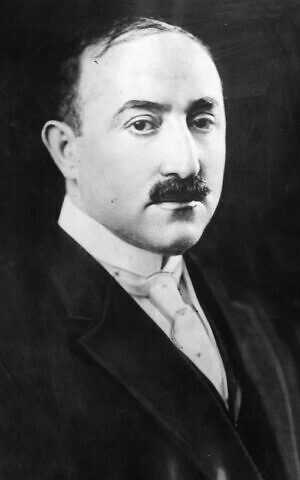
Photo: 20th Century Studios, Public Domain
But much like in the US, Jewish identity in early Australian cinema was often reduced to comic relief or caricatures, rarely taking centre stage in a serious way.
The breakthrough for Jewish visibility didn’t really happen until the late 1960s and 1970s. This new wave, led by Barbra Streisand, Mel Brooks and Woody Allen, moved Jewishness from the margins to the mainstream. Brooks used bold, slapstick satire to rob figures like Hitler of their terror, while Allen intellectualised the “neurotic Jew” archetype, making it a relatable symbol of modern urban life.
Australia had its own version of this cultural arrival. The Oz Film Revival eventually led to films that grappled with Jewish identity more directly, like Ben Lewin’s The Dunera Boys (1985) or the Academy Award-winning Shine (1996), which told the story of pianist David Helfgott. More recently, films like Tony Krawitz’s Jewboy (2005) and Cathy Randall’s Hey Hey It’s Esther Blueburger (2008) have explored the complexities of being Jewish in modern-day Australia.
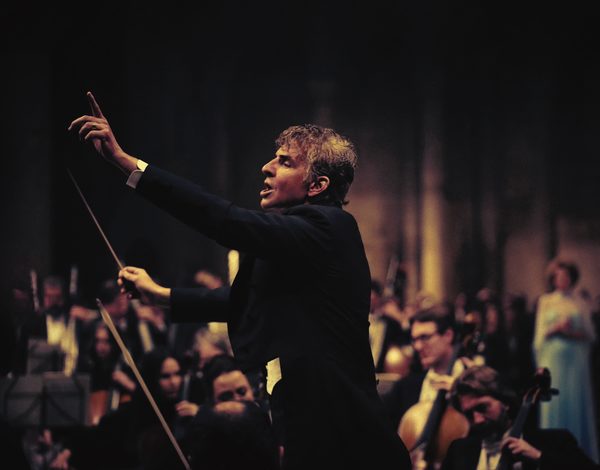
But still, there was “Jewface” to deal with. In 2023, the debate over authentic representation in popular culture reached a boiling point with the release of the trailer for Maestro. Bradley Cooper, a non-Jewish actor, portrayed Jewish legend Leonard Bernstein using a prosthetic nose. While Bernstein’s children defended the choice as an artistic commitment to resemblance, the controversy highlighted a painful double standard.
“Blackface and other forms of appropriation became forbidden years ago, but ‘Jewface’ … remains alive and well,” noted observers in the industry. Data suggests that nearly 60 per cent of Jewish leading roles go to non-Jewish actors. But why?
Even Australia’s own Esther Blueburger featured Danielle Catanzariti, who was raised Catholic, in the lead Jewish role.
As comedian Sarah Silverman puts it, if representation matters for every other minority group, it must finally matter for Jews as well.
Weisler believes the fix isn’t just about casting, but about the type of stories being told. He points to the “Will & Grace effect”, which significantly moved the needle on LGBTQ+ acceptance by making a character’s identity secondary to their humanity.
Indeed, the current climate has forced a deeper personal reckoning for many Jewish creatives. In the wake of the October 7 attacks, many expected a wave of solidarity from an industry they had supported for decades through countless social justice movements. Instead, they were met with a “troubling period of silence”.
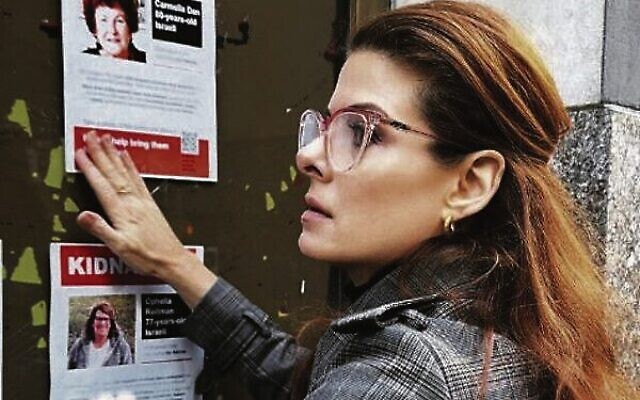
Debra Messing, who has become one of the most vocal advocates for the community, described feeling “completely abandoned” by her Hollywood peers. Messing said the global response awakened in her a “pride and a strength” that had been lying dormant. She isn’t alone. Julianna Margulies noted it was “shocking” how few industry members spoke out, remarking, “The last thing I thought in my life is that I would be the one actress speaking up for Jews.”
Today, the fear that Hollywood was supposedly built upon hasn’t exactly disappeared. It has just changed clothes. Modern Jewish stars find themselves on a brutal political tightrope.
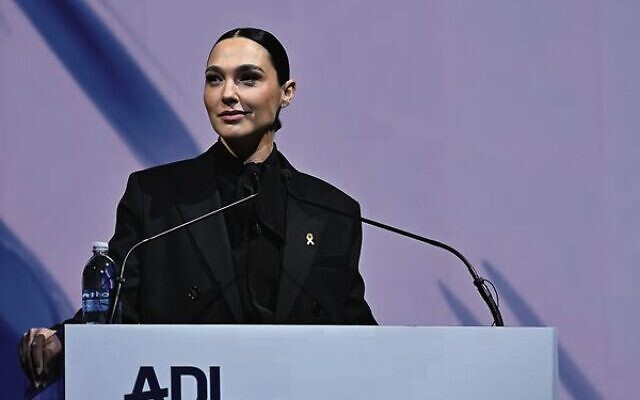
Photo: Bryan Bedder/Getty Images for Anti-Defamation League
Take the contrast between Gal Gadot and Natalie Portman. Israeli born and raised Gadot posted about the horrors of the October 7 attacks and was immediately met with a vicious backlash. Meanwhile, Portman, who is also Israeli-born but raised in the US, has taken a more nuanced and often critical path regarding the Israeli government, which has sparked outrage from the other side. Then you have stars like Timothée Chalamet or Scarlett Johansson, who seem to have decided that calculated silence is the only way to survive the algorithm. In an age where every social media post is eternal, saying nothing can feel like a survival strategy.
This pressure has created a new, somewhat tragic phenomenon. The “fair-weather” Jewish identity. We saw an example of this at the Emmy Awards when Jewish actor Hannah Einbinder ended her speech with a jarring mix of “Go Birds, f— ICE, and free Palestine”. To many, it felt like a public attempt to disassociate from her own people.
By echoing anti-Israel rhetoric, these figures often attempt to signal that they are one of the “good Jews”. It’s a cheap form of virtue signalling that basically says, “Don’t hate me, I’m on your side.”
And it’s not just a Hollywood problem. We’re feeling it right here in Australia, as films are being rejected by media outlets and even public broadcasters for being too inflammatory in the current climate.
This is exactly why Weisler says the community needs to step up.
“The feelings of abandonment were and are incredibly real and are certainly not isolated to Hollywood. It has been a sobering and profound clarity for many of us. Whether Hollywood changes structurally is still an open question, but we aren’t waiting around for the answer,” he tells The AJN.
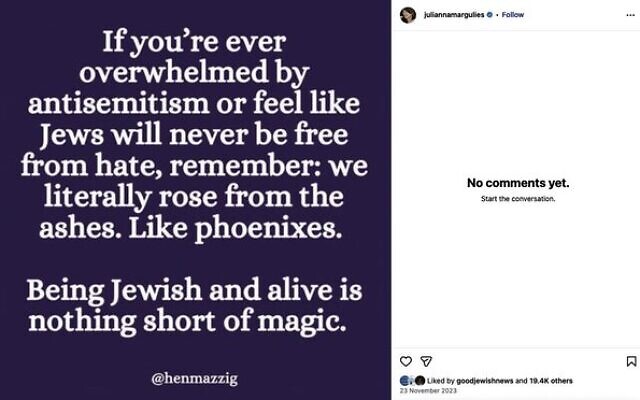
Photo: Instagram
Weisler explained that the Jewish community was stuck in a cycle of defence, spending lots of energy reacting and correcting misinformation rather than being authentically seen in the spaces where empathy is actually built – the screen. According to Weisler, we cannot argue our way into being understood, we need to “story-tell our way into the cultural fabric”.
“We realised that we cannot rely on others to tell our stories,” he said, explaining that the key is weaving Jewishness into the craft itself. Noah Wyle, who recently won an Emmy for his role in The Pitt, chose to make his character explicitly Jewish to honour his own “blood memory”. His heart-wrenching scene reciting the Shema prayer on the floor of a hospital room provided more visibility for authentic Jewish faith than a thousand press releases.
Indeed, the rising tide of antisemitism, marked by celebrities like Kanye West popularising tropes about “media control”, has led to a shift from defensiveness to proactivity.
And leading this charge is Weisler with Glow in the Dark, a global storytelling studio designed to embed authentic Jewish identity into mainstream media. The idea behind it is that if the old moguls built Hollywood to assimilate, the new generation needs to use it to be seen as proudly Jewish. It’s all about moving away from “reactive PR” and focusing on “narrative integration”. And it’s about looking at where the next generation lives, engages and interacts, and building stories there.
“We realised we couldn’t just argue our way into being understood; we had to story-tell our way into the cultural fabric,” Weisler explained. The Glow in the Dark model focuses on narrative integration rather than propaganda, reaching younger audiences through genres they already love, such as horror or gaming.
Glow in the Dark’s first video game project is launching on Roblox, a direct play for the demographic where cultural attitudes are currently being formed.
“Most of our modern mythology is now consumed on glowing screens,” Weisler pointed out. By embedding authentic Jewish characters into genres like horror or gaming, the aim is to reach audiences before their biases are set. For Weisler, this is a global mission with a local heart. He sees a massive role for the Australian community to lead the way in creating content that isn’t just about the Holocaust or the conflict, but about the joy and complexity of being Jewish today.
Weisler’s philosophy is built on the belief that reactive PR statements don’t shift culture, stories do. “In moments of cultural darkness or rising misunderstanding, we don’t just want to shout into the void; we want to provide the light. It’s about being a visible, radiant presence in the media we all share.”
Hollywood was built by people who were told they didn’t belong, and who used the power of film to prove that they did. A century later, as we face levels of antisemitism unseen for decades, the industry stands at a crossroads.
The question is no longer whether Jews “control” Hollywood, a trope that has been weaponised by antisemites for a century. The question is whether Hollywood will honour its creators by telling their stories with the same authenticity and chutzpah that Louis B. Mayer or the Warner brothers showed when they first stepped onto those California lots.
As Michael Weisler concludes: “Success is when our identity is no longer a ‘topic’ to be debated, but a humanity that is understood and celebrated by our fellow citizens everywhere”.
comments