



Royal Commission in the nation’s interest
'Our national security and the health of our democracy is at stake'
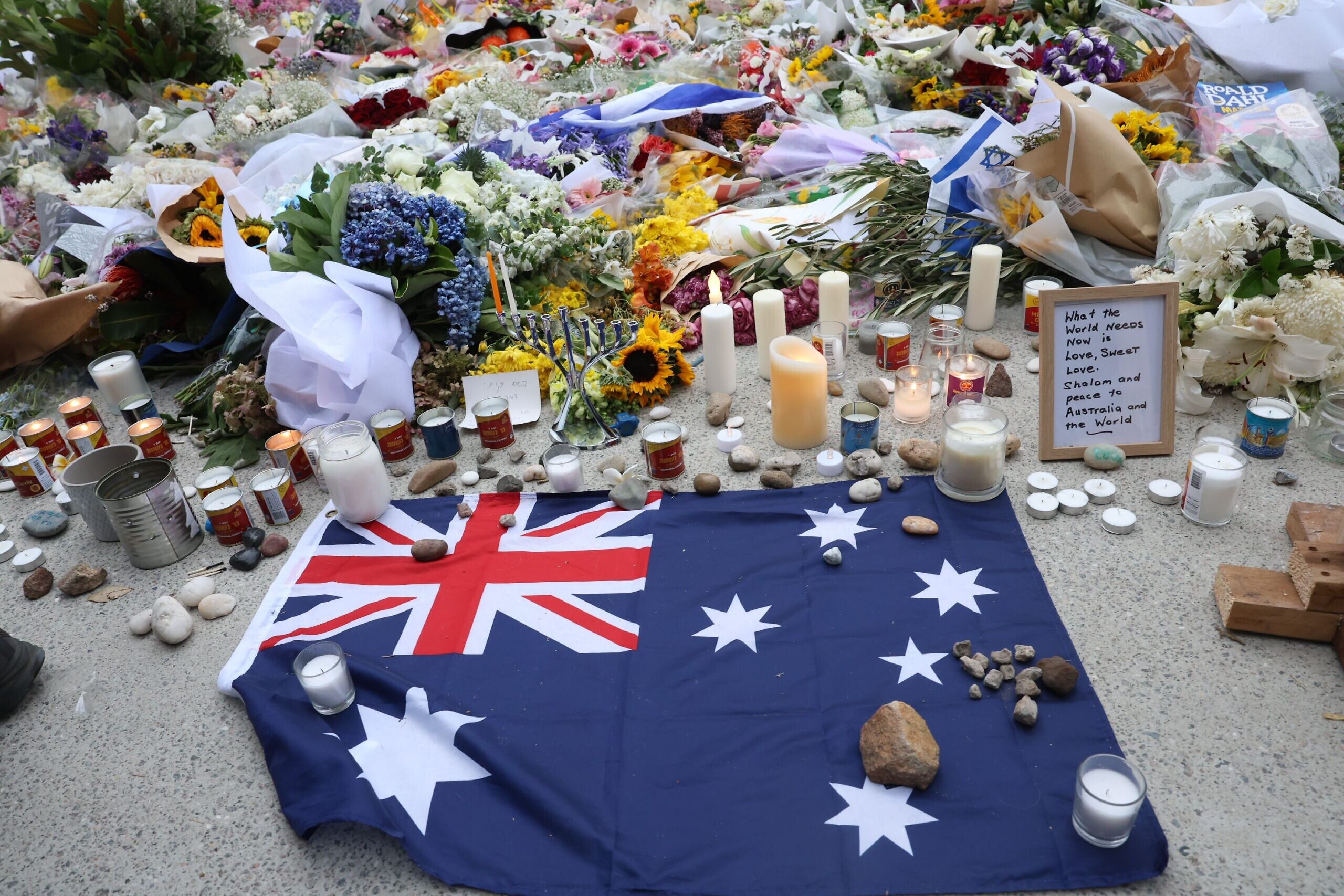
The arguments being made by the Government against establishing a Royal Commission into the Bondi atrocity is both politically damaging for them but also, and more importantly, contrary to the national security interest.
Between 1977 and 1984 there were two Royal Commissions and one Protective Security Review conducted by Justice Marsden Hope. During this time a number of issues had arisen about the fitness for purpose of our intelligence agencies in relation to the contemporary international challenges of the time but also in the shadow of the Hilton Bombing terrorist attack of 1978 in which three people died. The 1984 Hope Royal Commission was Commissioned by the Hawke Labor Government. These inquiries set our security agenda for the next two decades.
Since 9/11 and the rise of organisations such as Al Qaeda and Islamic State (IS), the world has changed dramatically. Internationally we face the unholy alignment of Russia, China, Iran and North Korea, presenting us with both a conventional threat and an unprecedented information warfare and social disruption campaign. The V-Dem Institute at the University of Gothenburg in Sweden has highlighted that in the last 10 years the world has gone from 48 per cent of the world’s population living under autocracies to 71 per cent today. Democracy is in retreat and it is not accidental.
What we witnessed in horror at Bondi has played out in multiple locations internationally. We need to deeply analyse this dynamic in our context. There is no question that there must be an urgent after action review for responders, agencies and Ministries. There is absolutely no reason that would be impeded by a Royal Commission. After the Hilton bombing the Army immediately got on with the newly assigned role in counter terrorism to the SAS from the inquiries, while they continued.
An Royal Commission firstly needs to analyse the exponential advance of technology, both in the hands of the threats and that are available to our agencies. The tools that give you the winning edge, in terms of being able to rapidly vector to a threat, are out there but they need upgraded infrastructure to deploy them and the funding for rapid acquisition. In some cases this process is under way but it is too slow due to having to phase it over a few budget cycles, and that is clearly unacceptable.
A Royal Commission needs to take this even further by unpacking the barriers to the seamless exchange of information across the nation, including the digitisation and networking of the means of tracking the movements, financial activity, weapons purchases, associations and acquisition of explosive device precursor materials. This technology can overcome labour intensive personnel challenges.
A Royal Commission can take a deeper look at the disaggregated nature of modern terrorism. References to the fact that no “terrorist cell” was detected in the relation to the Bondi perpetrators is to miss the point regarding contemporary terrorist tactics, techniques and procedures. Terrorist organisations are well aware of the need to guard against detection through their use of technical communications. They also know that personal communication must be tightly controlled using various methods. Most commonly the atrocity actor will be motivated and provided with technical advice in person to person communication. When Hamas conducted its large scale invasion of southern Israel it eschewed technical communication and relied on word of mouth in an extremely tight circle. More subtle means of detection are needed, particularly the clues that can be drawn from more proactive human intelligence, built into a fused system.
Individuals are groomed and prepared for terrorism through mind poisoning hate preaching and the malign influence of social media feeds. This part of the information warfare campaign is designed to generate division from within. The US Defence Advanced Research Projects Agency (DARPA) has three projects in train aimed at this problem. These are Influence Campaign Awareness and Sensemaking (INCAS), Modelling Influence Pathways (MIP) and the Deepfake Defence Tech Ready for Commercialisation Transition Initiative dealing with what AI tools offer us in fighting back against deepfake and AI material. Australia could seek to collaborate on these projects through the AUKUS Pillar II platform.
This is the kind of “outside the square” analysis that can be done in a Royal Commission. We could ask a Royal Commission to examine education standards across the Commonwealth to address critical thinking and source evaluation as well as the best way to address the evil of “othering”.
A NSW inquiry will not have the legal authority to compel Commonwealth personnel or agencies to cooperate with it. The Commonwealth may permit cooperation, but agencies are likely to withhold certain information. They may cite security issues, but a Commonwealth Royal Commission can compel this level of cooperation and conduct secure sessions, delivering classified recommendations. A Royal Commission also has the flexibility to issue interim reports on specific issues and recommendations as it goes, and offers the necessary legal protection of witnesses.
In short my advice to the government is, the excuses aren’t valid, by all means get on with both the immediate analysis but also establish a broader contextual Royal Commission. Our national security and the health of our democracy is at stake.
Mike Kelly is a former ADF soldier, Labor government minister and the co-convenor of Labor Friends of Israel.
This op-ed also appeared in The Australian. It has been republished with the author’s permission.
comments