



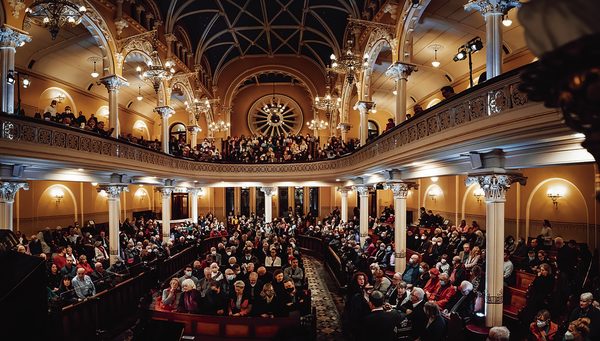
It was mid-1967 and Israel was threatened with extermination. As the world stood by, Jews around the world rediscovered their connections to each other. In Australia, something extraordinary happened.
At a community rally at the Sidney Myer Music Bowl in Melbourne, two rabbis spoke to the anxious crowd. Not in itself unusual, but it was who they were and what they represented that carried an unspoken message.
Orthodox Rabbi Chaim Gutnick, the president of the Rabbinical Council of Victoria and longstanding rabbi at Elwood Hebrew Congregation, shared the platform with Rabbi Dr Herman Sanger, leader of the Reform movement in Victoria.
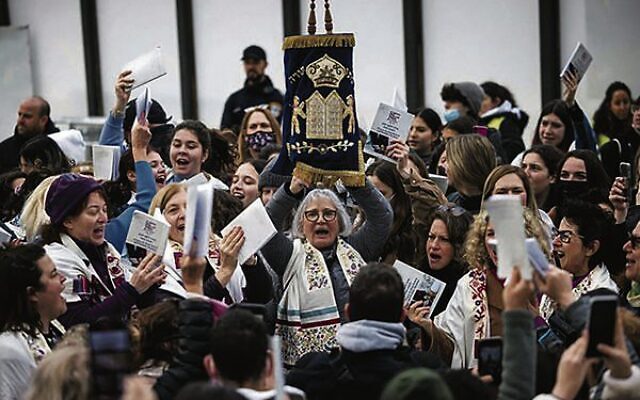
It hadn’t happened before, and it would be a long time before anything like it happened again. But everyone understood the significance of an Orthodox and a Reform rabbi standing together as the war clouds gathered and Israel stood alone. We were all Israel.
Flash forward to last year when Chanukah by the Sea became a massacre. The gunmen didn’t ask anyone which shule they belonged to.
Orthodox and Progressive Judaism in Australia can be described as two silos, with the Charedi world further off again. But three years of attacks, from October 7 to Bondi, have pushed them into the same rooms more often. Whether that has changed how they see each other is a harder question.
“It was true 10 years ago”
Rabbi Moshe Kahn, president of the Rabbinical Council of Victoria, thinks the change has been overstated, at least between the movements.
“We’re more unified,” he said, but he doesn’t accept that relations between Orthodox and Progressive Jews have shifted much. The old picture of mutual standoffishness was overdrawn, in his view. The two streams have always stood together at an Israel rally or in a crisis, and they don’t share prayer services. “That is true today, and it was true 10 years ago.”
The history bears him out, up to a point. Rabbi Herman Sanger, who led Temple Beth Israel for nearly four decades from 1936, often found Melbourne’s Orthodox rabbinate hostile. According to Rabbi John Levi’s biography of him, relations improved only when rabbis Sholem and Chaim Gutnick called for “a sense of shared Jewish responsibility”.
Nor does Kahn think Israel is the main glue. “I would say more the local rise of antisemitism.”
Robert Gregory, CEO of the right-leaning Australian Jewish Association, is blunter. He sees “fundamental differences between traditional Judaism and the Progressive movement that I cannot see being bridged”.
“On the surface”
Rabbi Allison Conyer, chair of the Assembly of Rabbis and Cantors of Australia, New Zealand and Asia, the Progressive rabbinic body, answered the question of unity with a rider: “An unequivocal yes … on the surface.”
On the surface, she says, the national and state bodies are trying harder to be inclusive, and Jews are turning up together in a way they didn’t before. Her synagogue has had more Orthodox visitors than ever, for a gathering after Bondi and for a political debate.
The head of Progressive Judaism Victoria has spoken at an Orthodox shule. “We are seeing things that never ever would have happened before October 7,” she said.
Underneath, older grievances remain. Communal events still default to Orthodox synagogues, which some non-Orthodox Jews won’t enter, and Progressive rabbis and cantors rarely appear on the bimah.
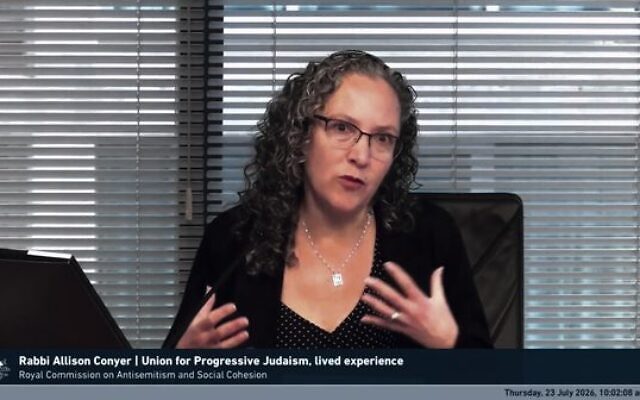
Photo: Screenshot
Progressive involvement in planning communal commemorations rose early on, Rabbi Conyer said, and has started to drop again.
“In terms of who represents our community, who is being consulted? There’s a whole other branch of the community,” she said.
“We’re slowly getting back in there, and there’s less resistance to it, and there’s more openness to it. But it’s still not quite where we want to go.”
Personal relations are warmer than the official distance suggests. Rabbi Conyer can ring Orthodox colleagues and finds them receptive, though she isn’t sure it always runs both ways.
One Orthodox rabbi has made a point of including Progressives in interfaith work; another has sent her couples whom the Orthodox can’t marry. Institutionally, though, the Orthodox Beth Din still has nothing to do with her movement.
Set beside Rabbi Kahn’s account, hers suggests the change looks bigger from the side that used to be left off the invitation list.
Not every Orthodox group sits inside the communal tent. Chabad isn’t a member of the Jewish Community Council of Victoria, but its president, Philip Zajac, calls the working relationship “impeccable” and said the council works hard to keep Chabad fully engaged.
Sydney
Rabbi Shua Solomon, president of the Rabbinical Council of NSW, spoke to The AJN in a personal capacity.
October 7 and December 14, he said, were “very painful reminders that regardless of our religious observance, political outlooks, communal affiliations, we share a common destiny”. Bondi brought that home to him “just down the road”, although he thinks Jews right across Australia felt it was happening in their backyard.
Much of his own work since has been behind the scenes in communal recovery, and he won’t name names. But he says organisations that once saw themselves as competitors, sometimes with “a certain level of animosity” between them, now “work very much in tandem” and talk regularly.
The question has shifted, he said, from what’s best for one organisation to “what’s best for the Jewish community”. Most people are comfortable with that, and many say the same thing: “Isn’t it such a shame that it took tragedy to bring us to this situation?”
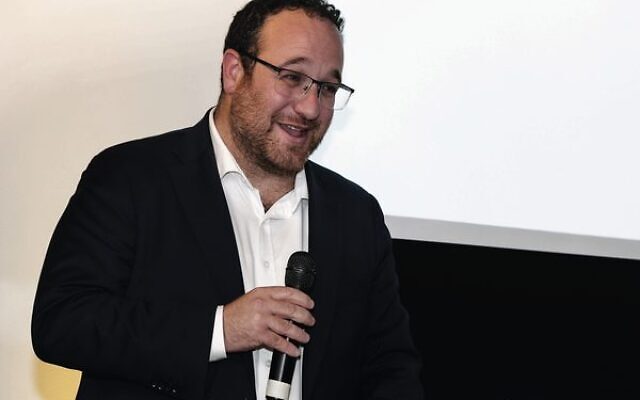
On relations between the movements, Rabbi Solomon draws the line where Rabbi Kahn does. The “theological and halachic differences” between the movements remain, he said, “and I don’t think they should be ignored”.
Within them “there are certain limitations”. Antisemitism, support for Israel, welfare and care for people living with trauma are another matter: “All of those things are things that we share in common, and that we can work together on.”
Michele Goldman, CEO of the NSW Jewish Board of Deputies, left the question of relations between the movements to the rabbis. But she said the past three years had reinforced that “whatever our differences in practice, belief or tradition, we are one people, with a shared history, a shared future and responsibilities to one another”. She points to the principle of kol Yisrael arevim zeh bazeh, that all Jews are responsible for one another. “We can disagree and still show up for one another.”
Families
Rabbi Conyer also sees a slower trend that has little to do with October 7. More families now straddle both movements through marriage, and their members go wherever their people are.
“It’s not about loyalty to a movement,” she said, and for many it isn’t about religious practice either. The old judgementalism “has been softened”, she noted. “It’s still there, but it’s been softened.”
When the threat recedes
Rabbi Kahn thinks the closeness will last, with a caveat. “A lot of it is also dependent on personalities. We’re all bigger than any individual.”
Rabbi Solomon has no illusions about the arguments stopping. “Jews have been disagreeing with each other for thousands of years, and that certainly isn’t going to change any time soon,” he said.
The question is “whether we can learn from this experience to disagree differently”, and whether people remember what was achieved when old differences fell away, “even while maintaining our own independence, our own views and backgrounds”.
Rabbi Solomon wants communal leaders to go further. Most of the public conversation, he said, has been about antisemitism, anti-Zionism, security and trauma. Nobody is asking enough about “the vision for the future that we present”, to Jews and the wider Australian community, while the community is closer than it has been in years.
Rabbi Conyer was the only person I interviewed to say plainly, “I don’t know.”
Antisemitism, she said, has been “the best unifier for us”. It doesn’t distinguish between ways of practising Judaism. “So what happens when we don’t have a common threat?” she asked. “Are we going to then have the emotional bandwidth to go back to the fribbles of, you don’t do this right, or we’re better? I don’t know. I’m hoping not.”
She believes that Jews can focus on pride in who they are “rather than they’re out to get us”, noting: “Underneath all of it, we are am echad. We’re one people. We’re one community, and when push comes to shove, that transcends everything.”
- Feature
- Features
- Orthodox Judaism
- Progressive Judaism
- Rabbi Chaim Gutnick
- Rabbinical Council of Victoria (RCV)
- Elwood Hebrew Congregation
- Rabbi Dr Herman Sanger
- Reform movement
- Rabbi Moshe Kahn
- Robert Gregory
- Australian Jewish Association
- Rabbi Herman Sanger
- Rabbi Allison Conyer
- Rabbis and Cantors of Australia
- Rabbi Shua Solomon
- Rabbinical Council of NSW
- Michele Goldman
- NSW Jewish Board of Deputies (JBOD)
- Rabbi Conyer
comments