



Sandstone barons had power to act
University leaders had the powers to act against campus antisemitism but too often chose not to use them.
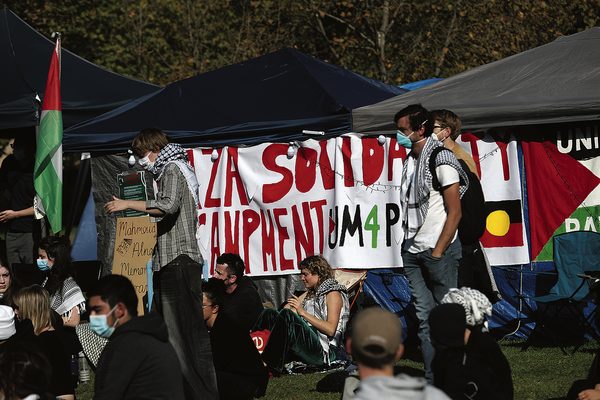
In their evidence to the Royal Commission on Antisemitism and Social Cohesion last week, we heard how the ruling barons at our sandstone universities lack understanding of their basic governance powers and responsibilities to discourage racist antisemitic behaviour within their academic castles.
University of Melbourne interim vice-chancellor Glyn Davis informed us that his university aimed at “every point” to end the campus encampment protests without violence. But he suggested the university’s hands were tied. “The university does not have a police service, doesn’t have its own enforcement agency. Security guards who work at the university are not empowered to move people on. They’re certainly not empowered to arrest people who are breaking the law, and only the Victorian police can decide that something is trespass and act on it, not the university,” he said.
He was correct to say that the university doesn’t have a police service. But, nevertheless, Victoria Police may allocate resources upon request by arrangement with the university and must attend at serious crimes, such as rape or bodily harm. Moreover, a university is the owner occupier of its campus. It has powers on its premises to ensure compliance with its policies and codes. Security working on site, as used by many universities, have the responsibilities to implement compliance, to the extent of the powers extended to them by the university.
Private security can have the same powers of arrest of any private citizen under Crimes Acts, the same as in a shopping centre. If security finds a person committing an offence such as vandalism or trespass, it has arrest powers to the extent allowed by the university. That power exists even if a university doesn’t support a guard acting in such a manner.
Concerning actions that are not initially offences, a person who had conditional permission to be on campus can later find it revoked automatically on account of their subsequent conduct, their offensive behaviour, against conditions on which permission was granted. When asked to leave the premises, failure to comply within a reasonable timeframe constitutes a trespass offence.
comments