



Scientists’ Tay-Sachs find
A RECENTLY released study on Tay-Sachs disease has revealed the risk among Jews of being a carrier is not linked to geographic ancestry, contradicting previously assumed knowledge.
A RECENTLY released study on Tay-Sachs disease has revealed the risk among Jews of being a carrier is not linked to geographic ancestry, contradicting previously assumed knowledge.
Genetic researchers had thought the risk of carrying or contracting the illness was highest among Jews whose families hailed from Poland, Hungary, Lithuania or surrounds.
But the new analysis, conducted over 13 years by researchers at Royal North Shore Hospital and the University of Sydney’s department of obstetrics and gynaecology, has found that all Ashkenazi Jews faced a similar risk of carrying the Tay-Sachs gene.
Professor Leslie Burnett, of Royal North Shore Hospital, said the findings were a great surprise, both to his team and to the genetic world in general.
“We had assumed that the geographic location of one’s ancestors would affect one’s risk,” he said. “But what we have found is that simply being an Ashkenazi Jew is sufficient information to know one’s risk.”
Professor Burnett said many Jews were reluctant to be tested, assuming they were not at risk because their ancestors were not from a particular part of Europe.
“Our findings now make it very clear,” he said. “We are all part of one community, and over the centuries, our genes have become blended across national borders.
“This means that the only question one needs to ask oneself is whether one is Jewish, in which case it is important to participate in the community genetics screening program and to be tested.”
Around one in 27 healthy Ashkenazi adults is a carrier of Tay-Sachs disease. If two carriers have a child, there is a 25 per cent chance that the child will be born with the disease, which causes severe disability and death by the age of three or four.
Inquiries: (02) 9328 6077.
GARETH NARUNSKY
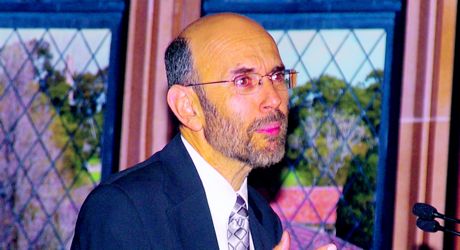
Professor Leslie Burnett
comments