



Serving a community rising from the ashes
DESPITE the best efforts of both Nazism and communism, Polish Jewry not only survived the 20th century but today boasts a thriving and growing community.
DESPITE the best efforts of both Nazism and communism, Polish Jewry not only survived the 20th century but today boasts a thriving and growing community.
That was the message brought to Australia this week by Maciej Pawlak, the first Polish Jew since the Holocaust to become a rabbi.
Quite an achievement for someone who didn’t even know he was Jewish until he was 15 years old.
But then, Rabbi Pawlak’s upbringing was no different from thousands of Polish children whose parents and grandparents hid their heritage until the collapse of communism.
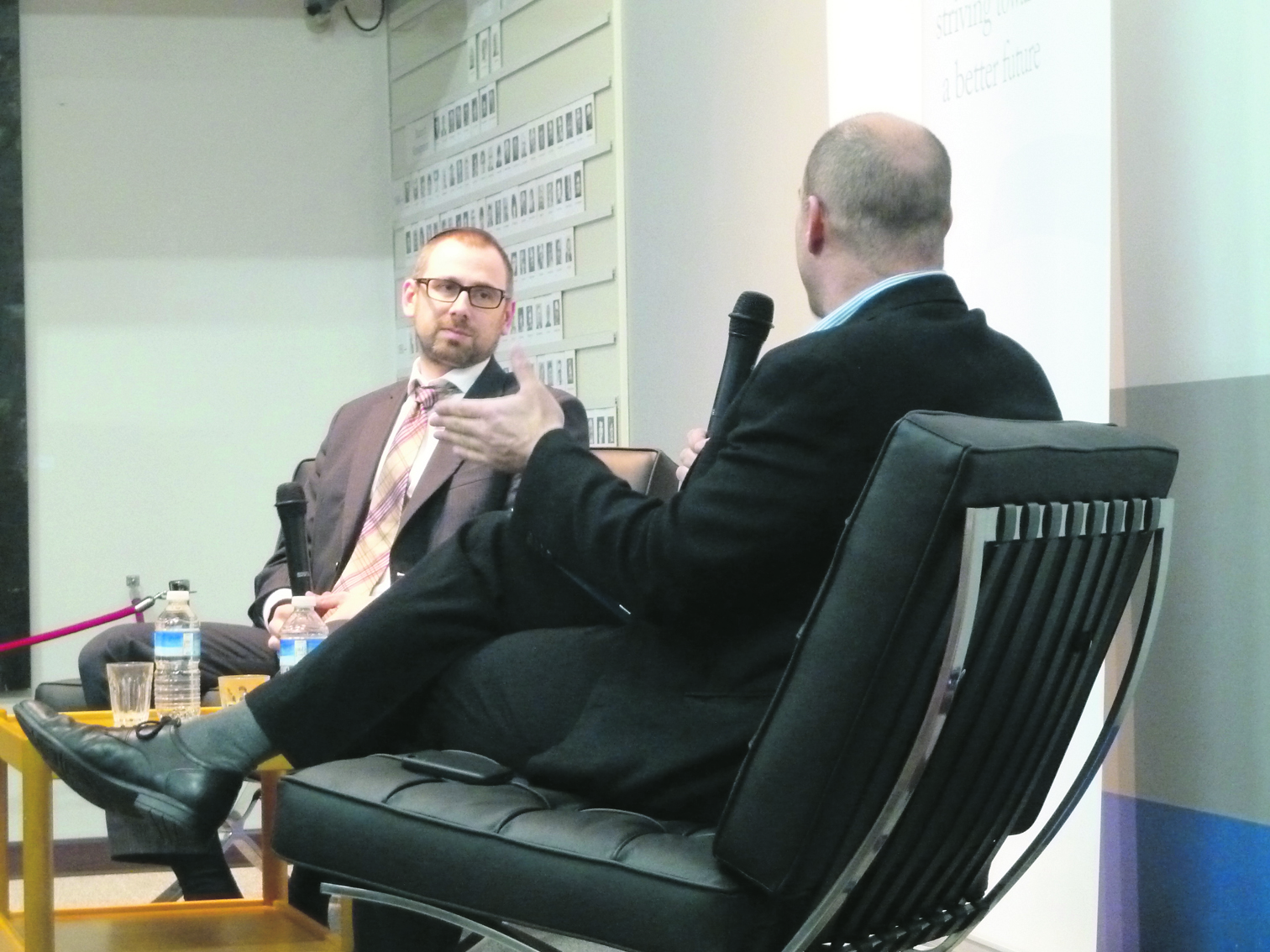
“When I was a kid, we didn’t really have any religion at home,” Rabbi Pawlak told an 100-strong audience at Melbourne’s Jewish Holocaust Centre earlier this month.
“The history of our family was never discussed before 1989 because it was much more difficult to be Jewish and talk about those things.”
Some families went even further to conceal their identities, the rabbi added, noting “Many of my Jewish friends’ parents had sent them to church and had them baptised.”
After 1989, however, some families, like Rabbi Pawlak’s, finally felt able to tell their children or grandchildren the truth. Other youngsters discovered their identity through research or by accident.
Rabbi Pawlak recalled one individual in his 50s who received a call from the Israeli embassy. “They said the Israeli government was giving a Righteous Gentile award to a family. ‘Why are you telling me?’ he asked. They said ‘They saved your parents, they were Jewish.’ This one phone call changed his life.”
Rabbi Pawlak’s own interest in Judaism developed after he was sent to a Jewish summer camp. “It wasn’t all of a sudden I decided to become observant and follow a religious life,” he said. “What happened was I made friends and I would go back to the camp … and I started coming with questions.”
Those questions eventually led him to Israel and to yeshivah, and to today where he is one of four rabbis serving Warsaw’s Orthodox community and director of the city’s Lauder-Morasha School. Launched in 1994 with seven students in kinder, 18 years on the school boasts over 200 students from across the religious spectrum, as well as a number of non-Jewish students.
“They come because of the high level of secular education,” said Rabbi Pawlak. “There are also those who are grandchildren or great-grandchildren of Righteous Gentiles, and others whose families lived together with Jewish families before or after war and they feel it would be nice if their grandchildren could have something similar growing up.”
But despite the vibrancy of the community, which numbers several thousand, Rabbi Pawlak says that outside of Poland, the country “is seen mostly as a place of destruction and the Holocaust. People can’t believe Jewish life can exist there, and that there are Jews there who are not planning to leave.”
Indeed, as well as the Orthodox community in Warsaw, Chabad and Progressive Judaism also have a presence in the city, while further afield, there are communities in Krakow, Lublin, Breslau and Gdansk.
As for a perception that old hatreds still exist, Rabbi Pawlak is quick to dispel that myth, noting that his school is involved in a number of joint projects with other schools and that the community enjoys very positive relations with the authorities.
Rabbi Pawlak, who was brought to Melbourne by the Australian Society of Polish Jews and their Descendants, also visited Caulfield Hebrew Congregation, Mizrachi and the Caulfield Beth Hamedrash, as well as Bialik, Mount Scopus and Leibler Yavneh colleges.
AJN STAFF
comments