



Seventy years on: a war we can’t forget
I was inspired to write this article after reading extracts from a new book by British historian, Max Hastings, Churchill as Warlord, timed to coincide with the 70th anniversary of the outbreak of World War II.
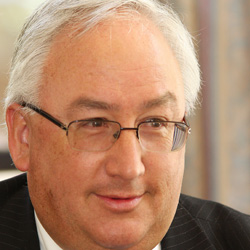
MICHAEL DANBY
 I was inspired to write this article after reading extracts from a new book by British historian, Max Hastings, Churchill as Warlord, timed to coincide with the 70th anniversary of the outbreak of World War II.
It is fashionable these days, particularly in Australia, to downplay Winston Churchill’s leadership. However, Hastings produces even more evidence that it was only Churchill’s determination that “we shall never surrender” which kept Britain in the war when France surrendered and the Nazi war machine seemed invincible.
If Britain had done the “sensible” thing and negotiated terms with Hitler, the Nazis would have been left as the unchallenged masters of Europe.
There would have been no second front as the Americans would have had no proximate base to bomb or invade Europe.
Now we know the accepted wisdom that it was inevitable that Britain would “fight them on the beaches”, because¬† Britain’s very existence was in play.
Lord Halifax secretly negotiated with the Italian Ambassador Count Giuseppe Bastianini for peace with Adolf Hitler. If even a hint of surrender talks had emerged, demoralisation of one of only countries defying the Swastika could have destroyed Britain resistance.
For days Churchill manoeuvred against Lord Halifax and Neville Chamberlain. World history teetered. Finally seizing the day, Churchill dramatically demanded total resistance at a full cabinet meeting.
He ensured Britain fought on andt he fate of the world turned.
Churchill had many failings, but he cannot be denied his place in history as the man who stood up to Hitler when all seemed lost.
The events of World War II are now almost, but not quite, beyond the reach of human memory. For most Australians, World War II is now a rather fuzzy amalgam of Kokoda and Tobruk, Pearl Harbor and the Bridge on the River Kwai, photos of grandads in uniform and grandmothers’ stories of rationing and American sailors in Melbourne.
Few remember that more than 300 Australian ships were sunk along the East Coast. The war is remembered as “the good war” — a war that everybody supported, a war in which right and wrong were clearly demarcated, and a war which “we” very satisfyingly won.
For the  Australian Jewish community, of course, World War II evokes darker memories.
There are few Australian Jewish families whose history and memory are not deeply scarred by the terrible events of those years. It is just over 70 years since my father arrived in Melbourne as a young refugee, leaving behind in Germany his parents, who were to die in Auschwitz four years later.
The association between the war and the Holocaust is so deeply ingrained among Australian Jews that it is hard to recall that the rest of the world does not always see it that way.
There are few people left now with adult memories of the war. I’m privileged to know some of them. Some are veterans of the Australian armed forces, some are veterans of other battlefields who came to Australia after the war, and some are civilians who survived the horrors of the Holocaust.
I could mention many names here, but a few will do.
The first is Alan “Kanga” Moore, who as a young Melbourne reservist was thrown into the battle at Kokoda, which stopped the Japanese advance down to Port Moresby and quite possibly saved Australia from invasion.
Ben Sherr, who just passed away last week, initially pressed with other Victorians of the legendary 39th Militia Battalion up to Port Moresby to halt the Japanese South Sea Regiment. Mr Sherr, a skilled driver, was seconded to drive ammunition up the track. Machine gunned, suffering from malaria and berri berri, with six years of service overseas, he was still modest even 60 years and was reticent to put himself on the same level as the 300 survivors of the 39th¬† battalion — “the men who saved Australia”.
Another is Ios Teper, a Jew from Odessa who served through the war in the Red Army, from Stalingrad to Berlin, and who still lives independently in St Kilda. Mr Teper is one of the most highly-decorated war veterans in Australia.
Then there legendary couple Abram and Cesia Goldberg, survivors of Auschwitz, who continue to work for the Jewish community well into their 80s.
I mention them because they symbolise three different aspects of the war.
On one level it was a military contest between the armies of the western allies and the armies of Germany and Japan — larger in scale than any previous war, but not very different in kind. Nearly a million Australians served in uniform in that war, of whom 27,000 were killed in action, on battlefields as far apart as Libya and Borneo; at sea; and in the skies over Germany. Proportionate to our population, our sacrifice matched that of the other western allies.
But we need to remember that it was the war on the eastern front — the titanic struggle between the rival totalitarian empires of Hitler and Josef Stalin — that really decided the outcome of the war.
Our victory was bought with the blood of the 20 million dead in the Soviet Union. Our victory was also at the expense of the Poles and other eastern European peoples who, in 1945, found themselves trapped inside an empire from which they were not to escape for more than 40 years.
Viewed from Warsaw or Prague, the issue of World War II as the paradigm of just war, is not as clear as it was for Australians, Soviets or Americans.
At the same time, World War II was a war against civilians on a scale never before seen in the history of warfare.
The Nazi regime used the cover of the war to murder six million Jews, part of the 11 million civilians deliberately butchered.
Three million Soviet prisoners of war died in German hands. Stalin deported and executed millions of his own people. At least 30 million Chinese died during the long struggle with Japan. Allied bombers killed 600,000 German civilians and 500,000 Japanese civilians, including the 250,000 killed by atomic bombs.
No nation emerged from World War II with clean hands, but many individuals did.
We should remember this week the 22,000 non-Jewish men and women designated as Righteous Among the Nations for their efforts to aid the Jewish people in their ordeal. Many of these paid with their lives.
Amid all the horror, World War II offers some of the greatest examples of courage and heroism, sacrifice and altruism, leadership and vision, ever recorded in human history.
Whatever the mistakes of the Allies during and after the war — and they were many — no amount of historical revisionism can obscure the fact that our generation owes its freedom and prosperity to the sacrifices made by so many people during that war. A just war. Lest we forget.
Michael Danby is the Federal Member for Melbourne Ports, and is Chair of the Parliamentary Sub-committee on Foreign Affairs.
comments