



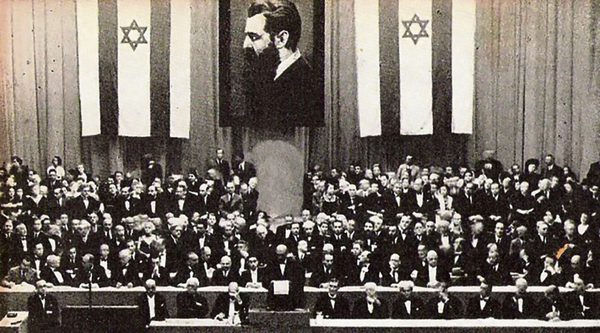
Australian Jewry has delivered its strongest electoral engagement in the World Zionist Congress in history, with a record 6702 valid votes determining Australia’s 13 delegates to the 39th World Zionist Congress.
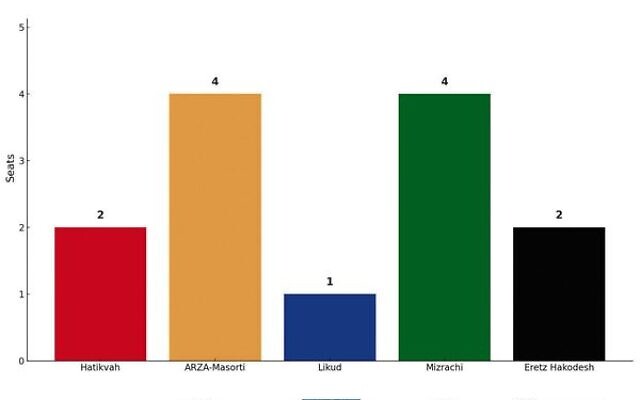
The ultra-Orthodox newcomer Eretz Hakodesh claimed two mandates after forcing the first direct election in over 15 years, reshaping the traditional balance of Australian Zionist representation.
ARZA-Masorti, representing the non-Orthodox streams, and the Orthodox Mizrachi groups each secured four mandates, while the left leaning Hatikvah Australia won two seats and the centre wing Likud retained one.
“These elections are far more than a procedural formality,” said Zionist Federation of Australia CEO Alon Cassuto.
“They are a powerful expression of the Australian Jewish community’s enduring connection to the global Zionist movement.”
The election was forced by Eretz Hakodesh, which refused to accept the consensus-based allocation that had operated previously.
“I think the reason why Australian Jews know nothing about the ZFA and have very little relationship with it is because you never ask them their opinion,” said Rabbi Alexander Tsykin, one of Eretz Hakodesh’s successful candidates.
“When the World Zionist Organisation says that it’s a democratic organisation, we should take that statement seriously.”
Record turnout sparks demographic questions
The turnout of 7832 registered voters represented unprecedented engagement, though almost a thousand failed to complete the process by paying the required five-dollar fee.
Eretz Hakodesh’s share of the vote has raised questions about Orthodox demographic strength in Australia.
Mizrachi’s Danny Lamm said, “What that suggests is 15 per cent of the Jewish population is ultra-Orthodox. That’s bloody high,” he said.

“It’s definitely not true. So where did their votes come from? They got their votes from a range of smaller congregations and people that joined them.”
“You don’t think there are 15 per cent of Australian Jews [who are Charedi] and neither do I,” Rabbi Tsykin acknowledged.
“That means that our voters were really enthusiastic. They wanted their voice to be heard.”
The Australian results mirror global trends. In the United States, Orthodox and ultra-Orthodox voters secured 81 of America’s 152 World Zionist Congress seats after casting more than 100,000 of a record 230,257 votes.
The largest single slate in the US was the Reform movement’s “Vote Reform”, which received just under 48,000 votes and around 32 mandates, the most seats for a single faction.
Established movements express concern
Ayal Marek from ARZA-Masorti expressed disappointment at his movement’s relative decline from its previous position.
“We’ve definitely gone backwards a bit, unfortunately,” he said.
“The main factor that changed here is that there is a new entrant, Eretz Hakodesh.”
Marek had argued against holding elections at all, preferring to maintain unity during rising antisemitism and ongoing war in Israel.
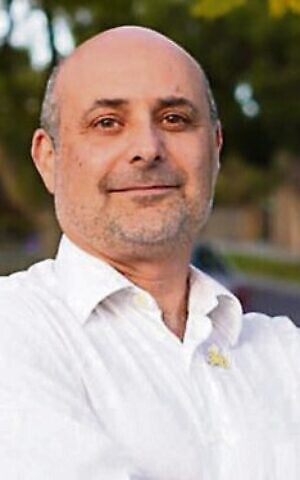
“I’ve been trying for the past two years to call for more unity in the community,” he said. “We cannot afford as a community to have internal divisions.
“Eretz Hakodesh forced an election on us, so we had to follow suit.”
Marek expressed particular concern about Eretz Hakodesh’s opposition to progressive Jewish movements.
“That’s quite disturbing. I think it’s out of line for them to try and cancel us.”
Despite competitive campaigning, Marek hoped for future cooperation.
“We have different values and that’s part of the beauty of living in a diverse and pluralistic community.”
Likud maintains single mandate
Alex Goodman from Friends of Likud expressed satisfaction at retaining the party’s single mandate, though acknowledged the challenges facing politically oriented rather than communal movements.
“I would have liked to have got a second mandate,” he said.
Goodman noted that Likud faced structural disadvantages compared to synagogue-based movements.
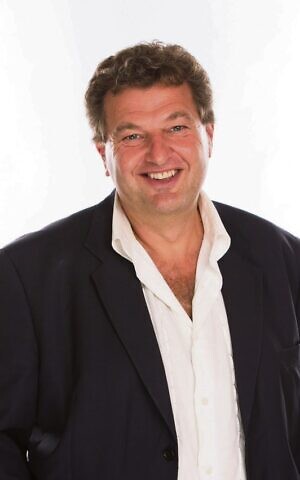
“Mizrachi obviously has shules and Bnei Akiva. The Reform have temples as well as schools. So there’s a big difference in the way that we’re set up.”
At the World Zionist Congress, Goodman said he would advocate for increased Israeli support for Australian Jewry.
“More support in the Diaspora, particularly during these times of heightened antisemitism,” he said.
“I’d love to see more shlichim come to Australia, whether they’re emissaries or teachers, to get more of an Israel experience in Australia.”
Low turnout raises representation questions
Goodman questioned whether the mandate distribution reflected genuine community demographics.
“The way the mandates turned out, I think, is questionable in terms of how the Jewish community is split up, because it’s really about how much of an activist you are and how you run your campaign, how big your schools and shules are,” he said.
He argued that Australian Jewry remained fundamentally traditional despite progressive electoral success.
“I think that we’re still very much a post-Holocaust community, a very traditional and Orthodox-facing community, and that’s a big difference between us and the American Jewish community, which is around fifth generation, and we’re still first, second or third generation.”
Goodman supported the shift to direct elections despite the challenges for political movements like Likud.
“Elections are a good thing. It gives everyone an opportunity to get more mandates than maybe they previously had. It allows new players to come in,” he said.
Reflecting on post-October 7 community engagement, Goodman noted both opportunities and challenges ahead.
“I think there was definitely a peak after October 7, and I think that antisemitism has not peaked. I don’t know when it will peak or if it will peak. It seems to be getting worse,” he said.
He praised the election committee process despite ideological differences among participants.
“I think we all have very, very, very different ideologies, but we worked very, very well as a group,” Goodman said.
Hatikvah welcome democratic process
Nirit Eylon from the progressive group Hatikvah Australia, which represents the Meretz and Ameinu parties, the Habonim and Hashomer Hatzair youth movements and the New Israel Fund, welcomed the democratic process despite the challenges of building support without institutional backing.
“We are not associated with a certain shule or have a solid group of followers, we had to build it up,” she said.
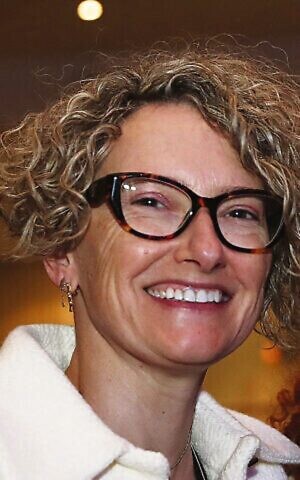
Eylon emphasised Hatikvah’s role representing unaffiliated community members.
“A large portion of the Jewish community is not seeing themselves as connected to a shule,” she said.
“For a long time, their voice wasn’t really heard through the leadership of the community.”
She acknowledged Eretz Hakodesh’s community presence.
“It’s not a secret that they have a presence in the community here. Because for them, getting to their communities in the shules, it’s slightly easier, so they managed to bring their crowd to vote.”
Eylon noted that nearly 1000 registered voters failed to complete the process.
“After the election ended, a lot of people still said, ‘Oh, we weren’t aware that there were elections. Next time we hope to see more engagement from the community and more people speaking up.”
Post-October 7 impact on voting patterns
The election occurred following October 7 and the subsequent conflict, which participants agreed has galvanised Jewish engagement across the political spectrum.
Lamm argued that recent events had vindicated more conservative approaches to Israeli security.
“The left is looking for two-state solutions, looking for peace and tranquillity and understanding. And what happened in the south? 1200 people got murdered,” he said.
“All the people on the left learned a bitter, bitter lesson. It doesn’t really work.”
Eylon, who leads the grassroots organisation United with Israel, emphasised cross-communal solidarity since the events of October 7.
“The Melbourne community and the Australian community is one of a kind, and at the end of the day, we all care deeply about Israel and want to rebuild Israel,” she said.
“I think this Zionist Congress, the focus will be, how can we help rebuild Israel? So I think we will put aside differences in some aspects, and work together to rebuild Israel as a strong, plural, pluralist democracy.”
Eretz Hakodesh outlines agenda
Rabbi Tsykin said Eretz Hakodesh focused on practical support rather than sectarian politics.
“We’ve been pushing very, very hard for support for lone soldiers in the Diaspora,” he said.
“There is basically zero support for lone soldiers when they come home to their families outside of Israel. I don’t really know why anybody would have a problem with that. I think that’s an issue that we can all work together on.”
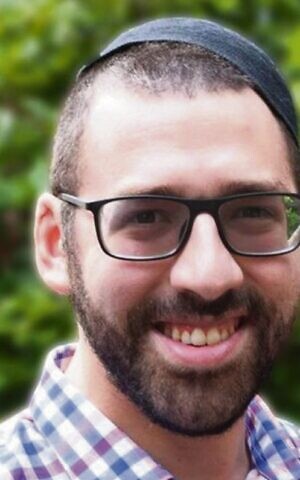
He acknowledged fundamental disagreements with other parties while expressing willingness to cooperate on shared interests.
“There will definitely be issues in which we disagree very, very strongly with the other parties too. I think that that’s okay. That’s why there was an election.”
Rabbi Tsykin criticised the World Zionist Organisation’s current focus.
“I think it is overly involved in sectarian Jewish issues, and I wish it was less involved in that. I think it should be more involved in generalised Israel education, more involved in teaching Hebrew language, more involved in fighting antisemitism.”
Strong Australian representation
The World Zionist Congress, founded by Theodor Herzl in 1897, serves as the “Jewish parliament” with 525 delegates globally. Israel holds 200 seats, the United States 152, and other countries share the remaining 173.
Australia’s 13 mandates represent disproportionately strong representation relative to population size.
Lamm noted the participation rate compared favourably internationally.
“In the UK, they had just over 10,000 people who voted. Check what the Jewish population is of the UK, it’s about three times our population.
“So we compare extremely favourably.”
He attributed Australia’s strong representation to high levels of Zionist engagement through aliyah, Birthright participation, and youth movement involvement.
“Australia’s representation at the World Zionist Congress, 13 out of 525, is actually disproportionate to our population,” he said.
“We bat above our average.”
Future cooperation uncertain
Despite ideological differences, veteran participants expressed cautious optimism about cooperation at the October Congress in Jerusalem.
Lamm, who has attended Congress meetings since 1972, emphasised the importance of mutual respect among committed Zionists.
“When they sit down in that conference room and vote on who’s going to get what, they’re also going to recognise that the person on the extreme left is a committed Zionist,” he said.
“He’s got a particular ideological view. It’s different to somebody else’s, but he’s also got a rightful place there.”
The Congress addresses resolutions on Israel-Diaspora relations, though decisions are advisory rather than binding on the Israeli government.
“All parties get portfolios. It’s not a case of winner takes all and then the others get nothing,” Lamm said.
“All the parties will be represented, but they’re represented in proportion to the electoral results.”
Rabbi Tsykin acknowledged the challenges ahead while defending the democratic process.
“I think the world is made better by honest debate. I do have strong disagreements with the way the World Zionist Organisation is currently run,” he said.
“We represent people who wanted to be represented. I don’t think we have to agree on everything. They have their agenda, and we have ours, and there is a democratic body that will now have to hash it out.”
The 39th World Zionist Congress convenes in Jerusalem from October 28-30, where Australia’s newly elected delegates will join their international counterparts during one of the most challenging periods in recent Jewish history.
comments