



Simchat Torah: the enigmatic climax
When Moshe Rabbenu had a vision of Rabbi Akiva teaching Torah, he worried that it was not what he had commanded. What would he have said to Simchat Torah as we know it?
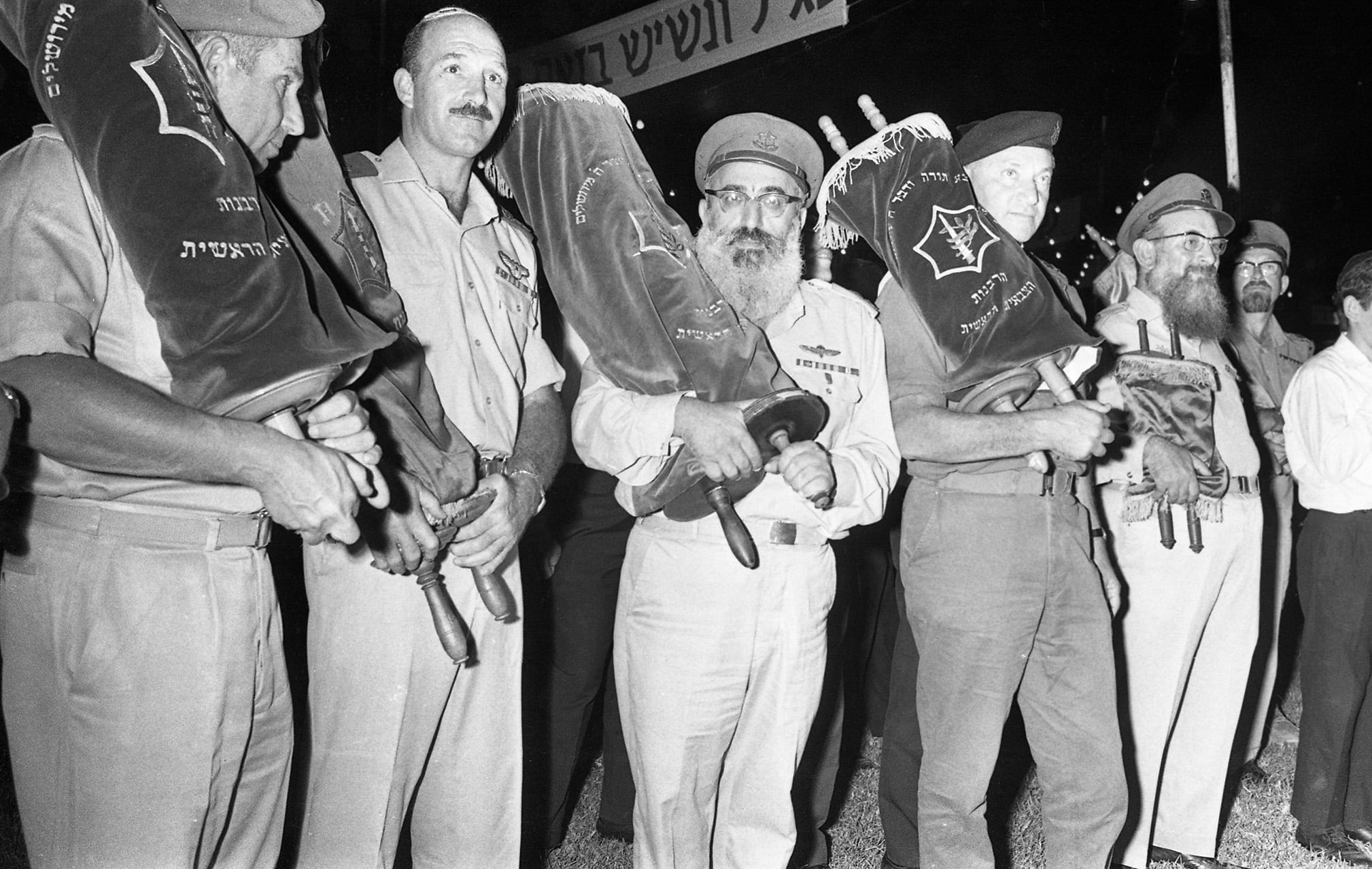
Sadly post October 7 the combined festival of Shemini Atzeret/Simchat Torah has lost some of its shine. However while for some there will again be terrible memories this year, Judaism has never allowed events however terrible to override the basic meaning and even celebration of our rituals – after all, to do so would hand our enemies a further victory,
So let us spend a few moments trying to understand the festival now upon us
Actually it is indeed an enigma. The expression Simchat Torah – the rejoicing of the Torah – would appear from one perspective to be the ultimate religious festival. For it is the day on which we celebrate the very essence of Jewish spirituality. Some will recall the way it was so in the darkest days of post war communist Russia when expressions of religion were subject to serious restriction and some how celebration of Simchat Torah at the Moscow Great Synagogue actually prevailed.
Yet this very occasion and the focal point of its celebrations, have no basis in the Torah itself. There are seven days of Succot – and they are only one of the many hundreds of sevens of significance in Judaism. There is also an eighth day of Shemini Atzeret – described by the sages as “regel bifnei atzmo”, a festival of its own – yet in some ways the climax of Succot. Despite the overwhelming significance of the number seven symbolising holiness amidst the ordinary, we easily accept an eighth over and above seven, because so often in our tradition, starting from brit milah, the covenant of Abraham so basic to Jewish continuity, seven plus one is the epitome of holiness. (In other contexts we also refer to 10 as a “davar shebikedusha – a matter of holiness”, again a seven plus figure.)
But a ninth day? And a day which doesn’t even feature in the Torah and of course is not observed in Israel? How often does nine appear as significant in our traditions? Even in the famous seder song “Who knows one?”, the author could not find a relevant religious tradition for the number nine, and settled for the natural birth cycle as the “nine” in the song.
comments