



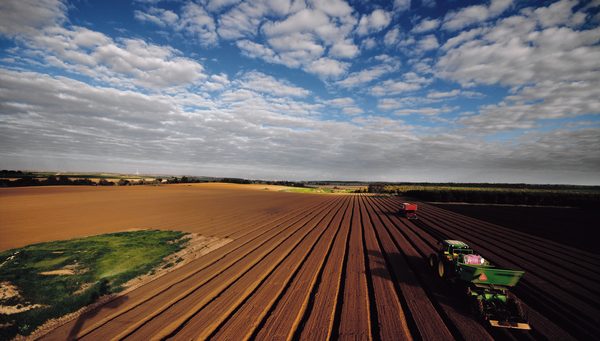
Kibbutz Nir Oz was founded in 1955 by idealistic pioneers who chose to plant their roots in one of the most inhospitable places in Israel – the sun-baked Negev desert, mere metres from the border fence with Gaza.
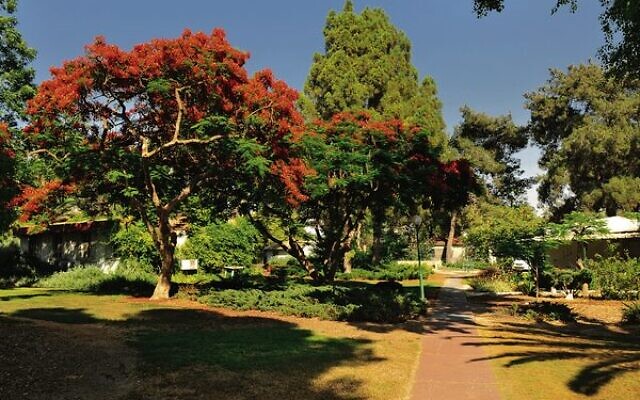
In the decades that followed, the community built something rare: not only innovation-driven farming, but a living botanic garden and a place so lush and shaded that the ambient outdoor temperature was kept five degrees cooler than the surrounding desert.
On the morning of October 7 in 2023, Hamas terrorists shattered that world, with a ferocity that, for Nir Oz, was particularly devastating. Of the 251 hostages taken from southern Israel into Gaza that day, 76 were from this single, small community. Terrorists entered 97 per cent of its homes. Close to half of those homes were burned to the ground. Residents were killed in their own bedrooms and kitchens.
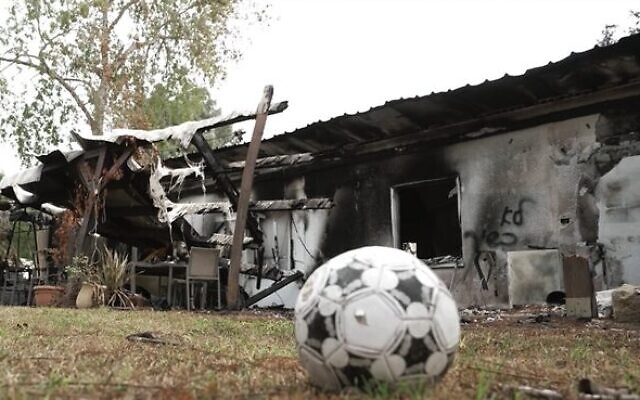
The objective of Hamas was to make the Gaza envelope communities so traumatised that no Israelis would return.
But they did not succeed, and now – slowly but surely – one of the most impacted of the kibbutzim, Nir Oz, is coming back to life.
‘The most important Zionist project since 1948’
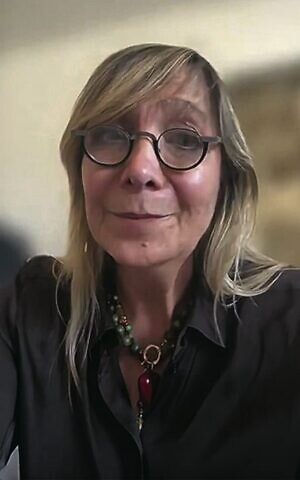
Leading its recovery and reconstruction project is Emi Palmor, a former director-general of Israel’s Ministry of Justice and chair of Natal, the country’s leading centre for trauma and resilience.
Palmor had never visited Nir Oz before October 7, but when she heard that the community was searching for someone to lead its recovery project, she recognised immediately what was at stake.
“I realised that Nir Oz is the most important Zionist project since 1948,” she said in a JNF Australia webinar on April 16 hosted by JNF Israel emissary Sarah Vanunu.
Palmor explained that without extensive, sustained intervention, the community was at real risk of becoming Israel’s only deserted kibbutz – a symbol not of resilience, but of defeat.
“Nir Oz is a symbol for Israelis and for Jews around the world,” she said.
“So, making sure that this community will be able to come back became something that really struck me.”
The reconstruction task is formidable. Every public building must be rebuilt. Hundreds of homes, many burned beyond recognition, must either be razed and replaced, or comprehensively renovated and meet higher security specifications and standards.
But Palmor is clear that the physical challenge is only one dimension of the work.
The deeper task is psychological, “to create an environment in which people feel safe enough and drawn strongly enough, to want to come back”.
Drawing on a framework developed by the World Bank and the United Nations for returning communities to disaster-affected areas, the recovery team established a pioneer neighbourhood as a first step – a deliberate echo of Nir Oz’s own founding history.
Ten renovated homes, originally built in 2017, were offered to 10 families.
Alongside them, a cohort of young adult educators drawn from Hashomer Hatzair – a youth movement active in Nir Oz since it was founded – moved in.
Ninety returnees and on the rise
The results so far, albeit early on, have exceeded expectations.
An average of 90 people are now sleeping at the kibbutz on any given night. About 40 of them are people aged 20 to 25 – former residents who had been serving in the IDF and, upon discharge, chose to come home.
“In other circumstances, some of them would have gone on to do a world trip,” Palmor said. “But they came back because they wanted to take part in the rebuilding.”
Ten more families are preparing to move into new homes in the coming weeks. While formal government approval for large-scale return is not expected until August 2027, when the main reconstruction phase is scheduled to deliver enough new housing, the early influx shows what’s possible and will provide confidence to others.
Those who were most traumatised have been given particular support.
The recovery team negotiated an arrangement with the government to allow any returning residents to Nir Oz to retain their temporary accommodation in Kiryat Gat – an hour drive away – for at least six months. Palmor said that policy was designed as a safety net for them, but in practice, she said with pride that “all those who already made the move back returned the temporary apartments in Kiryat Gat, out of choice”.
The kibbutz’s teenagers are, perhaps unexpectedly, among the most powerful drivers in the process of return.
Many still currently in Kiryat Gat with their families are choosing to spend weekends in Nir Oz as a first step back.
“As a result, an after-school youth hub has opened from Thursdays to Sundays,” Palmor said.
“And one of the new programs we’re doing now too is employing young people in farm work at the kibbutz and its botanic gardens, as part of their legacy and their post-traumatic growth.”
Two of the most moving examples of return involve people for whom the idea of going back once seemed unthinkable.
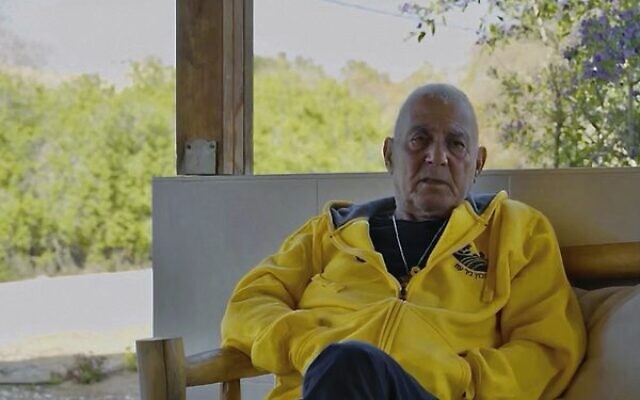
Gadi Moses was 80 when he was taken hostage by Palestinian Islamic Jihad on October 7 and kept in complete isolation. He survived and upon being released, returned to his home.
Mother of three Liat Atzili, then 48, was kidnapped and her husband Aviv was murdered and his body taken into Gaza. She returned on August 25 last year to live in her original home, after it was repaired and renovated.
“Whenever I walk around Nir Oz nowadays and see Gadi and Liat, I feel it – that this project is going to be something that seems to be a miracle,” said Palmor.
Much more than a garden a green heart
Central to the entire recovery strategy for Nir Oz is an asset that distinguishes it from every other kibbutz – its extraordinary botanic garden.
When its founders arrived in the desert in 1955, they made a decision that their fellow kibbutzniks in the Gaza envelope region thought was bordering on eccentric – they planted trees before they built houses.
The reasoning was both practical and philosophical. Shade and a better microclimate would make the desert liveable. An ecosystem created by the right trees and plants would require less water, less labour and less dust to maintain.

And trees, by their very nature, represent a commitment to future generations.
The scientific rigour behind those plantings was the life’s work of a gardener named Ran Pauker, now 88, who dedicated 70 years to researching which species could thrive in the Negev without placing demands on the kibbutz’s precious water supply.
He will be among those returning into the kibbutz’s 10 newly-built homes.
His research drew on plants sourced from environments with conditions similar to the Negev, including a significant number of species from Australia.
The result is a garden of thousands of different species – trees, plants and flowers – that made Nir Oz a destination for agriculture and climate researchers, gardening experts and town planners from across Israel.
Palmor said research developed at Nir Oz is being applied today in the city of Beersheba to help make it greener and cooler. She hopes that, in the longer term, researchers, gardening enthusiasts and farmers in arid regions from around the world will come again to the kibbutz, to experience and learn from its agri-tech focused farmlands and its incredible garden.
“Nir Oz has many things that are scalable, that can be applied elsewhere … including in Australia,” she said.
Noa Barel, the head of resource development at Nir Oz, added that beyond the practical, scientific and environmental significance of the botanic garden and the strategic planting and positioning of trees throughout the entire kibbutz, “the garden was always the community’s living room”.
“Families lived in modest homes averaging just 70 square metres and so the communal green spaces were where life actually happened.”
Throughout the 2.5 years of evacuation, community members visited the kibbutz to ensure the garden was tended to every week. The physical act of nurturing what remains – and what is growing again – has become a cornerstone of post-traumatic recovery.
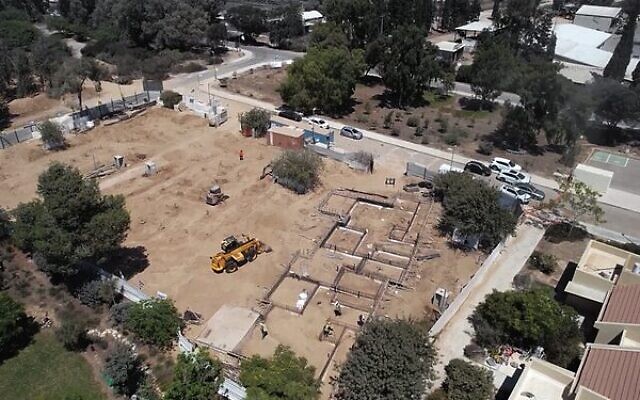
Palmor said the architects working on the rebuilding of Nir Oz are doing so guided by the underlying theme “To live in the garden.”
And Barel revealed that one of the “non-negotiable” constraints the design team was given was that “not a single tree could be removed”.
“Every building, every pathway and every public space had to be designed around the existing canopy.”
Solidarity from Australia appreciated
Both guest speakers in the JNF Australia webinar expressed warmth and sincere gratitude to the Australian Jewish community.
Palmor began by acknowledging the community’s unflinching support for Israel since October 7 and also its own experience of trauma, including the terror attack at the Chanukah event in Bondi last December in which 15 people were killed and dozens injured.
Barel echoed that sentiment. “What happened in Bondi Beach was a big shock in the Jewish world,” she said, “and I know that we [Israelis] are always on the receiving side [of support], but I wish that we had more ways to also embrace you.”
JNF Australia, which has supported more than 100 community recovery projects across Israel since October 7, 2023, is playing a direct and practical role in Nir Oz. Funding is contributing to the restoration and expansion of its botanic gardens. JNF is also supporting the establishment, in the longer term, of an AI innovation college inside the kibbutz’s renovated kindergarten building – the very kindy once attended by the Bibas children, whose kidnapping and fate became one of the most anguishing stories of the entire hostage crisis.
JNF is also supporting the installation of an “ImagineBox” immersive learning and therapeutic treatment space within the kibbutz.
Palmor said she dreams of one day installing an artistic mural – a map of the world – in the kibbutz’s central administration building, with the name of every Jewish community in the Diaspora that contributed to Nir Oz’s rebuilding.
Vanunu noted that many JNF Australia supporters had already visited Nir Oz on its previous missions to Israel, including a memorable occasion sitting with Gadi Moses in the shade of a garden tree, listening to him speak of rebuilding “bigger and better” than before.
She said a JNF Australia mission to Israel this October will include a visit to Nir Oz, which Barel said was an opportunity to witness not only the remnants of the destruction caused on October 7, but the renewal underway now.
“I’m looking forward to meeting anyone on that mission and I hope you’ll have so much beauty to see,” she said.
“Within so much pain that we have experienced in recent years and we still do, we have this really big hope in our hearts.
“To see the people who have returned to Nir Oz already, including young people, and to know the amazing fact that today, in the broader Eshkol Regional Council area, there are more people living there than who lived there before October 7. I think shows so much about Jewish resilience.”
To support JNF Australia’s Blue Box campaign for the restoration of the botanic garden at Nir Oz, visit donations.jnf.org.au/2026-blue-box-pesach/donate-now
To find out more about the next JNF Australia mission to Israel this October, go to jnf.org.au/stronger-together-info
comments