



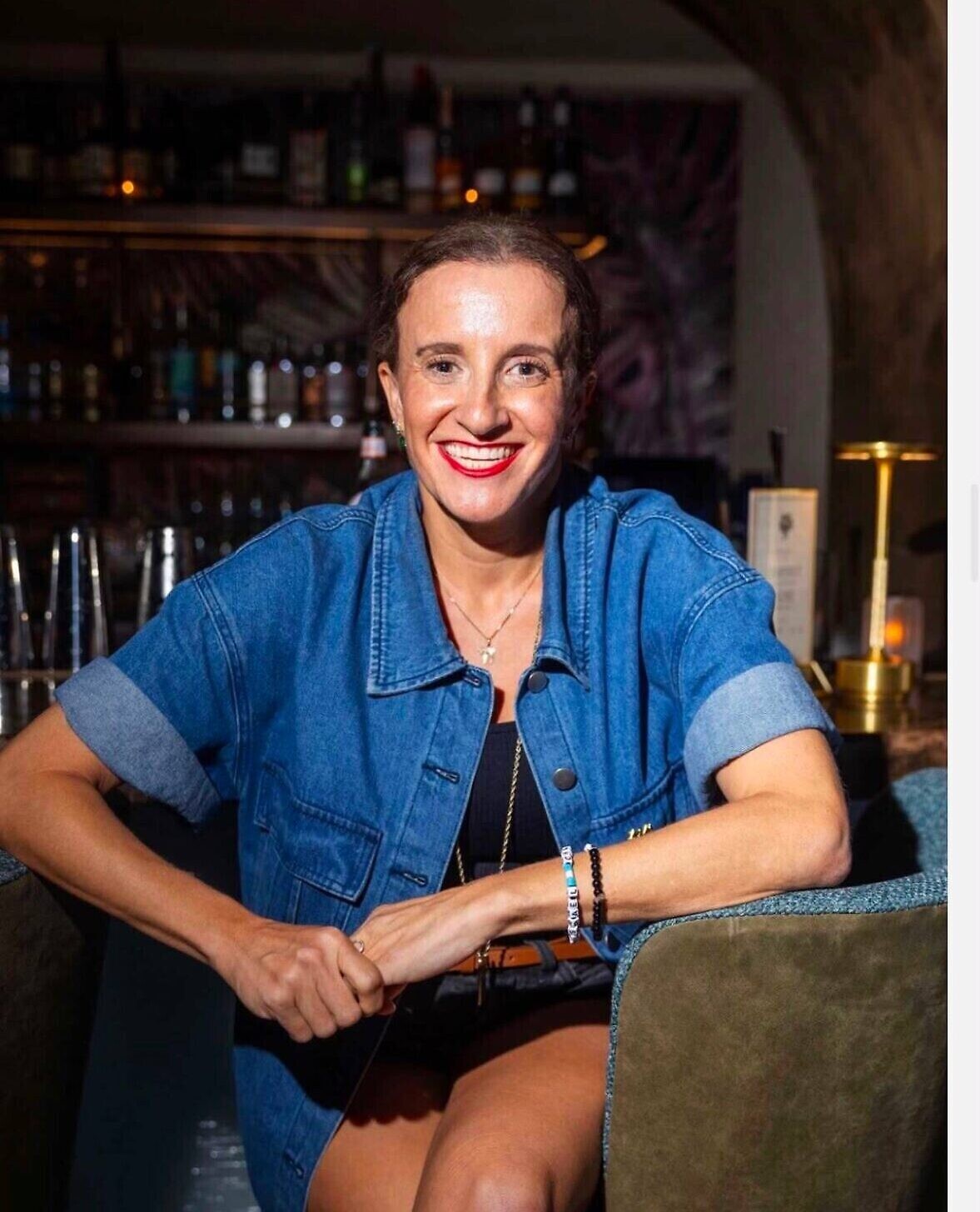
When Chani Lisbon picked up her first drink at 15, she put down everything else. Her faith, her sense of safety, the rules of Judaism that had been her roadmap since childhood. For years, a bottle of Grey Goose in the freezer was the first thing she reached for when she walked through the door.
But there is a picture that Lisbon still paints of herself as a little girl, walking to shule alone, feeling sorry for anyone who was not Jewish, because they did not get to have what she had. She told The AJN that she held her siddur in her hands at all times, ensuring she prayed three times a day.
But, she shared, this intensity and draw to religion was not born of joy. Rather, it was a product of fear. Fear that if she stopped doing all the right things, nobody would take care of her. And for a long time, nobody did.
Today, Lisbon is a 44-year-old comedian and motivational speaker from South Florida who is approaching 19 years of sobriety. She is in the midst of a whirlwind tour of Sydney and Melbourne, speaking at Jewish schools, recovery groups and community events, and her message is disarmingly simple.
“There is hope,” she said. “We don’t stay the same people. We can change, we can grow. And in my case, we can recover and become people that we’re proud of.”
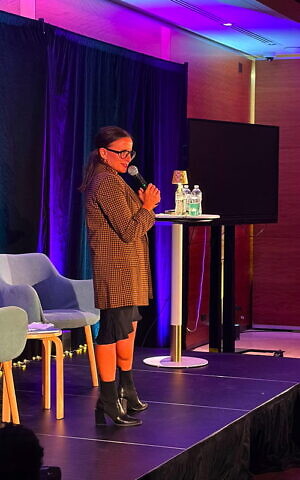
Her therapist had been pushing her toward this. “She’s like, ‘You’re more than just a comedian. You need to start sharing that side of you that is a little bit more vulnerable, but has so much strength behind it.'”
Lisbon grew up in a Chabad home in Los Angeles, the youngest of five children. Her parents divorced when she was five, and her father, a prominent rabbi in the community, moved out. Her mother struggled raising the children and working full time.
While Lisbon didn’t go into the full depths of her trauma, she acknowledged that it was severe, saying for most of her life she was just “holding on to survive”.
“I just never felt safe as a kid,” Lisbon said. “There wasn’t really a person there who I felt like, someone’s got us, someone’s taking care of us. I just remember feeling scared a lot, and lonely and scared and a little hungry.”
The rules of Judaism became her lifeline, not because she understood them, but because they were the only structure she had. She latched onto them like they were going to save her life, because to her, they were.
“Hashem became this figure that was like, if I do all these right things, I’m going to be okay,” she said.
That fragile scaffolding collapsed when she was 15 and discovered some painful truths. So, Lisbon started drinking. Unlike most teenagers who try alcohol and stop, she found something in it that nothing else in her life was providing.
“I took that first drink and I was like, I’m going to be okay. It gave me the sense of relief that nothing else was giving me.”
She is now one of 11 siblings and the only one who became an alcoholic. She is clear-eyed about that distinction.
“We all had the same childhood, very similar experiences, and none of them thought alcohol would be the answer,” she said. “I don’t blame my childhood on my alcoholism. I know that I’m an alcoholic because for me, alcohol was the solution to my problem.”
In her twenties she moved to New York, where the drinking escalated. But, she rationalised her life to herself. She had a job, she paid her rent. Everything looked fine on the outside.
“It was the inside that was breaking down. I’m not lying when I say I could not look at myself. I hated myself so much and hated everybody.”
Recovery came not through a dramatic intervention but through a quiet moment in a room full of strangers. She had dismissed the concept of a 12-step meeting entirely the first time she attended one. But a couple of weeks later, she tried a different meeting and something shifted.
“The people in the room hadn’t drank, and I saw that they were smiling and happy,” saying she realised that she wanted that too. “I never knew that I could have that.”
That was August 16, 2007. She was 25.
“Hashem that night removed the obsession and the compulsion to drink. I didn’t do anything to earn that,” she told The AJN.
She still remembers the mornings that followed.
“We don’t stay the same people. We can change, we can grow. And in my case, we can recover and become people that we’re proud of.”
“I would wake up and the room wasn’t spinning,” she quietly laughed. Suddenly it dawned on Lisbon that waking up without a hangover could be a possibility. She had been hung over for so many years that a clear head felt like a foreign country.
But sobriety was the beginning, not the end.
Two and a half years into her recovery, memories of childhood struggles surfaced, sending Lisbon into years of unbearable despair. She barely left the house. She developed alopecia. Her voice changed.
“I wasn’t funny. I was not funny for a long time,” she said. “I was just holding on to survive.”
She credits years of therapy, time and the people placed in her path for her gradual return to life.
It was not until she turned 40 that she made a conscious decision to stop living as a victim.
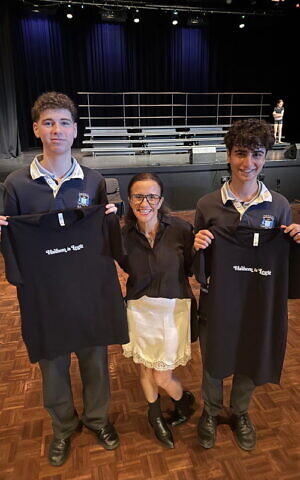
“At 40 is when I started taking care of myself as an adult and re-parenting myself. That’s really what happened. So it’s still new. I’m only four years old,” she laughed.
Her return to Yiddishkeit followed a similar path of slow, organic rediscovery.
After getting sober, she fell in love for the first time, with someone who was not Jewish. They moved in together. It was a beautiful relationship, but every Friday night they were in a music club, Lisbon watching her partner play the bass, while all across the city, Shabbat tables were being set and candles were being lit. And Lisbon realised she wanted that back.
“I would be sitting there watching them play and I was like, I don’t really belong here,” she said, explaining that she started to miss what she had walked away from. “There are tables and tables of Friday night dinners happening and I started to miss it. And I started to crave being at the table and hearing the kiddush.”
She started slowly.
First it was just the Shabbat dinner. When she finally sat at a table again and heard kiddush, she wept. “I just kept craving more,” she said.
She also recalled her journey to back keeping kosher, saying she was sick all night after eating a chicken sandwich. Again, she said it was a sign from Hashem.
“I just stopped. And it wasn’t something that I had to fight. It was this thing that just became something that I’m excited to participate in,” she said.
And through all of the changes, the turning away from Yiddishkeit and the drinking, through the years of darkness, one thread had always kept her tethered. Jewish music. In particular the songs of Avraham Fried. It was the one connection that she never turned her back on.
“I’m able to be funny now and make jokes about it. But it didn’t happen overnight and it didn’t happen in a vacuum. I asked for help throughout the entire thing. I didn’t do it alone…”
“When I was in my darkest moments, I would listen to him and I felt my neshama getting the medicine that it needed,” she said. Her devotion is so well known that friends arranged for Fried to surprise her at her 40th birthday party.
In 2009, Lisbon started taking comedy classes, but the resurfacing of her trauma forced her off stage for years. She could not even talk, let alone perform.
She returned in 2017, running from open mic to open mic five nights a week across Manhattan. Her first paid gig came during COVID at Yeshiva University in New York, where she had to write entirely new ‘kosher’ material and perform in a mask.
“They paid me for each talk. And I was like, oh my G-d, you can make money for talking? No one had ever paid me to be myself.”
Fellow comedian Leah Forster hired her to open, and Lisbon started producing her own monthly shows. The venues grew from someone’s living room to a shule to the back of a restaurant and beyond. “I kind of just ran after it and did things that were really scary,” she said.
But after October 7, Lisbon was convinced her career was over. She called a friend and admitted that she needed to find a job, saying no one wanted to laugh. Her friend, though, put her in her place.
“She was like, ‘Chani, it’s the exact opposite. Your role in this world just became more important than it ever was,'” Lisbon recalled.
In April 2024, an anonymous donor funded Lisbon’s airfare to Israel and she embarked on a 14-day tour performing free shows across the country, funded through a GoFundMe campaign. She boarded the plane with three shows booked. By the time she landed, she had seven. One show required a bulletproof bus to reach the venue.
“The woman sitting in the front row came over to me after and she said, ‘I just want to let you know that I lost my son-in-law and I haven’t really been leaving the house. And this was the first time I laughed in many months.'”
Since then she has performed at Chabad houses across Europe and Australia.
This 2026 tour has been less comedy and more vulnerability. Lisbon has been sharing her story of recovering from alcoholism and leaving Yiddishkeit before coming back on her own terms.
It’s a shift she said has been deeply healing.”I initially, as a comedian, wanted to be famous,” she said. “I don’t need to be famous. I just want to be making people laugh that are broken and that need it. And we’re the ones that need it right now.”
In Sydney, Lisbon spoke at Moriah College and Emanuel School, addressing senior students about her journey through alcoholism and recovery. She said what was remarkable is that at both schools, when the bell rang, not a single student moved. She also spoke to a group of Chabad teenage women and participants in a Jewish recovery program run through Jewish House.
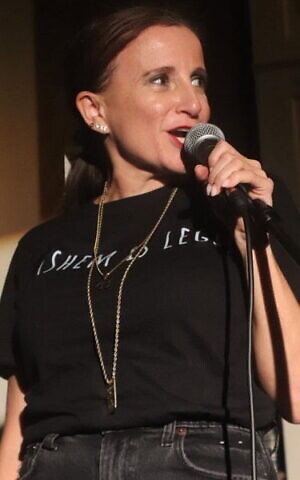
Lisbon said the response from young Australians had been extraordinary. Students who heard her speak shared that nobody had ever spoken to them so openly about the topics that Lisbon was discussing.
“I’m able to be funny now and make jokes about it. But it didn’t happen overnight and it didn’t happen in a vacuum. I asked for help throughout the entire thing. I didn’t do it alone,” Lisbon pointed out.
Lisbon still goes to therapy once a week. She does not pretend the trauma has left her body or that recovery is something you finish. What she has learned, she said, is how to welcome it, how to stop pushing it aside, and how to build a life around it. Not just a life. A beautiful, big, joyous, abundant life.
“I was surviving for so long,” she said. “This is a recent chapter for me.”
Asked what she hopes audiences take away when they hear her speak, Lisbon paused. The answer, when it came, was the same thing she wishes someone had told the scared little girl walking to shule alone, clutching a siddur and bargaining with Hashem.
“You are going to be okay.”
Jewish House
Lisbon’s visit to Sydney was organised in part by Jewish House, at the initiative of Rabbi Mendel Kastel.
As part of her tour, Lisbon spoke to participants in a Jewish recovery group, a Jewish Alcoholics Anonymous program that meets regularly and is supported by Jewish House. She also addressed people described as “recovery curious”, those considering seeking help for the first time.
Jewish House offers specialist addiction support services for people affected by substance use and addiction, focusing on recovery, wellbeing and long-term support in a safe, compassionate environment. Its services extend well beyond crisis accommodation to include support for those experiencing family breakdown, trauma, anxiety and other challenges.
Jewish House community engagement coordinator Shoshana Eisner said Kastel had been determined to bring Lisbon to the community to address difficult topics that are rarely discussed openly.
Anyone affected by addiction can contact Jewish House on (02) 9386 0770 or visit jewishhouse.org.au
Chani Lisbon will be in Melbourne this week. For tickets to the event with Emunah on Thursday, visit evening-with-chani-lisbon-and-emunah.raiselysite.com
For tickets to the event with YPJ on Sunday, visit events.humanitix.com/chani-lisbon-standup
comments