



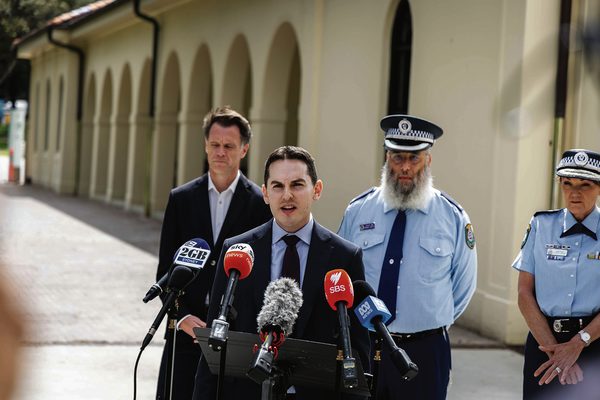
Think back four years ago when you became president, August 2022. Could you have foreseen the magnitude of challenges that you have had to endure over this term?
I don’t think anyone could have foreseen what we as a community have experienced since October 7, 2023 … It has been an incredibly challenging few years for the Jewish community of Sydney, of Australia, and indeed for the Jewish world, and it has been a privilege during that time to be on the front lines and to serve in this position.
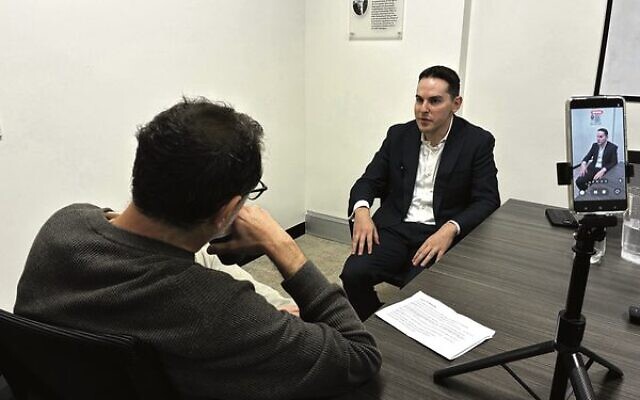
October 7. Describe how the board and yourself sprang into action as news came through of what was happening in Israel, and then the weeks and months that followed.
I think, reflecting on October 7, it is easy now to forget just how numbing that experience was for Jews around the world … the images which were coming out sent shockwaves through each of us, and it brought back intergenerational trauma because a lot of the images and videos we were seeing had hallmarks of the experiences of our ancestors over time. For the first time, at least in my life, the State of Israel looked vulnerable. And for days afterwards, community members couldn’t eat, they couldn’t sleep, there was deep trauma.
Then the events of October 8, when there were physical celebrations and demonstrations held in parts of western Sydney, and then the infamy of October 9 at the Opera House, and from a Board of Deputies perspective, we kicked into action that afternoon … straight away there was a recognition that this was a seismic event, which would have great ramifications not only for Israel, but for the Jewish Diaspora.
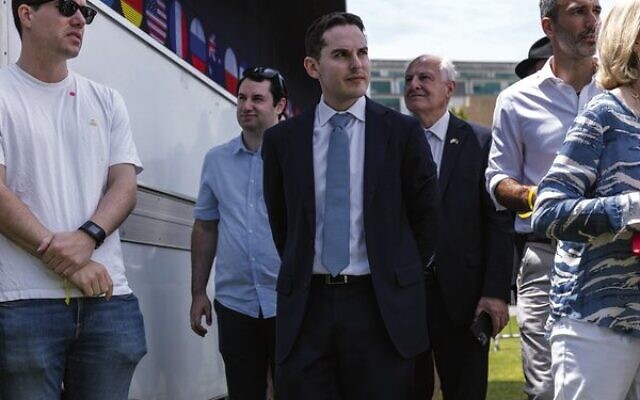
Photo: Cameron Clegg Photography
It is almost three years now. The explosion in antisemitism, the summer of terror with the firebombings, the graffiti attacks. Talk me through how the board dealt with this avalanche of incidents that just kept coming.
At that stage, I thought, okay, there’s been a bit of a wave which we have had to ride, but things have calmed down. Needless to say, they did not calm down … in November of 2023, there were so many reports of antisemitic incidents, even with a team of individuals charged with responding to these incidents, we did not have enough hands to actually deal with it.
You saw these hate marches in the CBD week by week … from there it escalated from offensive and dangerous rhetoric to acts of violence. That was exemplified during the summer of terror, where each night the community was going to bed expecting an attack, and when you woke up, the first thing you did was check your mobile phone, and the only question was, what was the target and how bad was the damage? And the community lived like that for a couple of months, and it paralysed communal life. Our worst fears during that time was that there was foreign involvement, and particularly Iranian involvement, and so it proved to be.
Then we saw the devastating events of December 14, which really has been the nadir of a historically challenging period for the Jewish community in Sydney, and it is no exaggeration to say, I think the toughest three years since Jewish settlement in this country in 1788.
Speaking of Bondi, tell me about the moment you heard what had happened. What did you do immediately in the hours following?
Probably since the night of the Opera House demonstration, October 9, 2023, I’ve always kept my phone very close to me, and I’ve always harboured concerns of a mass casualty event … on December 14, our worst fears came to fruition.
I was behind the lectern at a Chanukah celebration in Dover Heights, and [NSW Liberal Leader] Kellie Sloane was right next to me, and I just finished my introductions, and I heard Kellie next to me say, “Oh my God,” in quite a harried, concerned way, and I looked up, and I just saw a swarm of people running towards the stage, and I heard people shouting for the audience to get down. I looked at my phone and there was a lot of missed calls and also messages to say that there was a live shooting incident [at Bondi] with the possibility of other shooters en route or present at other communal events.
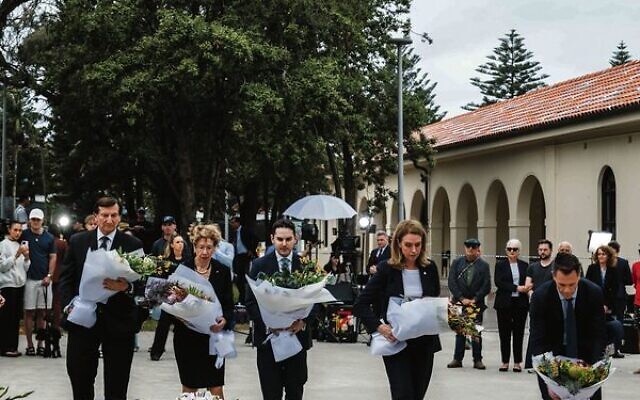
We went to our emergency response centre, and we were there till 4am that night, and the immediate concerns were making sure that, first of all, if there were other shooters around, communal facilities and events weren’t at risk … Secondly, to make sure that the bodies of those who were murdered down at Bondi Beach were treated in accordance with halachah. During those initial hours, no one knew who had been caught up in the attack. So we were getting calls asking where individuals’ loved ones were. We were just trying to understand who had been taken to hospital, what the status was of each of the individuals.
We took the unprecedented decision to effectively shut down all communal facilities. So it was a pretty harrowing and unique evening.
You once mentioned to me how relationships are at the core of what you do. How important have those relationships been with government, with other communities in NSW, with media, during the last three years?
I think the community would be very reassured to know not just of the depth of relationships that we have managed to develop over the years – genuine relationships based on trust and affection – but the way in which those relationships have held firm during some pretty trying times.
It is easy to be a friend during the good times, but when you’re under pressure, that’s when you see who your real friends are. Whether it’s a premier, senior ranks of the public service, law enforcement, they have really been there for us. I’ve got nothing but profound and boundless gratitude to all those individuals.
The Premier especially has been a staunch friend of the community, and it has come at a political cost for him.
I think we are particularly lucky with the quality of political leadership we have here in NSW between Chris [Minns] as premier and Kellie [Sloane] as opposition leader. The premier’s been on this journey right from the beginning, since October 7, and he was one of the first calls on October 8 when the full scale of what had taken place became clear, and from that moment he has never wavered. The Jewish community would have been in a far worse place without him leading the government.

The community has gone through this unprecedented time. What is your impression of how the community has rallied in the face of all of this?
The community has really risen to the occasion over the past few years. I think we as a community have been asked to rely on reservoirs of resilience and strength repeatedly, in a way that no other community has had to, and the community, no matter what the challenges that have been thrown at them, have really chosen to be proud, to invest in Jewish life, to be proud in their identity.
During the summer of terror, I met an individual who came to synagogue who said he hadn’t been in a shule in over 30 years, but he felt like seeing what was going on, now is the time to return to his community. And after October 7, you have people driving six, seven, eight hours to join communal gatherings … out of a period of great adversity, you have seen the very best of the community, and it has made me very proud.
You’ve been president during events that none of your predecessors have had to deal with. What toll has it taken on you?
And hopefully, none of my successors will have to confront any of these issues either. Look, there have definitely been some challenging moments, but compared to those who were caught up on December 14, or had property damaged, or terrorised during the summer of terror … the toll on me has been comparatively minor.
To be in this position and to be on the front lines and to be able to use my voice to try to shape events to the benefit of our community has been an enormous privilege.
Engagement with other communities has been a big part of what the board does. How have those relationships held up?
Engagement with those outside of our community has always been cardinal and key to the role and operation of the Jewish Board of Deputies, and we have prided ourselves on the relationships we’ve had with other faith communities, other ethnic and multicultural communities, and indeed civil society more broadly.
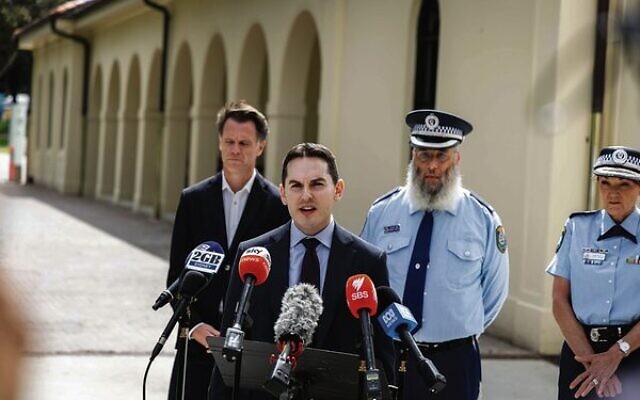
And it’s fair to say that we have been underwhelmed by the response of some of those groups over the past few years, and their reluctance to stand up for us during our moment of need.
But on the other hand, we’ve had individuals like the Anglican Archbishop Kanishka Raffel and the Hindu community who have just been so stalwart and unwavering … [and] the Australian Iranian community, they have been amazing. And also ordinary Australians … who during tough moments have reached out for no reason other than their genuine care and concern for our community.
Despite all the challenges over the last four years, what are some highlights?
Look, I’m really proud about the way in which the Board of Deputies has managed to rally the community during its lowest moments, whether it was the gathering immediately after October 7 on the Wednesday evening, or on December 21, a week after the December 14 atrocity.
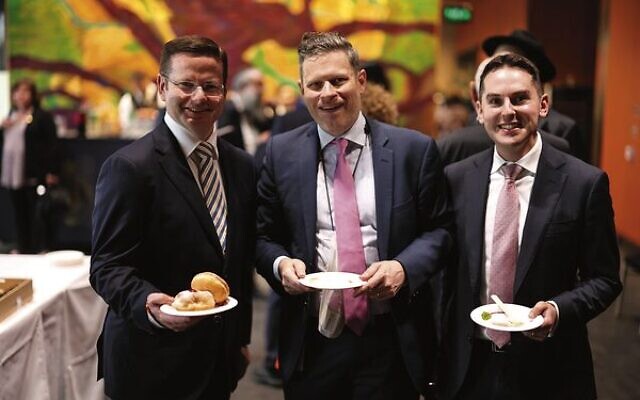
It has continued to build relationships with the next generation of civil society leaders, and also the orchestrative role it’s played in allowing the community to rise to the occasion, I think that has definitely been a highlight. One of the other highlights was we celebrated the 80th anniversary of the Board of Deputies.
As you get ready to hand over the presidency, what kind of state is the board in? How is it placed for the future?
This is a significant organisation with a lot of illustrious heritage. I think it has risen to the occasion well and truly, and I think it is as strong as it has ever been, and the future is incredibly bright for the Board of Deputies … with [CEO] Michele [Goldman] and the team that we have, I think my successor will be very well served.
So the future for the board will be bright. What about the future for the Jewish community in NSW in general?
I think now is a volatile moment for Diaspora communities everywhere. Historically, Jewish communities have always had to undertake an assessment exercise, where, in the face of rising antisemitism, you have to examine what’s taking place and try to assess what that means for the community now and going forward, and sadly throughout the ages, correctly undertaking that assessment exercise has sometimes meant the difference between life and death.
From my privileged vantage point, having worked with so many political and civil society leaders, I know how deep the care and concern and commitment for our community is, and that gives me a lot of hope.
I think it is very important for us as a community not to get trapped in the antisemitism mindset either. I think that is a trap, if we define ourselves by antisemitism and all our resources go into creating new institutions and organisations to combat antisemitism. The way in which Jewish communities over the previous generations have always confronted these issues has been to reinvest in Jewish life and institutions, and I think if we do that, there is enough support for us in broader Australia to ensure that the years ahead can be, if not as positive as the years before, then better.
comments