



The cost of boycotting One Nation
Rising support for One Nation is prompting debate about its place in Jewish communal politics.
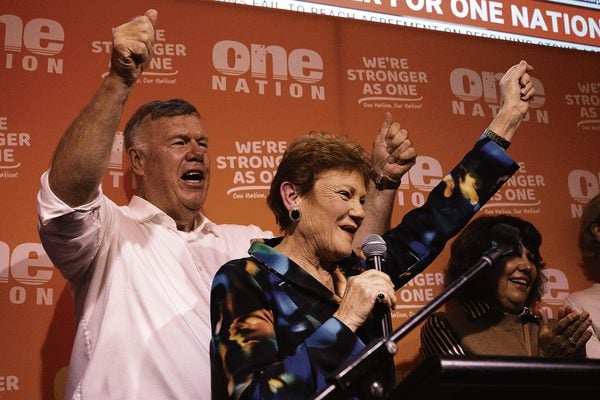
Few Jewish communal policies have aged as poorly as the longstanding boycott of One Nation. As the party surges in the polls, now commanding support from almost one in three Australians, it’s becoming impossible to ignore the damage caused by alienating one of the Jewish community’s strongest political supporters.
AJA never endorses parties and engages across the spectrum except the Greens. Yet One Nation’s consistent support for the Jewish community and Israel cannot be denied.
It’s equally undeniable that many in the Jewish community are now considering One Nation. The party strikes a chord on issues directly affecting us: radical Islam, immigration, law and order, and ABC bias. Many doubt the major parties’ ability to confront these challenges.
One Nation’s support reflects a longstanding commitment. In 2018, Senator Pauline Hanson became the first federal politician to introduce the IHRA definition of antisemitism into Parliament, a motion opposed by both major parties at the time. That same year, when the Coalition recognised only “West Jerusalem” as Israel’s capital, Hanson pledged full recognition of Jerusalem and moving Australia’s embassy there. One Nation isn’t wedded to a Palestinian state in the way the major parties are.
Following October 7, Hanson was appalled by Greens senators wearing keffiyehs in the Senate. She wanted a public gesture of solidarity, initially sourcing a Tallit before wearing an Israeli flag scarf provided by AJA. Hanson may not suit everyone’s style, but her sincerity is clear.
comments