



The day I learnt a biologist designed Tel Aviv
Why does Tel Aviv work so well as a city; so walkable, so human, so easy to roam? Turns out, it's because of a biologist.
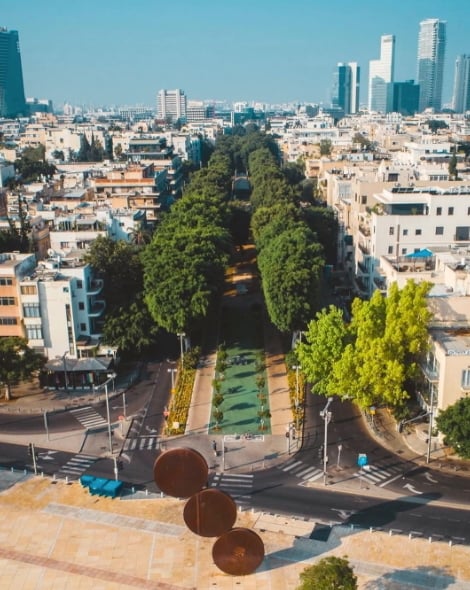
Tel Aviv is endlessly varied. One moment you’re on a wide, leafy boulevard, the next you’ve ducked into a quiet residential street, then suddenly you’re back among cafés, chatter, bikes, dogs, music. And then there’s the green. For a city in a dry climate, it’s everywhere. Trees arching over streets. Pocket parks. Long stretches of shade that feel like relief rather than decoration.
I’m especially fond of the boulevards. You know the scene. Families gathering late in the afternoon. Kids zigzagging on scooters. Dogs everywhere. Someone selling juice from a folding table. A makeshift café that looks like it was assembled five minutes ago and might vanish just as quickly. A man slicing watermelon. A guitarist under a tree. Mini playgrounds tucked just off the footpath – nothing fancy, always busy.
It all feels easy.
But have you ever stopped to ask why it works so well? Why Tel Aviv feels so walkable, so human, so easy to roam?
I’ll be honest: I always assumed it was luck, culture, or Israeli improvisation.
comments