




Dr Farshid Delshad, an Iranian academic specialising in Iranian and Semitic philology, has devoted his career to documenting the profound connection between Jews and Persians. His research shows how the Persian-Jewish relationship has shaped both civilisations across millennia.
“There has long existed a profound—though at times complex and tense—connection between the Jewish people, Iran, and the Land of Israel,” Delshad writes in his essay for The AJN titled, ‘From Susa to Jerusalem: The Unbroken Tapestry of Iranian–Jewish Fraternity’.
In 539 BCE Cyrus the Great conquered Babylon and issued a decree allowing Jewish exiles to return to Jerusalem and rebuild their Temple. This act of liberation earned Cyrus a unique distinction: he remains the only non-Jewish monarch designated “God’s Messiah” in the Torah.
“This singular recognition of Cyrus as a divinely appointed figure, despite his non-Jewish origins, testifies to the Jewish conviction that God’s providence may operate through individuals beyond their own community,” Delshad explains.
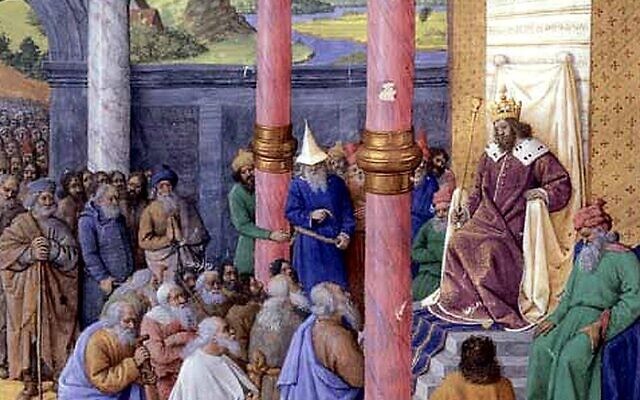
But Cyrus was not alone. Darius the Great provided resources for the Temple’s reconstruction, while Persian kings protected Jewish religious freedom even as Assyrian, Babylonian, Greek and Roman emperors sought to destroy it.
The gratitude was reciprocal. Jewish forces joined Persian armies against Babylonian rulers. When Cyrus launched his campaign, Jewish soldiers fought alongside Persians. Later, Jerusalem served as a bulwark protecting Persian frontiers from Egyptian incursions.
“The successive Jewish rebellions against Greek and Roman invaders progressively weakened and destabilised these empires’ expansive ambitions, ultimately thwarting their attempts to dominate Iranian territories,” Delshad says.
This mutual defence created deep cultural bonds. The Talmud states: “If God presented 10 goblets of wisdom to the world’s populations, nine of them were bestowed upon the Iranians.” According to tradition, when Alexander the Great sought Jerusalem’s High Priest’s support to provision his Greek army for invading Iran, the priest refused, declaring: “I shall not betray the Iranians.”
Persian Jews lived in relative prosperity for centuries. During the Middle Ages, Isfahan was substantially advanced by its Jewish inhabitants and designated a Judean city. A fresco depicting the ancient Iranian city of Susa adorned Jerusalem’s main gate, inscribed: “So that we may not forget whence we came.”
Religious and cultural exchange flourished. The concept of resurrection in Judaism shows Zoroastrian influence, while the Jewish practice of kindling Shabbat candles influenced Zoroastrian observance. Over 1000 Iranian words entered Hebrew and Aramaic. The messianic concept common to Judaism, Christianity and Islam likely derives from the Zoroastrian figure of Saoshyant.
However, the Islamic conquest of Persia in the seventh century fundamentally altered Jewish status. Jews became dhimmis—non-Muslim subjects required to pay jizya while facing various restrictions. Treatment varied by ruler, but the Safavid dynasty’s establishment of Shi’a Islam as state religion in 1502 brought severe deterioration.
Shi’a emphasis on ritual purity deemed non-Muslims, including Jews, ritually unclean. Physical contact was limited. Jews were excluded from public baths, forbidden outside during rain or snow, required to wear distinctive badges, and faced forced conversions, pogroms and blood libels.
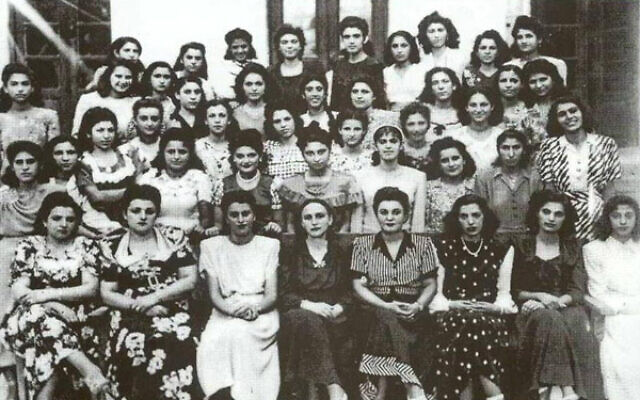
European travellers in the 19th century reported: “They are obliged to live in a separate part of town … for they are considered as unclean creatures … If a Jew enters a shop he is forbidden to inspect the goods.”
A new era began with the 1925 Pahlavi dynasty. Reza Shah weakened clerical influence, abolished restrictions on religious minorities, prohibited forced conversions and eliminated the concept of ritual uncleanness. Modern Hebrew entered Jewish school curricula. Jews held government jobs.
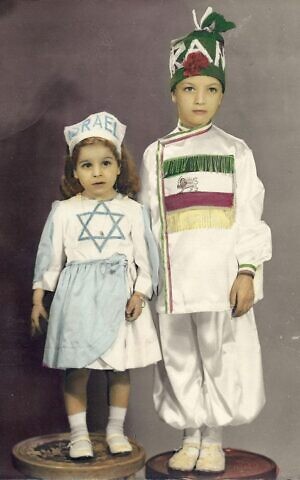
From the early 1950s until 1979, Iran and Israel maintained a pragmatic partnership. Iran supplied up to 60 per cent of Israel’s oil. El Al connected Tel Aviv and Tehran. Israeli experts aided Iranian agriculture while Iranian students studied in Israeli universities.
The 1979 Islamic Revolution shattered this renaissance, leading to an exodus of almost all Jews able to leave and unleashing suffering that continues today.
Now, as Israel strikes the Islamic regime and Iranian protesters rise up demanding freedom, history’s wheel turns full circle. The debt of liberation Cyrus bestowed upon the Jewish people finds its answer in Israel’s support for Iranian liberation.
“Perhaps it is here, amid the tempests that sweep the ancient lands, that the Jewish people repay the debt of hospitality and protection owed to their Persian brethren,” Delshad writes.
“By standing resolute beside their Iranian brothers and sisters, they help lift the heavy yoke of the Islamic Republic’s long tyranny.”
Iranian people supporting Israel’s efforts and Israel working to free Iranians from theocratic oppression reflects the same spirit that moved Cyrus to free the Jews from Babylonian captivity 2500 years ago.
“Thus do the two peoples, bound since the dawn of monotheism, fulfil the prophecy written in the stars of history,” Delshad says.
“That those who once opened the gates of Jerusalem shall, in their turn, see the gates of Persepolis flung wide once more.”
comments