



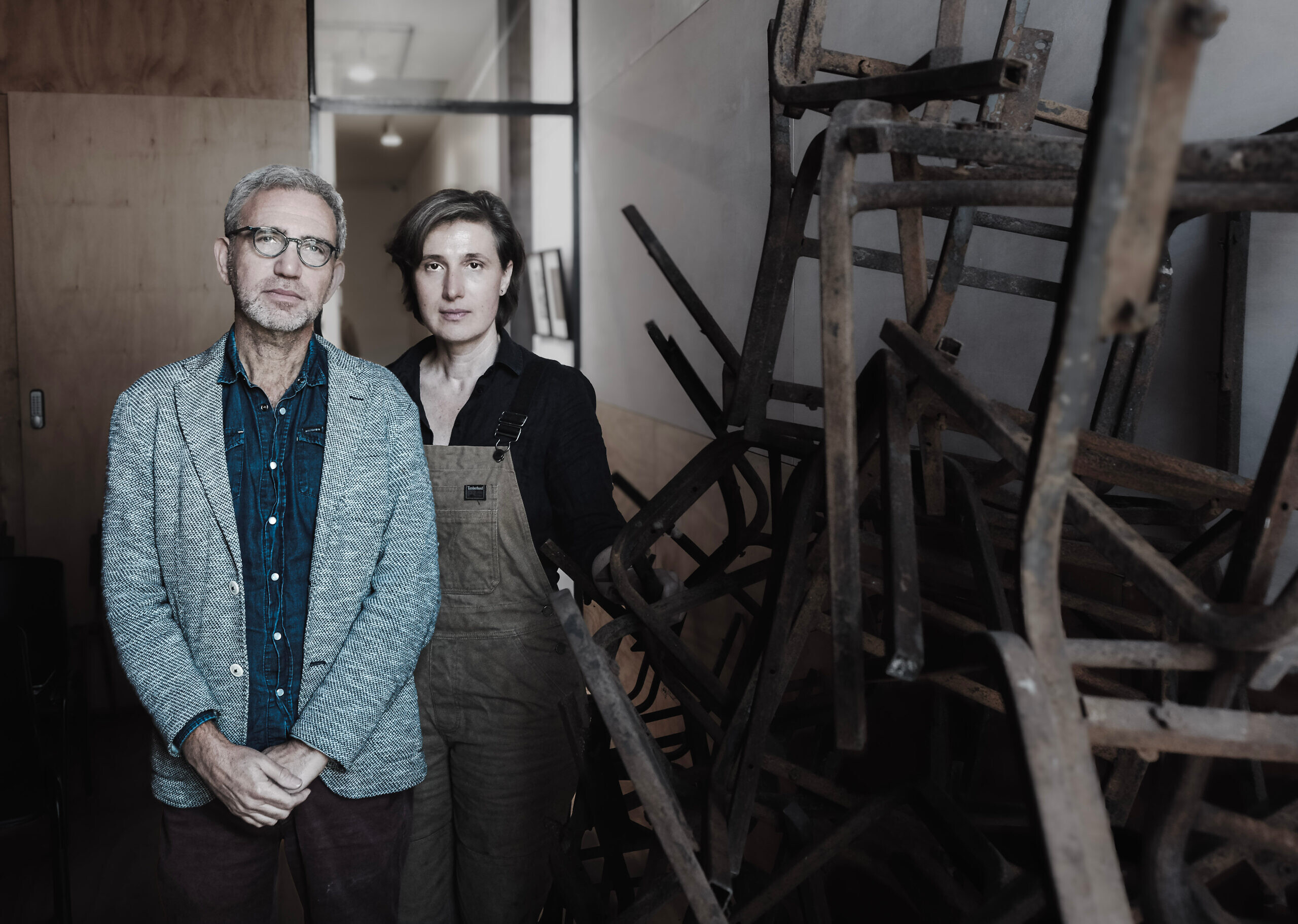
When Walkley Award-winning filmmaker Danny Ben-Moshe sent a rough cut of his documentary about antisemitism to the ABC on the morning of December 14, he could not have known what would unfold in Bondi that evening.
A film about the Jewish experience of hatred landing in a broadcaster’s inbox on such a day might prompt an urgent phone call.
Instead, it was declined.
That film is Cancelled, a documentary following four Australian Jewish artists as they navigate the fallout of October 7 across Australia’s cultural landscape.
The ABC said no. SBS said no. The Sydney and Melbourne Film Festivals said no. Ironically, as Ben-Moshe told The AJN, the film about being cancelled got cancelled.
“The people who should be documenting this are not. They’re just not interested,” Ben-Moshe said. “They don’t see us, or they don’t care about us, or our story conflicts with the narrative.”
It was not always meant to go this way. Ben-Moshe, the filmmaker behind Revenge: Our Dad, the Nazi Killer and the high-rating SBS documentary Strictly Jewish, had ideas for October 7 films within days of the attack. Producers told him it was too soon. Meanwhile, Revenge had its theatrical release pulled because a cinema chain did not want to appear “provocative”.
“We’re not the first Jewish community to experience discrimination and hatred in history, far from it, and they got through it, and we will too.”
“Just being Jewish was an act of provocation,” Ben-Moshe said matter-of-factly.
Cancelled follows musician Deborah Conway, visual artist Nina Sanadze, writer Joshua Dabelstein and circus artist Talia Sofizade, each of whom has faced threats or professional consequences for their Jewish identity since October 7. Filmed in Ben-Moshe’s verite style, the film culminates in the Bondi Beach terror attack.
The film centres on the Goldstone Gallery in Collingwood, the space Sanadze established in early 2025 to amplify cancelled voices. Ben-Moshe found his way to the story after reading about Sanadze in The Australian. Then the Adass Israel building was firebombed. So Ben-Moshe started filming.
Strikingly, he shared with The AJN that despite filming within the Adass Israel community for a full year, no one from his film crew – who themselves had spent time engaging with the Adass community – reached out to him to see if he or the community was ok.
“I basically said, if I can raise the money to cover the cost of the filming, I’m just going to shoot this story,” he said. “Not knowing where I’d be going with post-production, not knowing quite what the story was.”
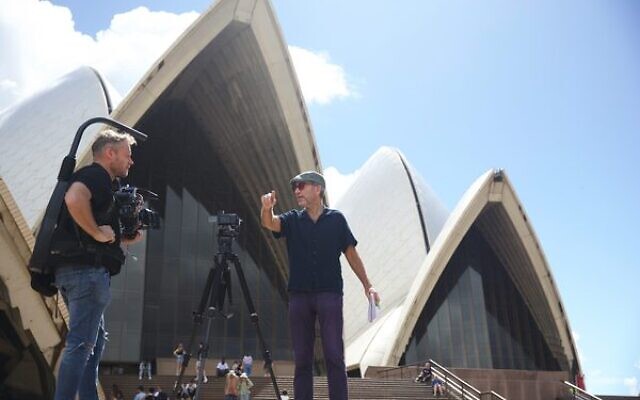
Ben-Moshe told The AJN that where possible, the film was crewed by Jewish creatives, meaning the making of the film itself became a response to the cancel culture that the filmmaker had come up against.
It was eventually made with Jewish philanthropic support, and Ben-Moshe was upfront with donors about the risk.
“I had to say to anyone who donated money to the film, there is no guarantee that this film will see the light of day. But at a minimum, let’s give the mainstream broadcasters and the mainstream festivals in this country the opportunity to tell this story.”
The subjects found their way into the film organically. Dabelstein was the gallery’s writer in residence. Sofizade, a circus performer whose October 7 show had been cancelled, met Sanandze at Miznon when they were faced with a violent mob storming the restaurant. Conway entered when Ben-Moshe filmed her performing at the Camelot Lounge in Sydney amid online threats.
“What I want to avoid as a filmmaker is people saying, ‘So I went here, and this happened,'” he said. “I want to see things as they happen.”
And happen they did.
For Ben-Moshe, the most confronting sequences are set in Israel. Ben-Moshe filmed at the Nova festival site, at Kibbutz Nir Oz, and in homes left as they were on October 7. He has filmed at Auschwitz and at his family’s death pit in Lithuania, but said stepping into the homes at Nir Oz was harder than all of it.
“It was so much more dark and painful than even the Nazi death camps I’ve been into,” he said, describing coffee cups half full, beds still made up, children’s toys splattered in blood. When Sanadze wanted to film inside the Bibas family home, Ben-Moshe opened the front door and could go no further. “I just cannot. I just can’t go in here.”
“That’s the ultimate truth of what’s going on in this gaslighting world,” he said. “That reality is being denied, distorted, obfuscated and defended in Australia.”
Cancelled will have its premiere at JIFF, launching the 2026 program. After the festival, the film will screen on Sky. Ben-Moshe made Cancelled for a mainstream, progressive audience, but has made peace with the outcome. Ticket sales for the JIFF screenings have been strong, and international Jewish film festivals have expressed interest.
“I realised now that the film is actually just what Jews need,” he said. “We need to go through this journey collectively. It’s part of our healing, part of our group hug.”
While it’s heartbreaking to watch what the four creatives go through in real time, Cancelled is also, Ben-Moshe says, a story about defiance.
“It’s a story about standing up to it. It’s a story about our resilience. It’s a story about digging deep. It’s a story about the truth that we all know, and we know we’re on the right side of history. And I think it’s affirming and positive for people to get all of that.”
“We’re not the first Jewish community to experience discrimination and hatred in history, far from it, and they got through it, and we will too.”
Cancelled will be screened as the program launch feature film for JIFF on Wednesday September 16 in Sydney and Thursday September 17 in Melbourne. The film will be followed by a Q&A moderated by AJN national deputy editor Jessica Abelsohn in Sydney and AJN journalist Dahlia D’Onghia in Melbourne. For tickets, visit jiff.com.au
comments