



The first duty of states is to protect their citizens
There is no question that the US and Israel have been acting in accordance with the law of self-defence.
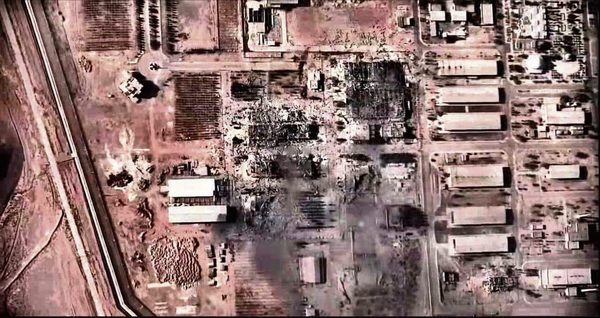
There is an alarming tendency among some academics, credulously amplified by sections of the media, that is doing great damage to international law. This relates to automatically looking to cast Israel as being in violation of international law regardless of the facts or the actual law. In the context of confronting Iran over its nuclear ambitions and declared threats this is also in effect facilitating the genocidal, autocratic and terrorist intent of one of the most vile regimes on the planet.
Let’s be very clear – there is no question that the US and Israel have been acting in accordance with the law of self-defence in the strikes conducted on Iran beginning on 13 June. Article 51 of the UN Charter enshrines the “inherent” right of self-defence, including collective self-defence, which refers to the state of the law as it existed when the Charter was written.
The principles of this right were defined in formal correspondence between the UK and the US in the “Caroline Incident” and has been accepted universally as a normative statement of the law. This correspondence was triggered in 1837 when British and Canadian forces crossed over into US territory to neutralise non-state actors who were supporting rebellious elements in Canada. The Caroline principles can be summarised as being that such actions are legitimate in anticipation of an attack if the situation leaves no moment for hesitation and the response is proportional to the threat. In the situation when an attack is actually taking place against a state by another state then the right is obviously also triggered.
Some are arguing at present that because the right in Article 51 is expressed in the English version as being tied to an “attack” that it cannot now be exercised in any situation short of this. That is simply not correct, not in the intent of the Article nor as evidenced in state practice since the Charter was created. Professor Tim McCormack, who is an actual, and probably the foremost, expert on the laws of armed conflict, has explained this in his seminal work on self-defence, drawing on the case study of the Israeli attack on Iraq’s Osiraq nuclear reactor in 1981. He highlights that in the equally authoritative French version of Article 51 the expression is rendered as “aggression armee” not “attaque armee”, encapsulating the threat of attack. He also deals with the context that Article 51 was framed in reference to intervention by the Security Council and where this is not occurring then the equation is amplified in favour of self-help.
By using the word “inherent” the law was not changed and this has been borne out countless times in state practice, which is also the means by which the legal position must be interpreted. In the circumstances of nuclear weapons the equation is informed by the existential nature of the threat, the opportunity to do something about it before it materialises and the need to address it without causing significant environmental impacts. This is why Israel attacked the Iraqi reactor in 1981 and a Syrian reactor in 2007 while they were under construction.
comments