



The foundations of Agudat Israel
BAD Homburg, a city near Frankfurt a Main in Germany, was never a major Jewish centre. With a population of only a few hundred Jews when the community was at its peak, one might wonder as to why one might mention it at all.
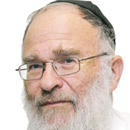 YOSSI ARON
BAD Homburg, a city near Frankfurt a Main in Germany, was never a major Jewish centre. With a population of only a few hundred Jews when the community was at its peak, one might wonder as to why one might mention it at all.But exactly a century ago, in the latter weeks of Av 1909, this otherwise insignificant town and Jewish community earned itself a place in Jewish history.
The local community hosted a gathering of the greatest names in the Orthodox world of the early 20th century. Among those who gathered were the Brisker Rav, Rabbi Chaim Soloveitchik; the Rebbe of Gur, Rabbi Avraham Mordechai Alter; the great Halachic decisor, Rabbi Chaim Ozer Grodzinski of Vilna; Rabbi Eliezer Rabinowicz of Minsk; the Rosh Yeshivah of Telze, Rabbi Eliezer Gordon; and Rabbi Shlomo Zalman Breuer, Av Beth Din of Frankfurt.
Also present were representatives of Rabbi Dovid Friedmann of Karlin, a delegation representing the roof body of Hungarian Orthodoxy, and representatives of other then significant communities, including those of St Petersburg, Warsaw, Lodz and Riga. Last but not least was a group representing German Orthodoxy, led by Rabbi Jacob Rosenheim.
These leaders of the Jewish world had gathered together to discuss the state of contemporary Orthodoxy, which was being ravaged by the forces of Reform, the Haskalah and assimilation. It was held in Germany rather than Russia because Germany was more open to international gatherings than Czarist Russia. And so it fell to the Orthodox minority of German Jewry, led by Rabbi Rosenheim, to play such a major part in the foundation of the body we still know today as Agudat Israel.
Commencing after Shabbat Nachamu, the Shabbat when Jewry turns its attention from the ravages of the past to building a foundation for the future symbolised by a new year, the rabbis spent three weeks mulling over reports of the spiritual health of world Jewry and considering recommendations to strengthen their position.
Key issues that dominated their discussions were the social and cultural differences between the Orthodoxy of Germany and Central Europe and the Orthodoxy of Russia and Poland. Yet despite differing attitudes to higher education and even modes of dress, it became clear that devotion to a Torah-based society was the common factor that united all of what were, from other perspectives, somewhat disparate communities.
And so they resolved unanimously to form an international union of “Yir’ei Hashem – God-fearing communities”, with the aim of revitalising the Jewish nation that is faithful to God and his Torah. Practical steps were to be taken in regard to strengthening Torah-based education in yeshivot and Talmud Torahs, assisting the poorer masses in the Diaspora communities and Eretz Yisrael, creating religiously appropriate literature and newspapers, and representing Orthodox Jewry at state political levels.
As a vehicle for achieving these aims, it was decided to empower the representatives of German Orthodoxy to create an interim leadership of Agudat Israel based in Frankfurt a Main. It would take all necessary steps, including drawing up an appropriate constitution, concerning itself with placing the organisation on a sound financial footing, and arranging for an international conference of representatives of world Orthodoxy.
There can be little doubt that this approach was intended as the Orthodox response to the Zionist congresses, which were seen as a very unorthodox mode of attempting to resolve issues affecting world Jewry, particularly in light of the secular elements that were so powerful in the Zionist movement.
Inevitably, the differing outlooks of the different groups represented at the conference did lead to delays in the implementation of the resolutions. It was not until May 1912 that the next gathering took place in Kattowitz, which formally founded Agudat Israel. The final impetus to that move had been the 10th Zionist Congress, which formally included a secular Jewish culture in its program, thereby recognising as legitimate a secular Jewish culture coexistent with religious culture. Clearly an Orthodox response was necessary and despite differences, all had to stand together to face the growing threat.
And so was formed the movement that ironically, despite original opposition to Zionism, today has representatives in the Knesset and Jerusalem municipality. At the same time, a century later, Agudat Israel now serves as a powerful roof body for American Orthodoxy, and even has representation on behalf of Jewry at the United Nations headquarters.
In the Amidah of Rosh Hashanah and Yom Kippur, we repeatedly pray for the time that the world will recognise the kingship of God, “veye’asu kulam agudah achat – that all of creation will become a single unified society” to do God’s will wholeheartedly. May that time be soon.
Yossi Aron is religious affairs editor of The AJN.
comments