



The four species and the festival of Succot
“And you shall rejoice before the Lord your God for seven days.” (Vayikra 23:40)
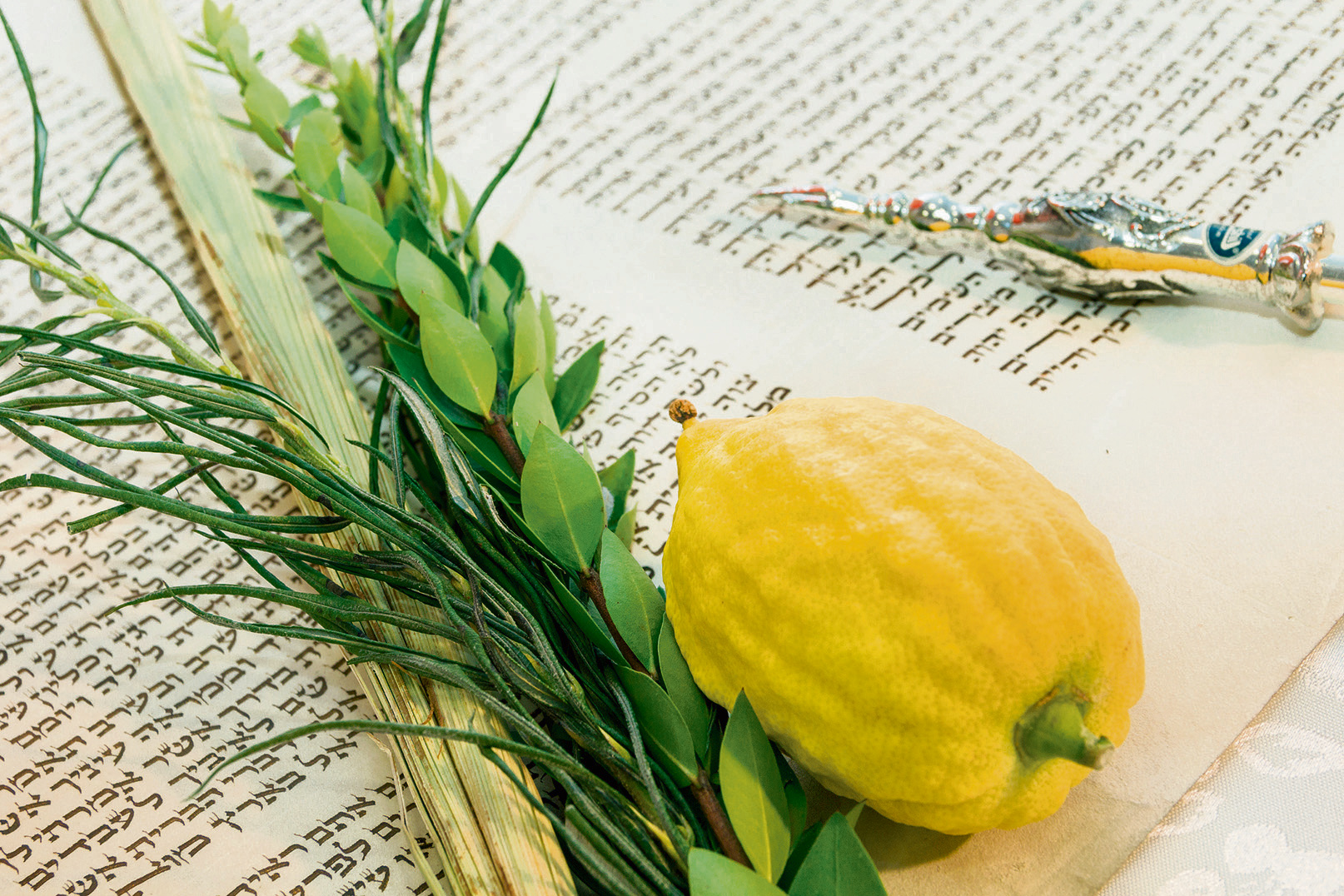
While in the modern era we possess Biblical manuscripts dating back two millennia (the Dead Sea scrolls), ancient pictorial representations other than those on certain artefacts are sorely lacking. Accordingly, we can only speculate as to the appearance of any mitzvah-related artefacts as they existed millennia ago – be they tefillin, tzitzit, matzot or even a succah. While archaeological discoveries occasionally assist and a menorah is depicted on the Arch of Titus, we essentially rely on oral tradition (the basis of the Mishnah and Talmud) with no visually compelling evidence to serve as a backup.
There is, however, one glaring exception to this situation.
Amid the laws of Succot, the Torah prescribes: “And you shall take for yourselves on the first day ‘pri etz hadar’ [variously translated as the fruit of a goodly tree, or of a tree where the fruit unseasonably remains on the tree over time – traditionally the etrog – branches of palm, boughs of a dense tree [traditionally the myrtle] and willows of the brook, and you shall rejoice before the Lord your God for seven days” (Vayikra 23:40).
Only the palm and willow are actually named; oral tradition associates the other two species with the etrog and myrtle.
Was it always the case that those other two species utilised were the etrog and myrtle with the myrtle and willow attached to the palm? Well, in this instance we do have clear pictorial evidence from the Temple era. The four species were a much-utilised motif on coins struck during the rebellion against Rome that preceded the destruction, as well as coins issued during the Bar Kochba revolt. Greek and Roman coins featured their respective emperors, but halachic strictures regarding sculpting human faces led independent Jewish entities to use alternatives – and the picturesque nature of the four species made them an obvious candidate.
comments