



The Long Goodbye
Keri Kitay discusses her memoir about losing her mum to Alzheimer's disease, writes Sharyn Kolieb.
In Keri Kitay’s memoir The Long Goodbye: Lessons on humanity from the grips of Alzheimer’s, she shares her family’s devastating journey after her mother Terry was diagnosed with early onset Alzheimer’s disease at 54 years old, and passed away at 63.
Kitay was in her 20s when her mum was diagnosed, and she poignantly recounts her family’s journey – what life was like before Alzheimer’s, the early signs that everybody missed, the day they got the shattering news, coming to terms with the grim prognosis, and most devastatingly, witnessing the woman they knew and loved slowly fade away. The memoir is also an important resource for those dealing with dementia, especially families and friends who are grappling with how to care for someone facing this cruel illness.

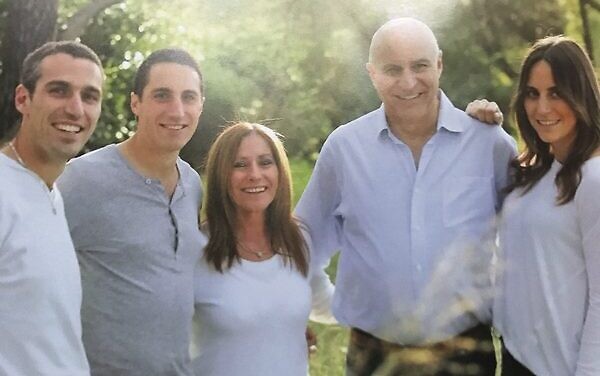
(front) Aaron Kitay, Terry Kitay, Ricky Kitay, Dov Kitay.
The memoir brings awareness to issues that are not well known – that Alzheimer’s is actually a ‘death sentence’, and that it is not only an ‘old person’s disease’ but can strike when people are in mid-life. She also feels a responsibility to educate on how people can make better informed health decisions to prevent Alzheimer’s. Speaking with The AJN, asked how she felt now that the book has been released, Kitay commented, “I’ve had so many people message me who are struggling with Alzheimer’s … predominantly people having a family member that are going through it, and it just seems like lots of people have lots of questions. And this has given them an opportunity to ask those questions and connect with somebody else who’s shared the same experience. And I think, for me, that was the big purpose of writing the book.”
Kitay is a communications professional in Sydney actively involved in the Jewish community (she is a recent former board member for the United Israel Appeal), and this is her first book. She said that the writing process has been therapeutic and allowed her to reflect on the challenges of losing a mum at a younger age, and a time when many of her peers could not relate to that kind of loss. Kitay commented, “It is something that it’s hard to talk about to your friends. There’s a different level of understanding and I think you can only understand that when you have gone through that loss. And then you do have that void in your life that only some people can understand because you’re living it every day.”

The memoir is raw and honest. Kitay reflects on the grieving process of losing her mum to Alzheimer’s disease when she was still alive, as well as the ultimate loss when she passed away, “I felt angry about the fact that this was happening to someone so young, and that she was being robbed of her friends and her family and seeing her grandchildren being born and grown up, and travelling and all those kinds of things that her future would have held for her,” Kitay shared.
She also discusses the pain of seeing her mum change from dementia, “It is really hard seeing that change in somebody when you know them being such a capable person – social and always out with their friends, to see that taken away from them because their ability changes.”
Kitay noted that some friends showed up for her mum, while others turned away, with many not knowing how to respond, and this she believes is an important message in her book, “If a friend or a family member is diagnosed with illness – whether it’s Alzheimer’s, Parkinson’s or cancer, whatever it is, instead of turning your back for lack of a better word, rather lean in, go and educate yourself understand how to talk to somebody who has dementia, how do you interact with them? At the end of the day, that person is still a human being with feelings, they may lose their memory but they don’t lose their intelligence. There is an awareness that people are no longer visiting and interacting with them in the same way. And I think we should learn to just be kind and lean into those situations rather than succumb to feeling awkward or uncomfortable … that’s all people ever want, [is for] us to treat them with kindness.”

Kitay believes that while is it important to acknowledge that currently Alzheimer’s is an incurable disease and the search for a cure persists, there are certain things that can delay the onset of it. Kitay is an ambassador for CHeBA (the Centre for Healthy Brain Ageing), which she described as an “amazing organisation” whose focus is on prevention. She said, “It’s important to start thinking about your health when you’re younger, things like physical exercise, movement are so important … they recommend eating a Mediterranean-style diet, avoid excessive drinking, sugar and to retain social connections.” CHeBA also advocates for the importance of reducing stress and acquiring news skills that challenge your mind, Kitay said, “Being curious and using your brain and learning new skills will enable new pathways in your brain to be developed.”
Regarding her family’s reaction to the memoir, Kitay said, “They have just been so supportive and really proud that we can share our story and help other people along the way, and honour my mum and make this whole journey that we have been through mean something by being able to hopefully give back and help other people who may be experiencing it in their lives.”
The Long Goodbye is published by Hachette and available now.
comments