



The night the ‘Lucky Country’ blinked
'This is not just about bits of plastic and metal. Guns are the last step in a chain that starts much earlier'
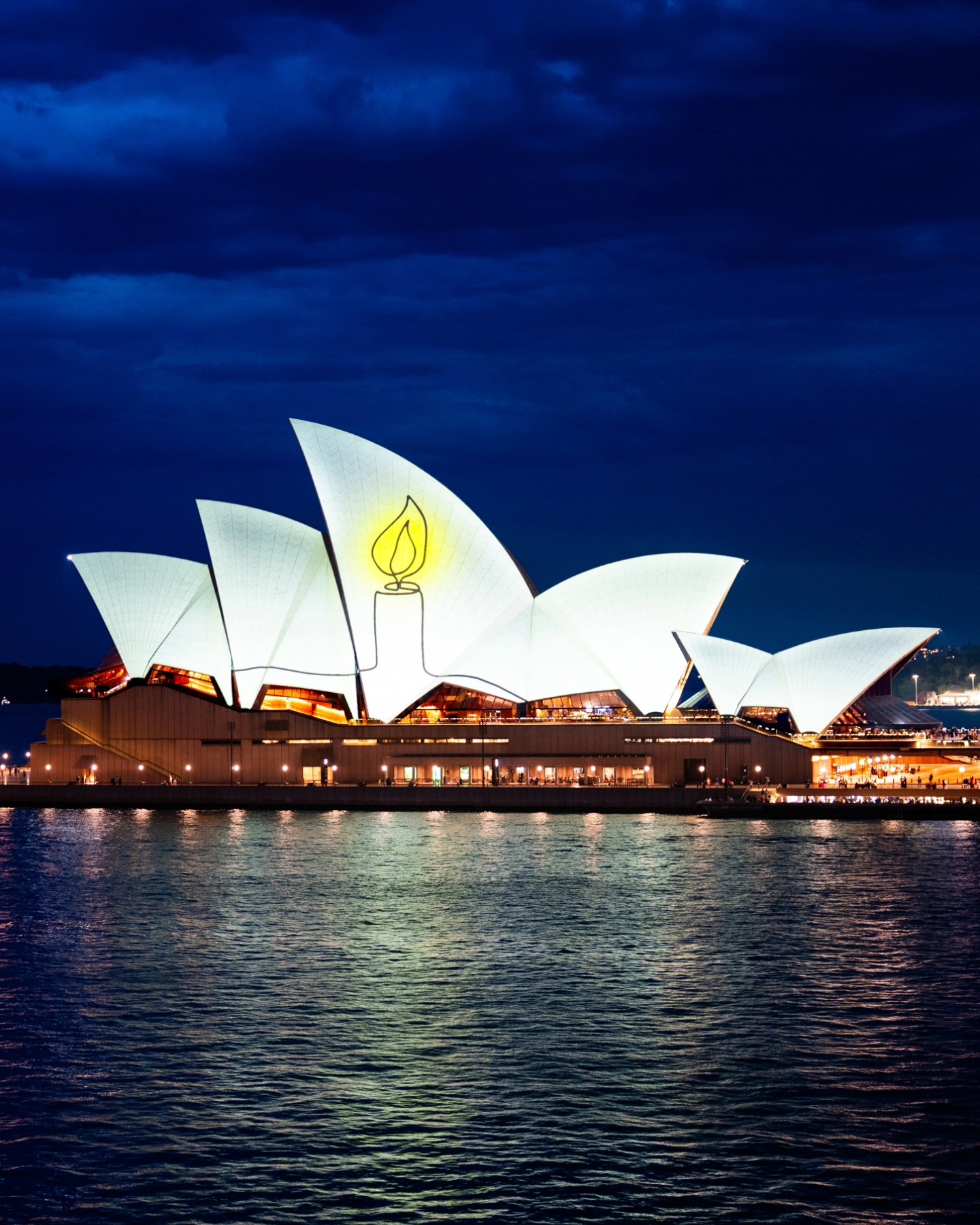
Anthony Albanese is right about one thing: what happened at Bondi was “an act of evil” and antisemitic terrorism that struck at the heart of the nation. But if all we do in response is tinker with gun laws at the edges, we are kidding ourselves. This is about far more than numbers on a firearms licence.
National Cabinet has now promised to “strengthen Australia’s gun laws” – a crackdown on 3D‑printed weapons, limits on how many firearms one person can own, tightening imports, bigger controls on high‑capacity magazines, and speeding up the long‑promised national firearms register. We are told that “the government is prepared to take whatever action is necessary” and that licences should not be “in perpetuity” because “people can be radicalised over a period of time.” All true. All necessary. And yet, brutally, obviously, not enough.
Because here is the fact that will not leave my head: a man living in the quiet suburbs of Sydney, the father of the younger attacker, held six registered guns in his name. Six. In a country that prides itself on Port Arthur as a turning point, on having “solved” the mass‑shooting problem, a licensed firearms owner with six weapons was able to walk into a Chanukah event and help turn a summer evening into a massacre.
Now, the NSW Government is proudly touting “the toughest gun law reforms in a generation.” Buried in that announcement is one of the centrepieces: “imposing a cap of four firearms per individual, with strict exemptions for primary producers and sports shooters, who may hold a maximum of 10 firearms.” In other words, the legal ceiling will move from six guns in one suburban wardrobe to four – with entire categories of people still allowed to own as many as ten, if they tick the right boxes.
The link is here, in case anyone thinks this sounds exaggerated.
Four instead of six. This is what is being sold as a historic safeguard. As if the moral line lies neatly between four guns and five. As if the difference between a licensed shooter with four guns and a licensed shooter with six is what will save the next group of Jews lighting candles by the sea. If this is all we are prepared to do, then we have learned nothing.
Yes, gun laws matter. They always have. The Howard reforms after Port Arthur worked; they did sharply reduce mass shootings, and the decision to buy back and ban whole categories of weapons saved lives. The national firearms register must finally be finished, not left as an endless “work in progress.” Limits on numbers of guns and on who can hold them must be real, not symbolic, and the default for high‑risk weapons should be zero, not four, not ten.
Access to firearms should be rare, hard‑won, heavily checked and regularly reviewed. Licences must not be set‑and‑forget; if there is any sign of radicalisation or violent extremism, the licence should disappear faster than the press conferences. That would look very different from a system where an “upper cap” of four guns is presented as a grand gesture, while the same media release quietly guarantees special deals for those who can argue they are primary producers or competition shooters.
But the Jewish community is entitled to say: this is not just about bits of plastic and metal. Guns are the last step in a chain that starts much earlier.
Where do we begin to break that chain?
We start with education. Not as a soft slogan, but as a hard obligation. The currents that carried two men to Bondi with hatred in their hearts did not start with a licence form; they started with stories, sermons, social media feeds and friendship circles, with what children hear at home, at school, in youth groups, and in online spaces where no adult is watching.
If schools – state, independent, faith‑based – receive public money, they owe the public something in return. They owe a curriculum that does not just avoid overt incitement, but actively teaches the core of a human‑rights culture: that every person, including Jews, has equal dignity and equal claim to safety. Democracy is not just a word in a civics book; it is a shared project that depends on how we speak about each other, whose fear is taken seriously, and whose pain is dismissed as “political.”
This is not about targeting “Islamic schools” as a bloc or indulging in lazy blame. It is about insisting that any publicly funded schooling, of any faith, must sit squarely within Australian law and human‑rights standards. If we are so afraid of being called racist that we stop asking what is being taught, we abandon our responsibility to the children in those classrooms – and to the children outside them who may one day be in someone’s sights.
Then there is enforcement. Antisemitism has been marching in plain sight in Australia for years. Jewish leaders have warned, over and over, that something was shifting: assaults, harassment, rallies where “Zionist” and “Jew” were treated as interchangeable targets, online mobs making Jewish names trend for all the wrong reasons. We were told to calm down, that the system would cope. It hasn’t. Not on campus. Not in the streets. Not now at the water’s edge on a Jewish holiday.
If the state is serious about “doing whatever is necessary to eradicate antisemitism,” as the Prime Minister now says, then it must show it. That means prosecutions for incitement, not just press releases. It means using existing laws, and if those are too weak, changing them. It means real consequences for those who cross the line between protest and persecution, instead of shrugging and assuring Jews that “this isn’t who we are” while doing very little to prove it.
It also means taking immigration and citizenship seriously as part of the picture, without turning “migrant” into a dirty word. A person who wants the gift of Australian citizenship should show, over years, that they understand what that means – that they can live by our laws and respect the rights of others. If there are warning signs of sympathy for violent ideologies, they cannot be brushed aside with “but we don’t want to look prejudiced.”
And if, after all of that, someone who has been given a home here turns their hand to terror, there must be no ambiguity about where the state stands. Status can be removed. Assets can and should be available to compensate victims. The message must be ruthless and clear: this country will defend its Jewish citizens first, not those who seek to murder them.
All of this sits alongside – not instead of – tougher gun laws. The proposed national firearms register, the buyback scheme announced by the Commonwealth, and the NSW package on magazine limits, reclassification of certain rifles and mandatory storage checks are all necessary pieces. Cracking down on 3D‑printed weapons and high‑capacity gear is overdue. But when a government can say with a straight face that capping private arsenals at four guns is “the toughest reform in a generation,” something has gone missing between the talking points and the lived fear at the Jewish end of the beach.
As this is written, it is the second‑last day of Chanukah, the festival of light. This year, the darkness has intruded in ways that cannot be unsaid: candles on Bondi Beach became targets; families who went out for doughnuts and songs came home, if they came home at all, to a different country.
And yet, the point of Chanukah is not that darkness wins. It is that a small, stubborn light keeps burning when logic says it shouldn’t. For Jews in Australia, and for those watching from Israel and elsewhere, that light cannot remain a metaphor. It has to show up in the hard places: in the laws we pass, in the classrooms we fund, in the people we welcome, and in the courage to say that “never again” is not a slogan we dust off only after the sirens sound.
We honour the dead by demanding more than small, cosmetic changes. We honour them by insisting on a country where Jews do not have to scan the horizon at a festival of light and wonder where the next shot will come from. And if that means admitting that “four guns, not six” is not nearly enough, then that admission would be the first honest step.
Sharonne Tidhar is an Australian writer.
comments