



The ongoing war that began on 9/11
Twenty-five years after 9/11, truth and moral clarity remain essential weapons in the war against terror.
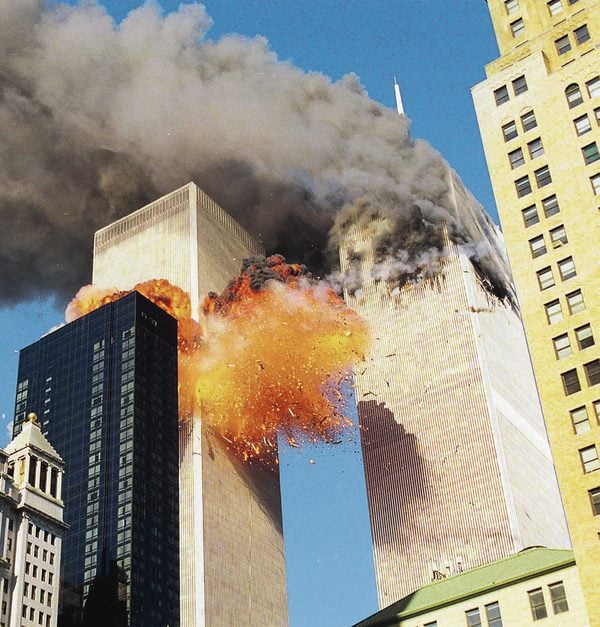
The 9/11 zone in New York is a quiet space inside one of the world’s most bustling cities. The sound of water as it flows from the edges of the two rectangular pools where the Twin Towers once stood is almost meditative. Yet inside the 9/11 museum, the twisted steel foundations of the towers confront you with the horror of that day 25 years ago. There is the intense sadness and solemn quiet of a graveyard.
After the end of the Cold War, the West deluded itself that “peace in our time” had finally arrived. This was a fatal misunderstanding. For decades, Islamist extremists had been spreading an ideology of taking the battle to the “infidel” enemy’s soil – and developing the capability to do so.
On September 11, 2001, four US aeroplanes were hijacked by al-Qaeda terrorists – two crashed into the Twin Towers in New York, one struck the US Defence complex at the Pentagon and one fell to earth on empty land after its passengers bravely fought the terrorists. 9/11 was arguably the largest and most devastating terrorist attack in history, leaving almost 3000 people dead.
The response from the US-led West was to launch the “global war on terrorism” – a vast, transnational, multi-faceted battle. The campaign began with US invasions of Afghanistan and then Iraq. The aim was to create shockwaves that would rattle the Middle East into greater openness to Western values, like human rights and democracy. US Secretary of State Condoleezza Rice warned in 2004 that realising this vision, “may take decades [and] will require a commitment of many years”.
Indeed, years of conflicts followed. Inspired by the toppling of Iraqi dictator Saddam Hussein in 2003 and facilitated by the internet – a new way to (almost) freely communicate – the Arab Spring erupted in 2011. It was a wave of popular revolts against the Arab world’s authoritarian governments, but it ended with little positive change. In 2014, the ISIS terror state was created between Iraq and Syria, until it was mostly defeated some years later. In December 2024, the Syrian dictator and war criminal, Bashar al Assad, was removed by a movement led by former jihadist Ahmad al Shara’a.
comments