



The principles and purposes of Jewish education
As another school year begins, let us give some thought to traditional principles of Jewish education.
The rabbis taught: “A father is obligated regarding his son to circumcise him, to redeem him (if he is a firstborn), to teach him Torah, take a wife for him, to teach him a craft and some say even to teach him to swim” (Kiddushin 29a).
Leaving aside the technical responsibilities implicit in this talmudic statement, from a rabbinic perspective parental responsibility in the educational field clearly extends in three directions.
The first involves teaching of Torah – facilitating knowledge of our religious heritage and its requirements that will lead to the child’s full participation in Jewish life.
The second involves teaching of a means of livelihood. Not doing so, say the same sages just a few lines further on, is to be compared to teaching the child highway robbery. For if the skills essential to earning a living are not provided, such dereliction of duty makes that parent responsible for what follows in the child’s life.
And the third, teaching a child to swim, is not only important in itself for reasons particularly obvious in this land “girt by sea” and also, as we have recently seen, so prone to flooding in an unexpected manner in places even as bushfires rage elsewhere. It also symbolises the need to provide the child with the tools enabling swimming rather than sinking when faced with so many practical dangers that arise in life.
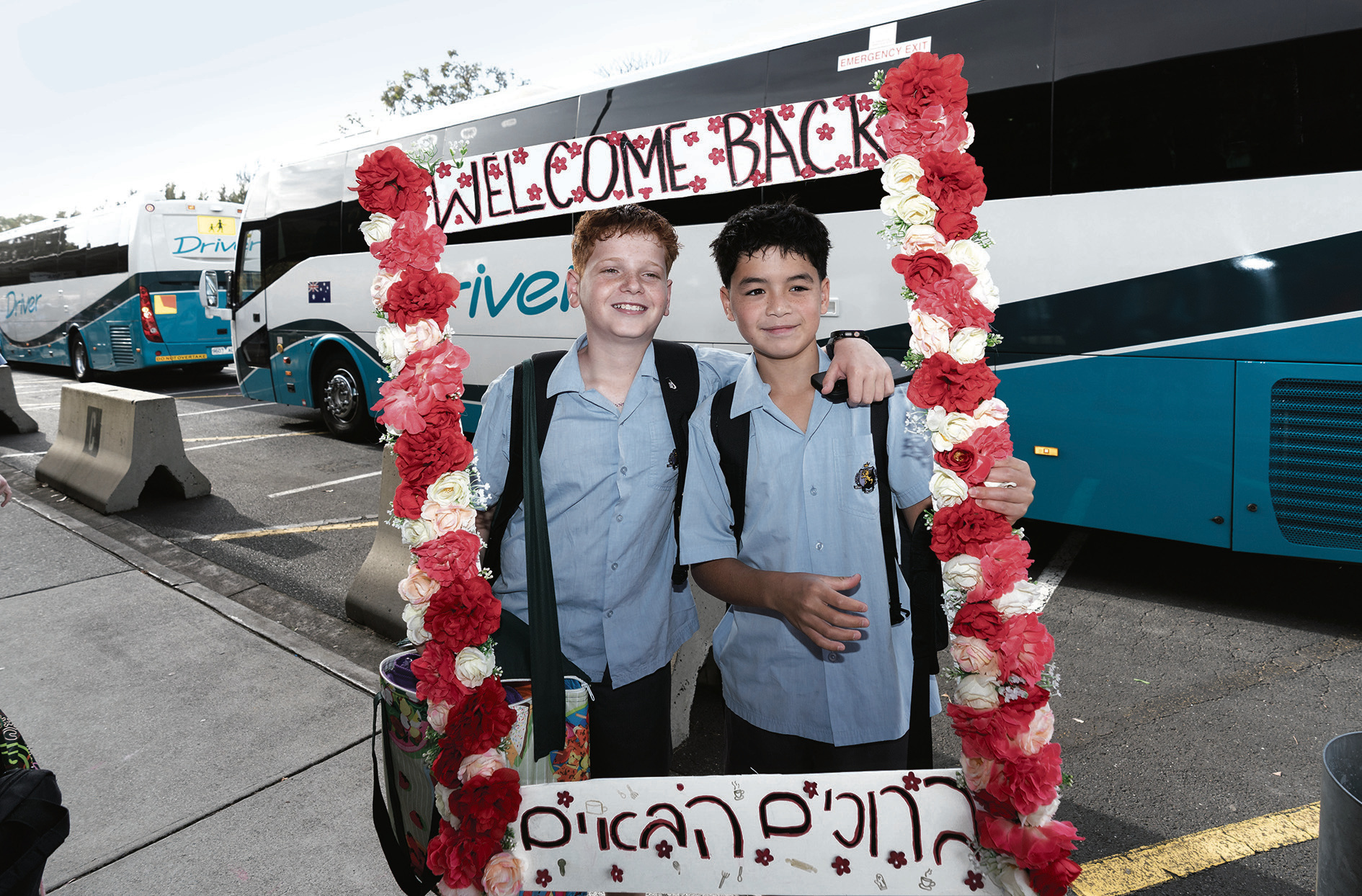
As our children across the nation commence the 2026 school year and countless hard-earned dollars are again funnelled into our Jewish school system by parents and others, it is time to reflect on what we seek from those charged with fulfilling educational responsibilities to the next generation.
Certainly from a halachic perspective direct parental responsibility and involvement remains paramount. It cannot simply be delegated to a school leaving the parent to blame the school alone when sought outcomes are not achieved. Nevertheless we also need to be clear in our minds as to what outcomes we expect in return for allowing the school to have our children in their charge – as well as from the perspective of “value for money” paid for our children’s education.
And at the same time we could ask as to what the community as a whole expects from the broad spectrum of Jewish schools that provide educational opportunities across our community as a subset of Jewish educational streams worldwide and the educational objectives of the Australian national entity.
To answer all these questions, one would need the breadth of a book rather than the length of a column. But a few pointers are in order.
One common thread in all our schools, despite their variant religious/Zionist philosophies, is the extent to which a primary objective is to inculcate and pass on elements of our heritage. Some may emphasise Talmud and strict religious practice while others may emphasise Hebrew or Yiddish language and culture, but all are part of that tapestry of Judaism that is both our heritage and our future. Parental school choice reflects the approach they seek to transfer to their children. The other common thread is the extent of striving for academic excellence translating into examination results that will facilitate further study of the students’ choice.
Let me say here and now, however, that in seeking that excellence it is essential that schools also provide a useful education for those who will not achieve such results yet need the facilities of our schools to ensure that they too participate in, and subsequently remain part of, our community. What we as a community and as individual parents seek from our schools is success in achievement of these objectives.
And in that context, we seek from staff professionalism to the nth degree and willingness for they themselves to listen and learn. All involved in Jewish education are well aware that Jewish parents are hard to please; indulging in criticism of schools and individual teachers seems to be a common form of whiling away time on a long, hot Shabbat afternoon. (One might add that whether really justified or not, if less of such criticism took place within earshot of our children, they themselves might be more inclined to show the respect to schools and their staff, which is fundamental to the learning process.) But teachers and school management can never rest on the laurels of yesteryear; they must continually make their best efforts towards achievement of these aims. And in so doing, listening and responding to constructive criticism is of paramount importance.
To all enrolled in school for 2026, we wish the best of success in their learning and personal development. And to teaching staff and school management, we say “aleh ve’hatzlach” – “go up and be successful” (Kings 1 22: 15) in your most sacred of tasks.
Shabbat shalom,
Yossi
Shabbat times Melbouren: Friday, February 6 – Shevat, 19 Candle lighting 8.11pm. Saturday, February 7 – Shevat 20, Shabbat ends 9.11pm
Shabbat times Sydney: Friday, February 6 – Shevat, 19 Candle lighting 7.39pm. Saturday, February 7 – Shevat 20, Shabbat ends 8.35pm
comments