



The Special Envoy’s plan was always doomed
'A plan for tackling racism was recast as a plan for stoking racism. And it was always going to be thus'
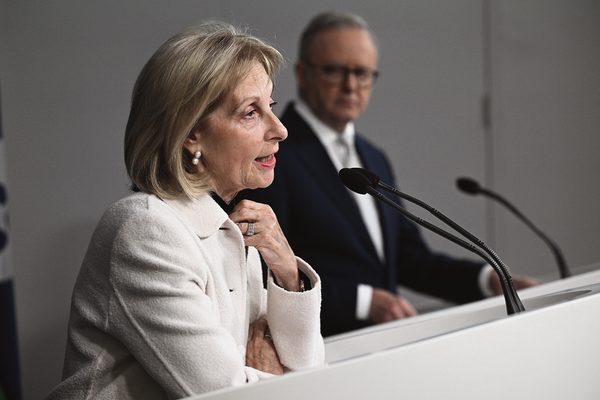
Jillian Segal’s appointment as Australia’s special envoy to combat antisemitism was booby-trapped from the start, thanks to the deeply ambivalent government that appointed her as well as the unique nature of antisemitism itself – a mutating conspiracy theory about a people deemed spectacularly evil, rapacious and above all, duplicitous.
An antisemitism envoy is someone governments can less get behind than hide behind. Can you imagine Anthony Albanese, declaring, as does Segal, that antisemitism is not only a creature of the far-right but also of the far-left and of “radical Islamism”?
Can you imagine him gravely informing the Australian public that antisemitism has become “normalised” on university campuses? And that for the most part hatred of Israel is antisemitism or else why do flare-ups in the Middle East invariably spark violent attacks on Jewish targets in the Diaspora?
Had Albo and co decided early in the piece to hammer home to the Australian people the truth about antisemitism it might have stemmed the tide of anti-Jewish hatred enough to render a plan to combat antisemitism unnecessary.
So Segal is left to “do the work”, as the woke would have it, of educating the public on the shape-shifting nature of anti-Jewish prejudice. She is a human shield set up to absorb the inevitably ferocious backlash.
Because, whether of the white nationalist or “post-colonial” Marxist or brown Islamist strain, antisemitism’s ground zero is a myth of the nefarious, uniquely powerful Jewish lobby that prevails over governments and other institutions against national interests and against all that is virtuous and humane. In this instance the trope holds that Segal’s plan to combat antisemitism amounts to a wealthy minority stifling political dissent so that the Jewish state can evade the consequences of its ongoing “genocide” in Gaza.
The result is that Jews cannot name antisemitism without triggering the antisemitic trope that they’re exploiting their immense power to gain exceptional privileges.
But what other minority encountering racism – including actual violence – and seeking a forceful response from the government is accused of peddling exceptionalism?
The accusation itself proves Jews are a special case, and that the hatred confronting them is exceptional. This doesn’t make anti-Jewish racism worse than other kinds of racism; merely different, and therefore requiring a customised solution. And because the solution demands soul-searching from the intellectual left, the left will resist the demand with its vast institutional power. Because it won’t, or can’t, admit to its own racism.
“Just because the most powerful in our country have endorsed this report does not mean we should agree with it,” wrote Richard Flanagan, the first writer in history to win both Britain’s major fiction and non-fiction prizes, in a piece in the Nine papers headlined, “To defend our democracy, PM must disavow and abandon Segal report.”
To whom is Flanagan referring when he speaks of “the most powerful in our country?” Does he mean Jews such as Segal are the most powerful in our country – even if their power falls short of controlling the media and the universities where a mob laid siege to the office of a Jewish academic, masked thugs disrupted lectures in search of “Zionists”, protesters camped out for the end of Israel and many Jewish students felt too intimidated to turn up at all?
And who is the “we” that Flanagan insists must resist the dangerously powerful? Good, decent people like him who cherish the lives of innocents in Gaza? Who cherish academic freedom?
Of course, some of the most enthusiastic proponents of the trope of Jewish power are themselves Jewish.
Segal’s plan is “the latest push to weaponise antisemitism”, wrote Louise Adler in The Guardian, six days after the latest alleged firebombing of a Melbourne synagogue. The Jewish community organisations have “successfully badgered the government of the day”, cowed the ABC and “corralled” more than 500 captains of industry to subscribe to full-page ads against antisemitism.
Then shortly after the release of Segal’s plan, The Guardian rehashed a story from February that a trust linked to Segal’s husband made a $50,000 donation to right-wing political lobby group Advance Australia, campaigners for a No vote during the Indigenous Voice referendum and in the business of “vilifying Palestinians”, according to former Foreign Minister turned pro-Palestine evangelist Bob Carr.
But his donation may have been less a reflection of his innate political leanings than a measure of his political desperation, in which he was far from alone.
In any event, within days of the release of her exposé of institutional antisemitism in Australia, Segal and the Jewish community in whose name she speaks metamorphosed from a minority under threat because of an assault on democracy into the enemy of democracy. And a plan for tackling racism was recast as a plan for stoking racism.
And it was always going to be thus.
Julie Szego is an author and journalist. This is an edited version of “The Crucifixion of Jillian Segal” first published on Substack at Szego Unplugged: szegounplugged.substack.com/p/the-crucifixion-of-jillian-segal
comments