



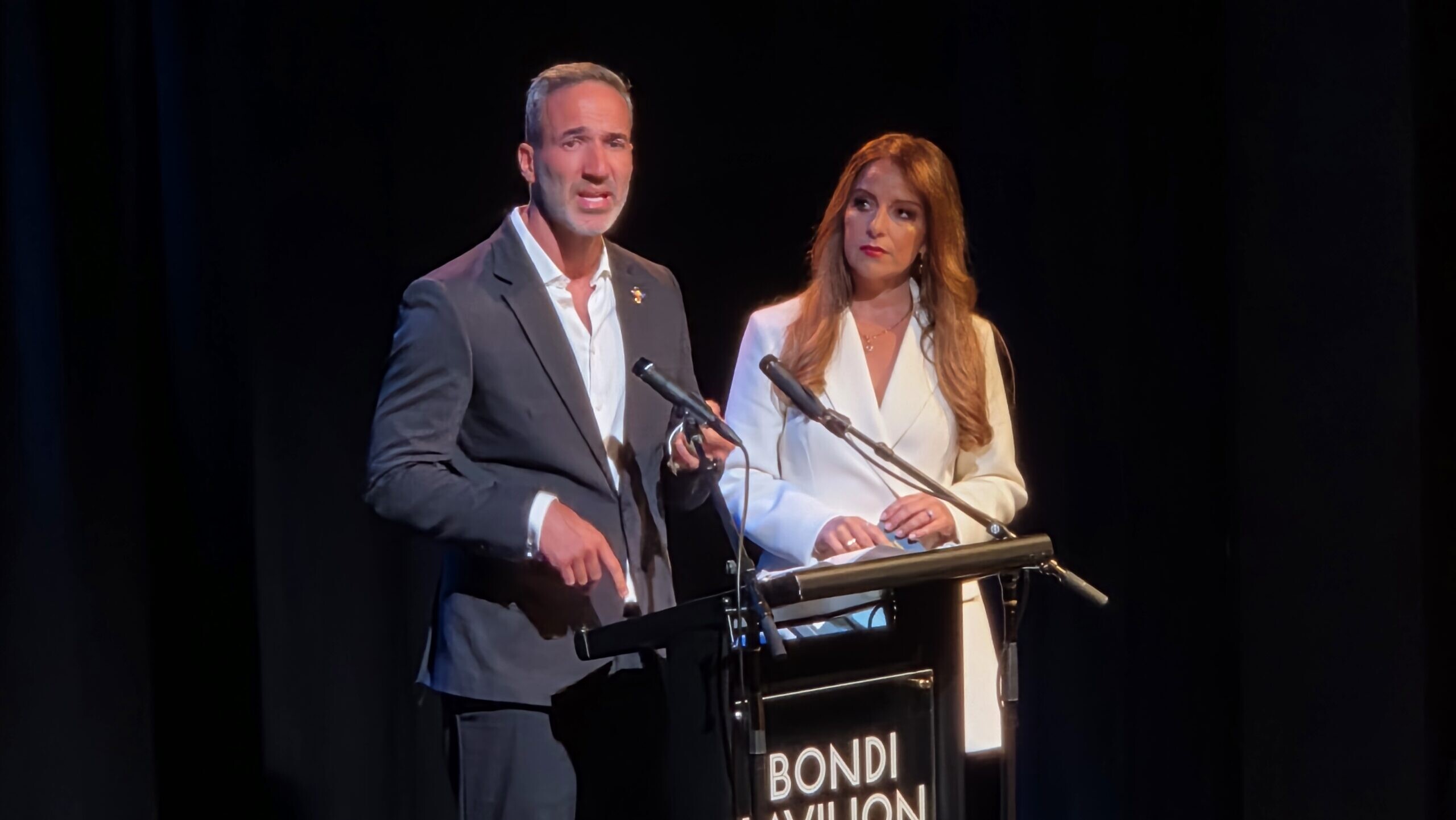
As News24‘s was moving from hospital to hospital in the aftermath of the horrific terrorist attack at Bondi on December 14 last year, interviewing the wounded and sitting with families who had lost everything, she realised, “There were just too many stories to capture, and I deeply wanted to do them justice.”
When it was suggested to her that she write a book, her initial reaction was, “There is no way, I do not have time.
“But this was too important,” Markson told an auditorium at Bondi Pavilion last Thursday night.
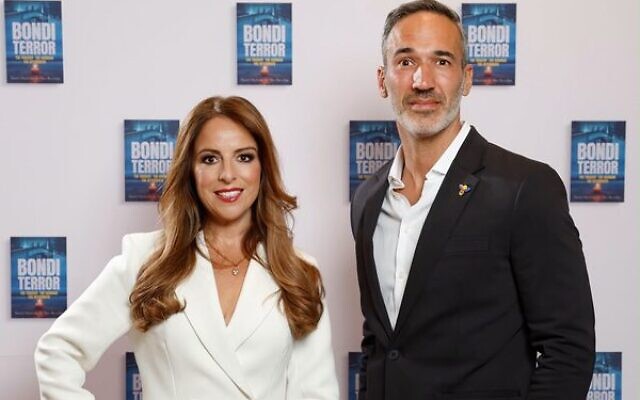
So she reached out to “the one person who has been a standout, extraordinary voice on antisemitism over the past few years”. She texted Executive Council of Australian Jewry co-CEO Alex Ryvchin, “very casually, saying I was thinking of writing a book and wondered if he wanted to write it with me, as if I was asking him just to come on my show that night”.
Ryvchin did not need persuading.
“I immediately knew we had to do this. It would be a vital recording of Australian history, and I felt that we could do it justice,” he said.
“Even though in our lives at that time we were utterly consumed by work and by concern for the community, we knew this book just had to be written.”
Bondi Terror: The Tragedy, the Courage, the Aftermath, published by HarperCollins, was launched last Thursday night in a room of survivors, bereaved families, first responders and political leaders, metres from where 15 people were murdered on December 14.
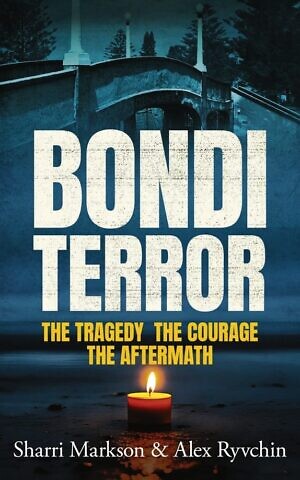
The authors presented it, in Ryvchin’s words, “to the families who lost everything, to the hundreds with wounds that do not heal, and to our community that has come through fire” – and, Markson added, “to our country that we both love. We present this book, this eulogy, this testament.”
The book draws on dozens of hours of testimony from survivors, witnesses and first responders.
One story that had not previously been told is that of Detective Senior Constable Cesar Barraza, the police officer who neutralised the gunmen.
“It’s the greatest untold story from Bondi,” Markson said.
She described Barraza as a deeply religious Seventh Day Adventist who had prayed weeks earlier to be posted somewhere he would be needed. He had been at Bondi six weeks when on the night of December 14, he ran towards the gunfire without his body-worn camera, his phone, spare magazines or his bulletproof vest.
“I am in awe of Cesar, truly in awe,” Markson said. “He didn’t hesitate. He just ran to save the Jewish community, and he is a strong supporter of the Jewish community.”
She described Barraza as humble, modest and unassuming.
“We would never have found out his story except we were desperate. I was desperate to know about this police officer who took down both of the shooters, and I went looking for it. And I made a lot of phone calls.
Barraza may now receive Australia’s highest civilian award, the Cross of Valour, for his bravery.
For Ryvchin, the hardest material in the book was about his own rabbi and community, and a chapter tracing how the country arrived at December 14 – a road that is in part, he said, an actual road. Military Road runs a few kilometres from Bondi Beach to his former home in Dover Heights, which was firebombed in January 2025, less than a year before the attack.
“That was the road to Bondi, the road of firebombings and attacks escalating day by day, which weren’t curbed, which weren’t stopped, and culminated in this horror,” he said.
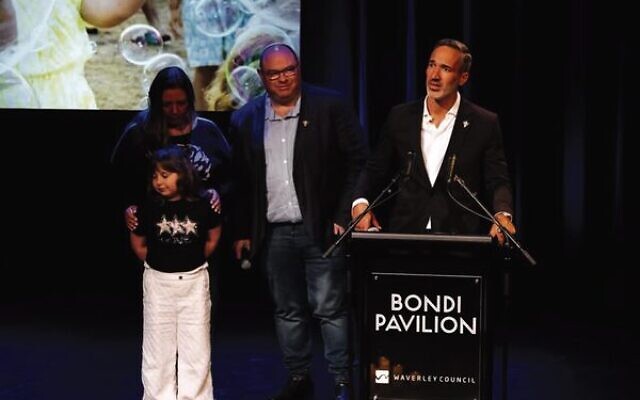
He said writing the book had meant reckoning with his own position. “This was my community. This was the event that I attended every year with my family for as long as I can remember. This was my rabbi that was killed. These were my people who I knew my whole life.”
What steadied him, he said, was watching those who had lost far more – among them Michael Britvan and Valentina Poltavchenko, the parents of 10-year-old Matilda, and Chabad of Bondi spiritual leader Rabbi Yehoram Ulman, whose son-in-law Rabbi Eli Schlanger was killed.
“Leadership doesn’t always come from the places we might expect. It doesn’t always come from elected officials. It comes from ordinary people placed in extraordinary circumstances,” he said. “If they could go on, for me, it’s easy.”
No one agency had the complete picture
Markson said she and Ryvchin had not set out to investigate the failures preceding the attack, but chapters on them were added as they went.
“There were a lot of warning signs about the alleged shooters and their activities,” she said. Intelligence agencies and law enforcement “had different pieces of the puzzle in their possession, but no one agency had the complete picture, and that’s the ultimate failure”.
She revealed the alleged shooter Sajid Akram came to the attention of agencies in 2007, 18 years before the massacre, when the national security hotline received an alert about his interest in explosives, and again in 2014 over his interest in Islamic State. When ASIO conducted an assessment in 2019, it did not have access to either report.
“It was just mistake after mistake after mistake, and that was hard to write,” she said, adding that the chapter opens by making clear it is not about assigning blame. She quoted NSW Premier Chris Minns back to himself on what is needed now: radical transparency, “the minimum obligation in terms of honouring the dead”.
Speaking at the event, Minns said the book contained hard questions for leaders like him.
“It’s the first job of government to protect its citizens, and we failed our Jewish brothers and sisters on December 14,” Minns said. “We made some big mistakes, including the decision to let protesters march on the Opera House two days after October 7. And bear in mind that was before any action in Gaza.
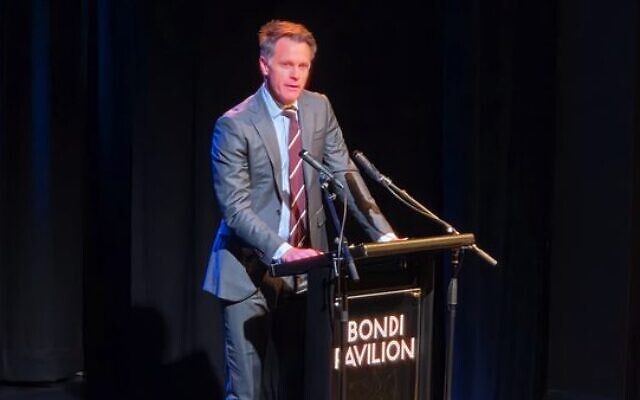
“We find it abhorrent when people glorify violence by chanting ‘globalise the intifada’ on our streets and we won’t cop that culture in Australia.”
Minns said the “good news” is that most decent, ordinary Australians agree, citing the Bondi surf lifesavers who raced to aid the massacre victims, mentioning two in particular who came to the aid of Leibel Lazaroff, a trainee rabbi from Texas, who was injured while himself helping others. James McIntosh and Alexandra Edmondson, friends at the time, are now engaged.
“But as Sharri and Alex said, that’s a story for another day,” Minns said.
“Sharri and Alex, this book is confronting and at times heartbreaking to read, and it must have been incredibly difficult to research and write. I’m not sure anyone else could have told the personal story of the victims in such a caring, intimate, empathetic way. It takes a huge amount of trust to tell a journalist about the worst day of your life, but we can be glad that they did, because in these pages, we now have a definitive record of the unbelievable bravery of the people of this community.”
Addressing the authors, News Corp executive chairman Lachlan Murdoch said, “Together, both of you brought your insights, your compassion, and your empathy to the attack and its aftermath as it happened.
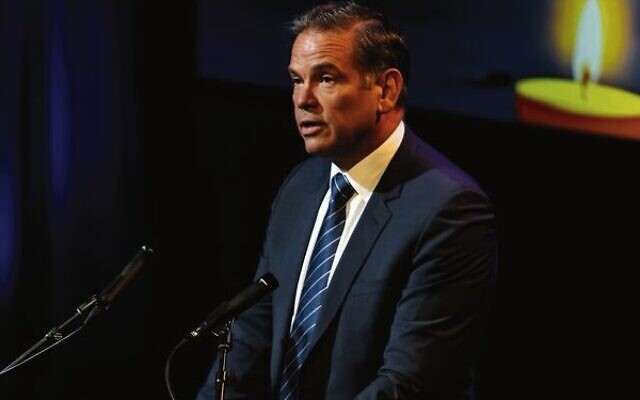
“We grieve for all who were injured and lost. This book remembers and honours them, as well as the many heroes who stepped in, who stepped up when it mattered most.
Speaking to victims’ families, he added, “Without your courage, your strength and your honesty, this book could not have been written. It would certainly not have been as powerfully moving a work, faithfully and accurately describing what happened on December 14, its lead-up, and its aftermath.”
Former treasurer Josh Frydenberg, who hosted a panel discussion at the event, called the evening one of pride, hope and anger.
He said he was proud of Markson and Ryvchin, and hopeful that the many leaders from across society in the room were using their voices to make Australia better.
“Finally, there’s also anger,” Frydenberg said.
“When antisemitism moves from the shameful fringe to the public square, it’s no longer about the Jews, it’s about everyone else, and we are literally fighting for the soul of Australia.
“Fifteen innocent people have lost their lives, and so many others were shot. And as Sharri and Alex have said, those emotional and physical scars will never heal. It should never, ever have happened in our country, and I’m angry about it. And people here are angry about it because there are no excuses. Those people who are in positions of authority ignored the warnings. There were desperate cries for help that fell on deaf ears.
“It was cascading examples and exhibits of terror and harassment and intimidation that was of course going to culminate in this most dreadful terrorist attack on Australian soil in our history.”
‘I want 10 minutes with him’
Elon Zizer, shot six times and having spent two weeks in intensive care, told the panel he was ahead of the curve but living with nerve damage, pain and remaining shrapnel, and thought about that night 20 or 30 times a day.
“A friend of mine explained to me the concept of post-traumatic growth rather than post-traumatic stress, and I’ve really been trying to follow the path of post-traumatic growth,” he said.
He sought professional help after leaving hospital on how to talk to his two young children, and was advised to be open. “There were two really bad people that were trying to hurt innocent people,” he told them. He tries now to teach them that people are inherently good.
Hanna Abesidon described how her father Tibor Weitzen, 78, was murdered as he ate doughnuts with his wife of 37 years. They had met for coffee that morning, and he had urged her to come and enjoy the day as a family.
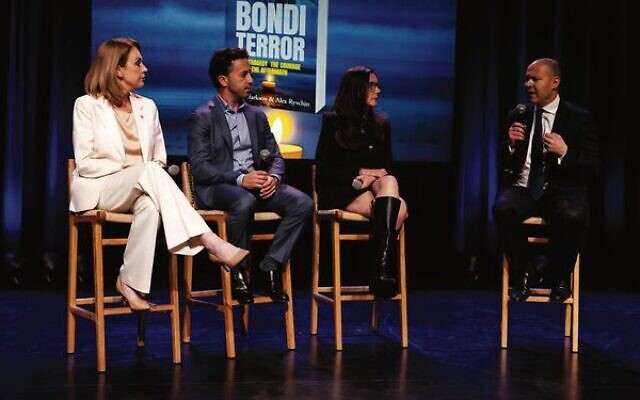
“He loved Australia. He brought us here for a better life, and I think that his message would be that he wants the old Australia back.
“I’d give anything to have him back, anything, any amount of money. I want 10 minutes with him next to me, just to sit.”
NSW Opposition Leader Kellie Sloane ran towards the attack, helping a father and son who had been hiding under the bridge into an ambulance before going in.
She described standing by a tree afterwards, catching her breath amid bullet casings, when a woman emerged from the car park and asked what had happened. Told the Jewish community had been attacked, the woman asked how she could be sure it was aimed at Jews.
“She wouldn’t have meant anything bad by that, but it was emblematic of what I’ve been hearing everywhere,” Sloane said.
Her first words on camera that day, she said, were that she did not know how she could ever tell her community they would be safe again. She can say it now, she said, but only with effort.
“Safety does not mean barbed wire around your schools. Safety does not mean armed guards at every event,” she said. “If the Jewish community, if any Australian community, is to be safe, we need to root out all forms of hatred. We need to get it at its core.”
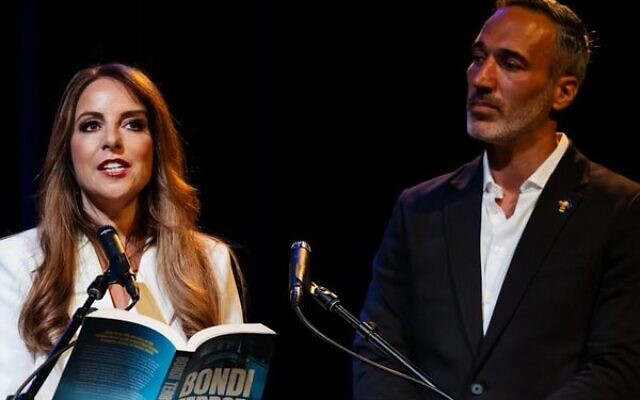
Ryvchin also used the launch to announce the establishment of the Matilda Foundation, honouring the 10-year-old who was killed and has since captured the nation’s heart and imagination. “I want to pledge to you that you are not alone, you will never be alone. We will always remember,” Ryvchin told her parents, their surviving daughter Summer by their side.
Michael Britvan thanked the community for their support, saying he did not know where the family would be without it.
“I feel like with help of Alex and the community, I’ll be able to instil that love for life and for humour, for love, that Matilda had, and I’m going to bring it to Australia and maybe around the world,” he said.
Rabbi Ulman closed the evening, noting that the last shofar blast of Elul had sounded that morning, with the traditional break before the new year.
“As we open and launch this book about the tragedy that struck Bondi, we stand at the threshold of a new year, praying that its pages will mark not an ending but a new beginning of strength, unity, peace and blessing,” he said.
Bondi Terror is out now.
comments