



Trump: Justice for Iranians and beyond
US president urges regime security forces to surrender as PM Netanyahu calls on Iranians to topple regime.
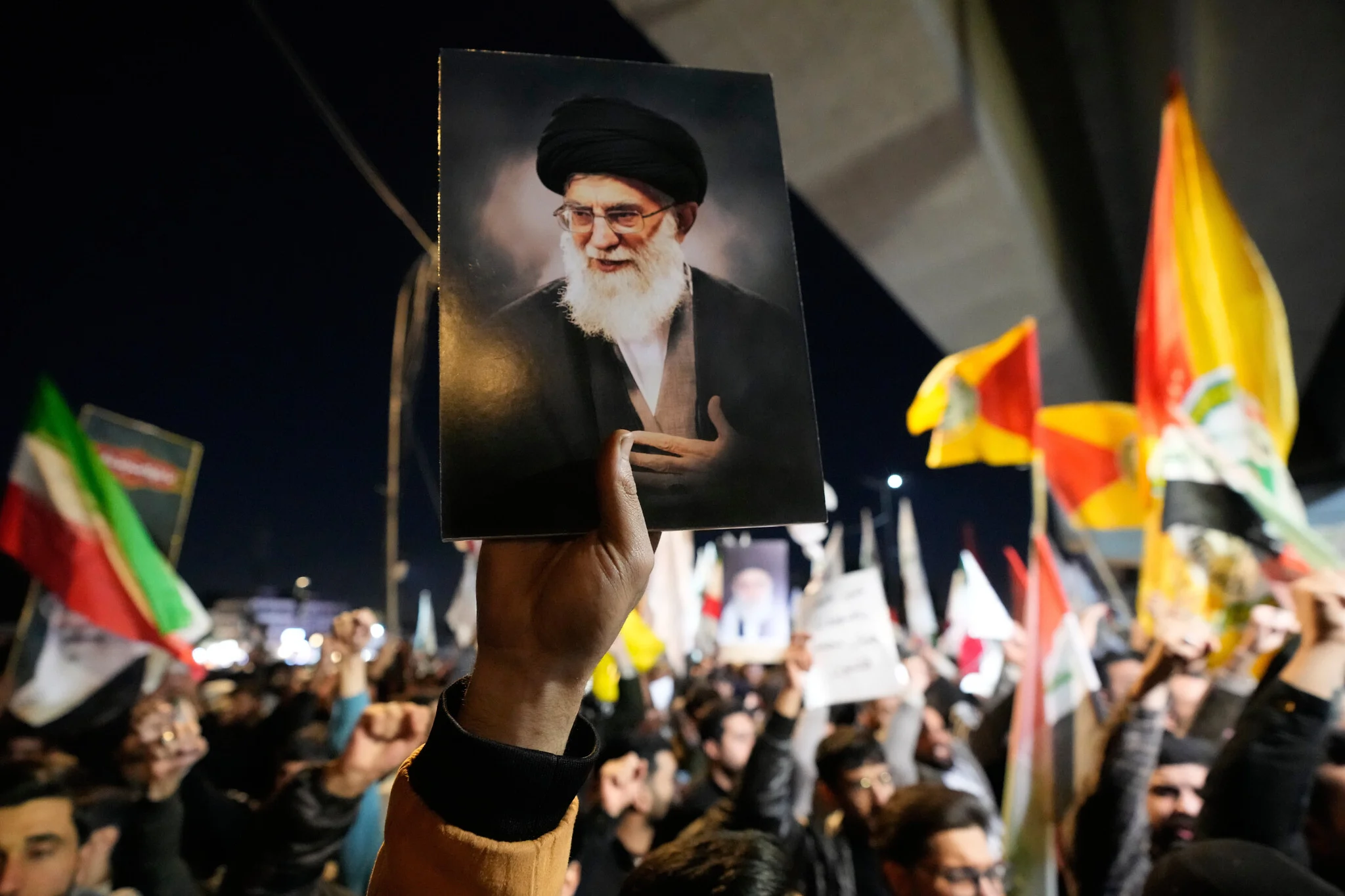
(THE TIMES OF ISRAEL) Iranian Supreme Leader Ayatollah Ali Khamenei was killed in American-Israeli strikes on Saturday morning, Iranian state media confirmed early Sunday morning, hours after US President Donald Trump declared the 86-year-old’s death in the most ambitious attack on Iran in decades.
“Khamenei, one of the most evil people in history, is dead,” Trump wrote on Truth Social, adding that US strikes would continue “uninterrupted” for the coming week or until peace is secured in Iran.
Israeli and US officials had increasingly projected confidence in the hours leading up to Trump’s remarks that the leader of the Islamic Republic had been killed in an airstrike on his compound.
An Israeli official briefing local media said the Iranian leader had been killed in an Israeli strike on his compound on Saturday morning, and a senior Israeli official told Reuters that his body had been found. Israel’s Channel 12 reported that Prime Minister Benjamin Netanyahu had been shown an image of his body after it was recovered from the compound in Tehran.
Iran’s state media said Khamenei was killed in his office in the early hours of Saturday, announcing a 40-day period of mourning. It added that family members of Khamenei were also killed, including his daughter, grandchild, daughter-in-law and son-in-law.
Earlier, before confirmation of the leader’s death, a post from the supreme leader’s X account purported to show that he was still alive, and regime-affiliated media outlets denied he had been killed.
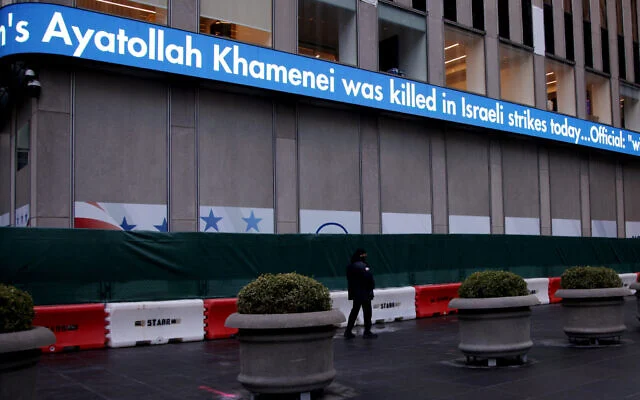
Trump wrote on social media that Khamenei’s death was “not only justice for the people of Iran, but for all great Americans, and those people from many countries throughout the world [who] have been killed or mutilated by [him] and his gang of bloodthirsty thugs.”
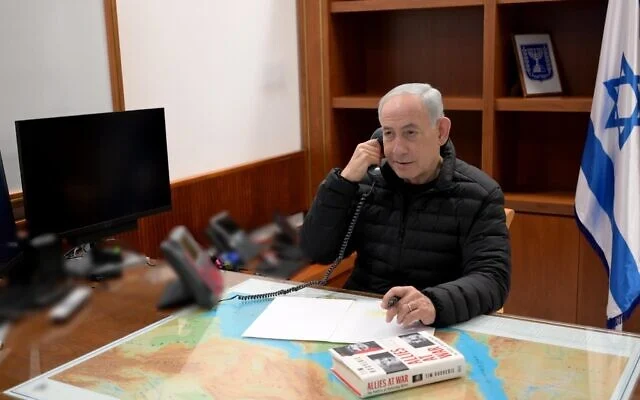
Netanyahu, in a video address to the public on Saturday night, said there were growing signs that Khamenei “is no more,” but did not openly declare him dead.
“This morning, in a powerful surprise strike, the compound of the tyrant Ali Khamenei was destroyed in the heart of Tehran… and there are many signs that this tyrant is no longer alive,” the premier said.
Cheers could be heard on Tehran’s streets after reports of the death, according to witnesses.
A Fox News reporter, citing an unnamed US official, said Washington believed Khamenei and five to 10 other top Iranian officials were killed in the initial Israeli strike of the operation, dubbed “Operation Roaring Lion” by Israel and “Operation Epic Fury” by the US.
Israel, having coordinated with the US, dropped some 30 bombs on Khamenei’s compound in the opening minutes of the assault, according to an unsourced Channel 12 report. The same report claimed the Iranian leader was underground at the location, but not in one of the two deepest bunkers that only US bombs could have penetrated.
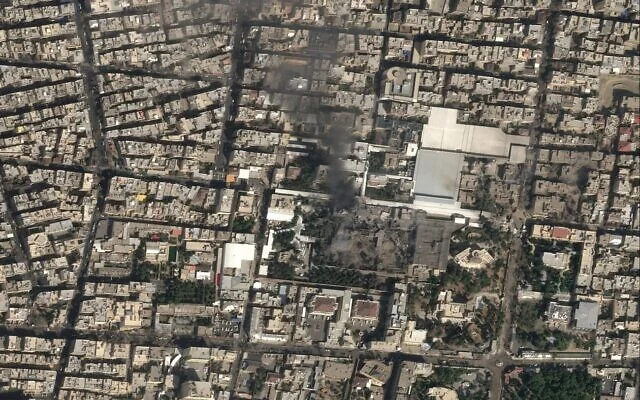
Satellite imagery has shown the compound largely destroyed.
Two Iranian sources told Reuters that Khamenei had met with Shamkhani and Supreme National Security Council Secretary Ali Larijani at a secure location shortly before the strikes began.
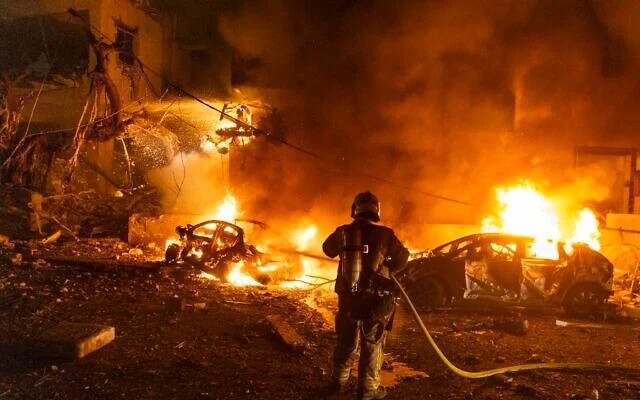
Iran responded to the Israeli and US strikes by firing dozens of ballistic missile barrages at Israel and Gulf states, which are close allies of the US and host its military bases.
As of Saturday night, two people had been confirmed dead in the strikes, including a woman in her 40s who was fatally wounded in a ballistic missile impact in Tel Aviv. The other confirmed casualty was a foreign worker in Abu Dhabi, the Emirati capital.
While Israel was reportedly behind the specific strike that killed Khamenei, Trump indicated the US played a major role while coordinating with Jerusalem.
Khamenei “was unable to avoid our intelligence and highly sophisticated tracking systems and, working closely with Israel, there was not a thing he, or the other leaders [who] have been killed along with him, could do,” Trump said.
“This is the single greatest chance for the Iranian people to take back their country. We are hearing that many of their [Islamic Revolutionary Guard Corps], military, and other security and police forces no longer want to fight, and are looking for immunity from us,” the US president added.
Such capitulations have not been independently verified.
Trump has called on Iranian security personnel to surrender in exchange for immunity or face imminent death.
“Hopefully, the IRGC and police will peacefully merge with the Iranian patriots and work together as a unit to bring back the country to the greatness it deserves,” Trump posted on Saturday. “That process should soon be starting in that not only the death of Khamenei, but the country has been, in only one day, very much destroyed and even obliterated.”
“The heavy and pinpoint bombing, however, will continue, uninterrupted throughout the week or as long as necessary to achieve our objective of peace throughout the Middle East and, indeed, the world,” the president concluded.
‘Years to recover’
It would take Iran “several years” to recover from the pummelling it received from the US and Israel, Trump said on Saturday evening in a phone conversation with reporter Barak Ravid from Israel’s Channel 12.
The president said he could choose to make the campaign as long as he likes or finish within a matter of days, but warned he would attack again if Iran attempted to rebuild.
“I can go long and take over the whole thing, or end it in two or three days and tell the Iranians: ‘See you again in a few years if you start rebuilding [your nuclear and missile programs],’” Trump said in the five-minute phone interview from Mar-a-Lago with Ravid, who published the English quotes on Axios.

However, he stressed that “in any case, it will take them several years to recover from this attack.”
Netanyahu urges Iranians to rise up
Netanyahu, in his televised statement, said Israel had eliminated commanders of Iran’s Islamic Revolutionary Guard Corps, senior regime officials and senior nuclear officials since Saturday morning, and that it would “hit thousands of targets of the terror regime” in the coming days.
The operation against Iran “will continue as long as is necessary,” the premier said, adding that “stamina is necessary”.
Vowing the operation would lead to “true peace”, Netanyahu said Israel would create the conditions for the Iranian people to “free itself from the chains of dictatorship”.
He called on the Iranian people to unite and rise up against the regime, urging them in the Hebrew-language video not to forego the “once-in-a-generation opportunity”.
“Soon your moment will come,” he said, “the moment when you must take to the streets in your masses, to complete the work to bring down the regime of horrors that embitters your lives.”
“Help has arrived,” he added in English.
The Israeli strikes on Iran continued into the night, with the Israeli Air Force confirming shortly after midnight that it had completed another wave of strikes targeting Iran’s ballistic missile launchers and air defence systems.
According to the IDF, the missile launchers and air defences were struck in western and central Iran. The military also said it “attacked several launch sites in central Iran that had not yet been targeted”.
One of the targeted missile launch sites in the Qom area was used by Iran to store “H-1” Ghadr missiles, capable of carrying warheads with hundreds of kilograms of explosives, the military said.
The IDF said the strikes on the launchers and other infrastructure at the sites “thwarted dozens of launches toward the territory of the State of Israel and dealt a severe blow to the regime’s most central offensive capability”.
Top Iranian officials killed
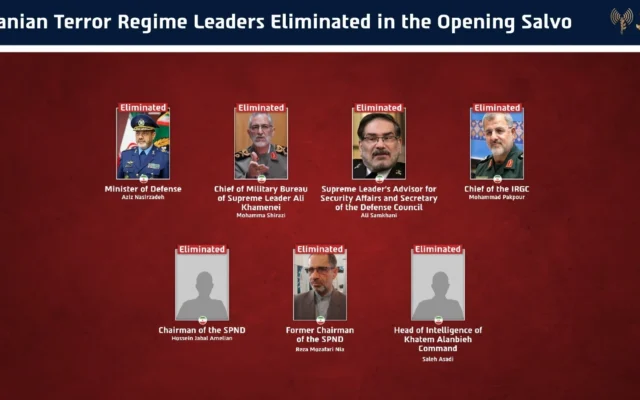
Elaborating on Netanyahu’s remarks about the deaths of senior figures in the Iranian regime, the Israel Defense Forces confirmed the identities of several members of Iran’s security leadership killed since Saturday morning. Among them were senior defence official Ali Shamkhani and IRGC commander Mohammad Pakpour.
Iranian media had earlier reported that Khamenei’s son-in-law and daughter-in-law were also killed.
The IDF said it could confirm the deaths of the following officials:
- Ali Shamkhani, a former IRGC Navy chief and Iranian army chief, and a top adviser to Supreme Leader Ayatollah Ali Khamenei. Israel targeted him in last June’s war and initially believed he had been killed.
- Mohammad Pakpour, commander of the IRGC. The IDF said Pakpour led Iran’s “plan to destroy Israel”, overseeing missile and drone attacks, support for Iran’s proxy groups, and what it described as the violent suppression of Iranian protesters during internal unrest last month.
- Salah Asadi, chief of intelligence in Iran’s military emergency headquarters and senior intelligence officer in the armed forces’ general staff. The IDF said he was involved in Iran’s “plan to destroy Israel”.
- Mohammad Shirazi, chief of Khamenei’s military bureau since 1989. The IDF said he served as liaison between senior armed forces commanders and the supreme leader, and was a central figure in the regime’s upper ranks.
- Aziz Nasirzadeh, Iran’s defence minister and a former chief of the Iranian air force and deputy chief of staff. The IDF said he oversaw industries producing long-range missiles and weapons transferred to regime proxies, as well as the SPND organisation advancing nuclear, biological and chemical weapons projects.
- Hossein Jabal-Amelian, chairman of SPND. The IDF said he was responsible for developing advanced weapons technologies and leading projects in the nuclear, biological and chemical fields.
- Reza Mozafari-Nia, a former chairman of SPND, who the IDF said advanced efforts to develop nuclear weapons.
‘Hellish international oppressors’
Meanwhile, Khamenei’s top aide Ali Larijani — whom Channel 12 reported had been among those targeted in the US and Israeli strikes — took to social media to vow revenge against Israel and the United States.
“We will make the Zionist criminals and the shameless Americans regret their actions. The brave soldiers and the great nation of Iran will deliver an unforgettable lesson to the hellish international oppressors,” Larijani wrote on X.
Khamenei had reportedly put in place detailed succession plans and emergency chains of command in the event he or other senior leaders were killed in US or Israeli strikes, elevating longtime loyalist Larijani to help manage a potential crisis.
Iran’s clerical leadership had already been facing mounting domestic opposition, marked by mass anti-government demonstrations in January. The regime cracked down on the protests, reportedly killing thousands — possibly tens of thousands — in the worst unrest since the 1979 revolution.
Protesters had again taken to the streets in recent days in remembrance of those killed the previous month.
Tehran residents had been going about their usual business on Saturday when the strikes began. Security forces flooded the streets, shops pulled down their shutters and few pedestrians ventured out, an AFP journalist reported.
“I saw with my own eyes two Tomahawk missiles flying horizontally toward targets,” a Tehran office worker told AFP before communications and internet access were cut.
The Red Crescent said 24 of Iran’s 31 provinces were affected by the strikes, listing more than 200 dead and over 700 injured.
Within the first 12 hours of the operation, the US military carried out nearly 900 strikes across Iran, according to an unnamed US official cited by Fox News.
The strikes were launched from land, air and sea and included drones, while US forces defended against hundreds of incoming Iranian ballistic missiles, the official said.
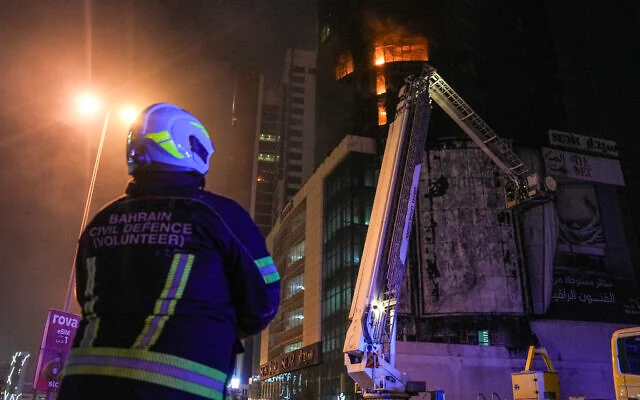
Iran fired about 300 missiles in the same period, many aimed at Israel. Explosions were also reported in the United Arab Emirates, Bahrain, Qatar, Kuwait and Saudi Arabia.
The US official said Iran struck “empty warehouses” in attacks targeting the US Navy’s Fifth Fleet headquarters in Bahrain, and claimed none of the counter-strikes affected US objectives in Operation Epic Fury.
Iran has around 2,000 long-range missiles and another 2,000 shorter-range missiles in its arsenal, both replenished after last summer’s US and Israeli strikes, the official said.
The goal of the joint Israeli-US operation, according to the official, was to ensure Iran no longer has the “capability to attack its neighbours: no drones, no missiles, no navy”.
The official said Washington knows where Iran is stockpiling its highly enriched uranium but that the sites are difficult to reach.
The operation was expected to last “a couple of weeks”, although Trump could choose to conclude it sooner.
The official added that a number of Iranian air defences still needed to be suppressed before US and Israeli forces could operate more freely in Iranian airspace.
Israeli military operations over the past two years had already killed several of Iran’s senior military officials and severely weakened Tehran’s proxy forces across the Middle East.
After Israel struck Iran in a 12-day air war last June, joined by the United States, both countries warned they would act again if Iran continued advancing its nuclear and ballistic missile programs.
Those threats were reinforced by a US military build-up in the region, even as Iranian and US officials engaged in nuclear talks.
comments