



Two girls, two cities, one imagined friendship
What if two Jewish women had met as 13-year-olds at Hakoah Club? Dear Jessy, Dear Miriam imagines that friendship in a tender staged reading.
Bondi’s Hakoah Club, 1989. Two 13-year-old girls meet beside the pinball machines and begin exchanging letters between Sydney and Melbourne.
Dear Jessy, Dear Miriam traces their imagined friendship through adolescence, identity and the curious timing of connection.
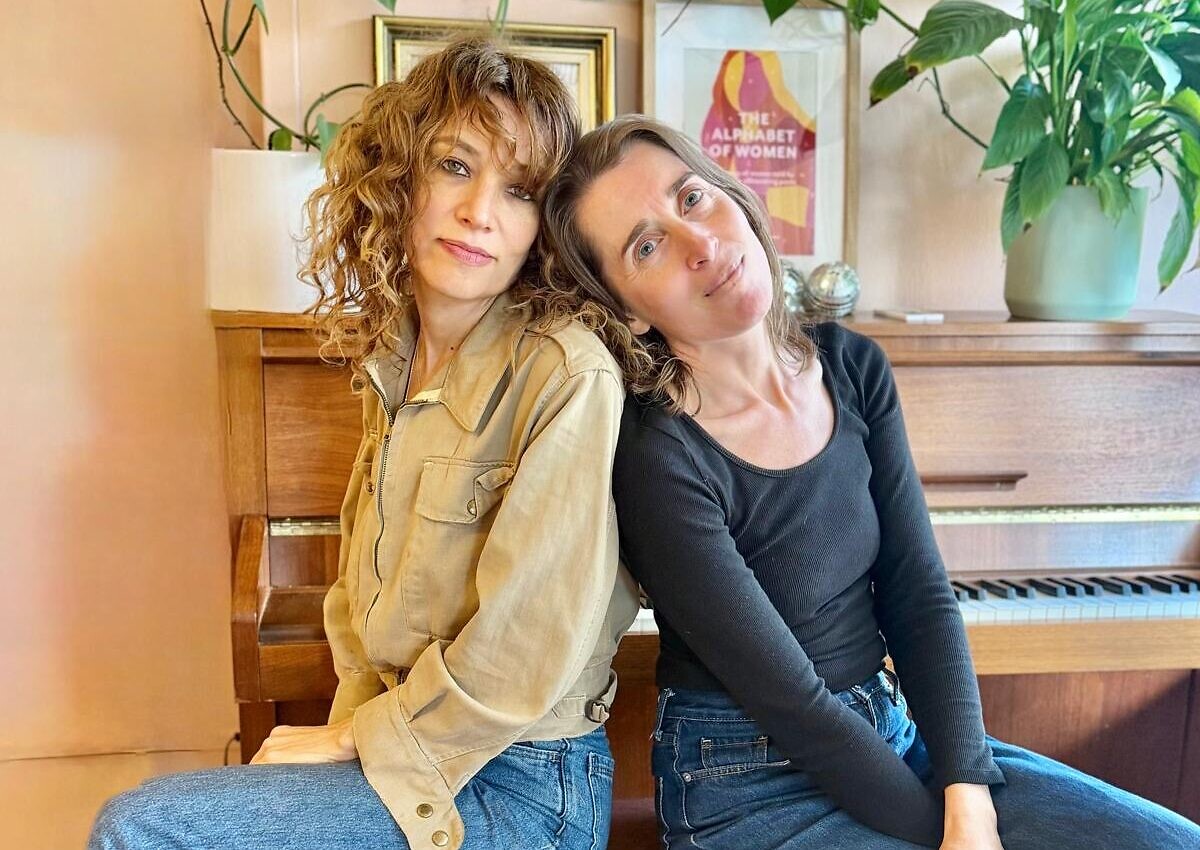
Here Miriam Hechtman and Jessica Chapnik Kahn give us a taste of what’s to come in their staged reading during The Festival of the Spoken Word.
Jessica: Hello Miriam!
Miriam: Hello Jessy!
Jessica: So Miriam, how did Dear Jessy, Dear Miriam all come about? Tell us its origin story.
Miriam: For a long time I have wanted to write about growing up in Melbourne in Caulfield in the 80s and 90s in the Jewish community with many Holocaust survivors and their families. It was colloquially known as the ‘shtetl’. I went to Jewish day school, all four of my grandparents were Holocaust survivors and looking back it feels like this was a very unique environment to have grown up in. I remember telling you this and we began to talk about our childhoods and how different they were and then we began to imagine what if we had known each other then. What would we have said to each other? What would we have told each other if we had been friends, or even pen pals living in Sydney and Melbourne.
Jessica: Penpals were such a big thing when we were growing up. I still have letters stashed away in a box somewhere from penpals I had from all over the world. Imagine if we had really met as teenagers and been penpals, Miriam? How would we have changed each other’s lives?
Miriam: I would have loved to know you back then!
Jessy: I had such a different upbringing to you. I was an immigrant kid. I came with my immediate family to Australia from Argentina. None of us spoke English and my parents had no education so it was quite rough. We hid our Jewishness and I went to a Catholic school. There was so much confusion and fear and uncertainty about our lives here, our survival and our identity. It was very hard to really feel seen inside of that as a teenager. I love the idea that we might have found each other somehow way back then, despite our differences. That we might have witnessed each other, been a loving shoulder, a listening ear. To find that kind of kinship and presence in life is a miracle in itself.
Miriam: I love the idea that our differences might have been the catalyst for our friendship. Writing letters is also such a clever way to tell a story. It actually has a name – it’s called an epistolary story and it is also having a bit of a renaissance too, with books like The Correspondent doing so well. So we know we have tapped into something that’s a bit ‘zeitgeisty’.
Jessy: Yes, letter writing is such an amazing way to get to know someone. You dare to be vulnerable much more easily. And you can find connection and safety quite quickly. I always loved how in the movie Beaches, these two very different girls grow to love each other so deeply, not from proximity but from a distance. From letter writing. Female friendships are such a huge part of women’s lives but don’t get written about nearly as much as romance. Female friendships are such a powerful love story.
Miriam: They really are, Jessy. So back to the origins of our show … When Shalom Collective announced that the Festival of the Spoken Word was open for submissions, it felt like such a great opportunity to explore this project further. We also thought a performance would be a wonderful way to invite parents, grandparents and their tweens and teens to engage in a way that might spark a conversation. There are so few theatre performances or coming-of-age books for tweens and teens, especially with a Jewish character. I grew up with Judy Blume, John Marsden, The Babysitters Club and The Diary of Anne Frank and these books were significant in my education about growing up. These books were confidantes to me. What about you Jessy – what drew you to this project?
Jessica: Yes, me too. I especially loved The Outsiders by S. E. Hinton. I was also a huge fan of the TV show The Wonder Years. I didn’t know it then, but I think those stories were teaching me what it meant to grow up. They showed me that the ache was real, that others had felt it before me, and that many around me were carrying it too, even if they weren’t talking about it. It makes a huge difference to know you are not alone with that ache. What do you hope audiences feel when they see our show Miriam?
Miriam: I hope the audience feels all the feels – the joy, the pain, the confusion, the laughs, the ‘Jewishness’ – but also that they feel more open to talking to the younger people in their lives about what’s going for them. It’s an invitation of sorts to look back on their own childhoods and for the younger audience to feel affirmed about where they are at and maybe feel more confident to talk about stuff with their family and friends. I’d also love people to start writing letters again! There is nothing quite like communicating through an old fashioned letter. What are your hopes for this little show Jessy?
Jessy: What I love about this story is that it reminds us that friendship and love have always existed alongside fear. Things can feel uncertain at any age. But even in overwhelming times, we still find each other. We still grow. We still dream. If audiences walk away believing that connection can help us through whatever our times are facing, then I think the show has done something meaningful. Maybe the innocence of two teenage girls can remind us to believe in things that feel impossible, even something as idealistic as world peace. Maybe there is even wisdom in believing.
Dear Jessy, Dear Miriam is on August 6. For tickets: shalomcollective.com.au/whats-on/dear-jessy-dear-miriam
comments