



Understanding the scourge of antisemitism
The sages (Bereshit Rabba 28:9) stated categorically “Esav hates Jacob”. But what really is antisemitism?
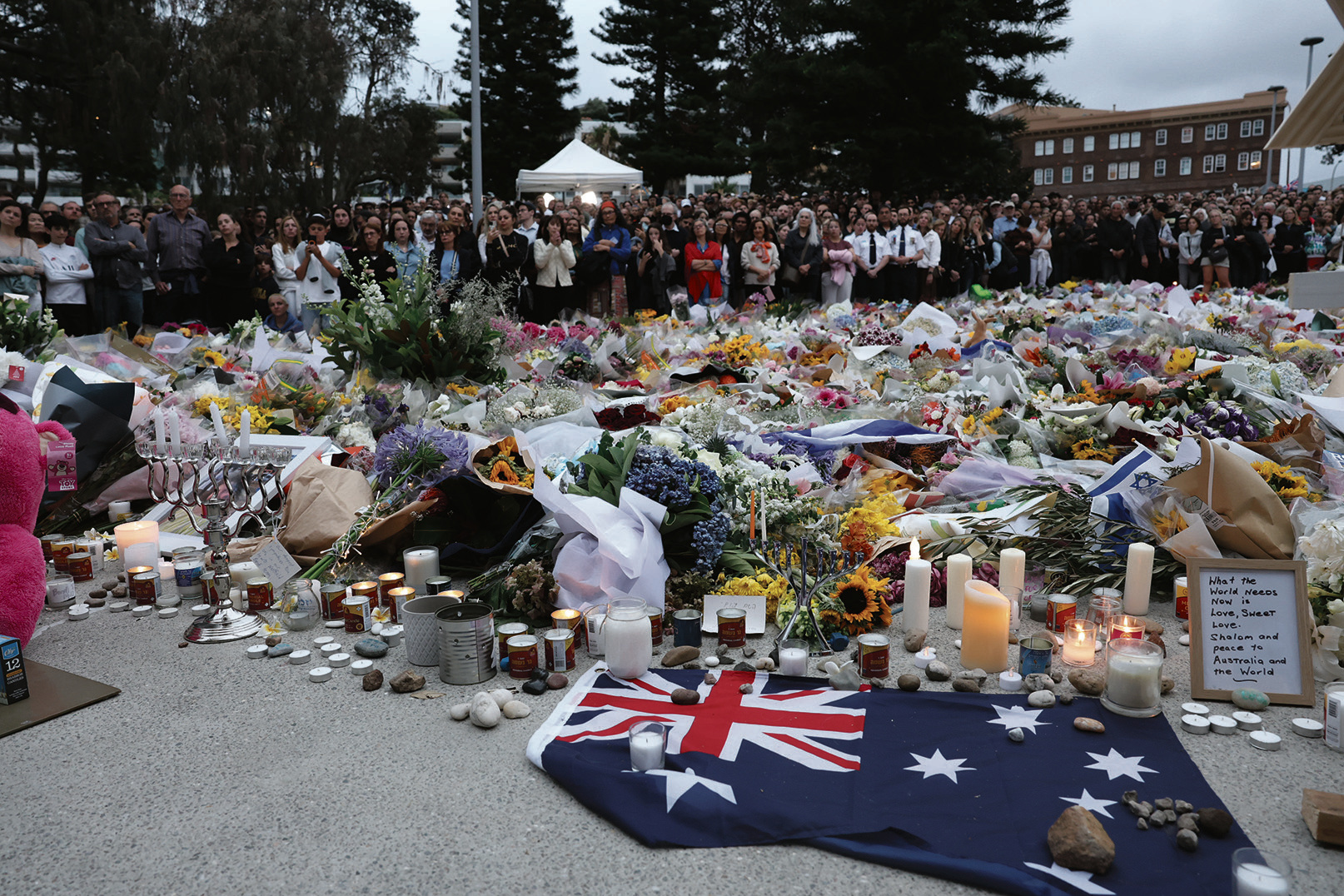
As I pondered the burning issue of antisemitism in Australia, I fortuitously came across an article in The Age (28/12/2025) by political scientist and writer Kylie Moore-Gilbert who argues that there appears to be “no singular, monolithic antisemitism festering in Australia but rather multiple different mutations of this ancient virus”.
She postulates that the two most outwardly and unashamedly antisemitic groups embedding themselves into Australian society and threatening our values are the Islamist extremists and the far-right neo-Nazis. They are similar in that they exist on the fringes of society and are actively engaged in recruiting for their cause. Both use online spaces to spread their hateful ideologies as well as connect with, and import ideas from, like-minded groups overseas.
Sadly as we know, of the two, the Islamist extremists have demonstrated a greater capacity for deadly violence this century, particularly against Jews. The Bondi terror attack was but the latest antisemitic atrocity carried out by fanatical Islamists worldwide. Of course, it was the Islamist terror group Hamas’ massacre of 1200 mostly civilians in Israel that triggered the current spike in antisemitic rhetoric and violence, popularising it in quarters far removed from radical Islamist ideology. Why such response from educated quarters beyond Islamic extremist groups resulted from clearly antisemitic actions is a primary issue requiring elucidation. And one must recall that it began almost immediately after October 7 – before the attacks on Gaza and associated images
Verses that address particular seventh century disputes in a particular place are recast as instructions for all Muslims everywhere against all Jews everywhere. Thus global jihadist groups like ISIS and Al-Qaeda have sought to provide a theological alibi for violence against Jews. Yes, admittedly the Tenach is not lacking injunctions and even practice of of capital and corporal punishment (and regarding Amalek even worse) but rabbinic Judaism has long moved on from practical implementation of such injunctions where Islam has not.
Neo-Nazi antisemitism has its roots in events that accompanied and followed the establishment of Christianity, the blood libels of medieval Europe, and centuries of state and Church-sanctioned pogroms against Jews justified by Christian scripture, papal edicts, hateful conspiracies and old-fashioned economic opportunism. It is from this ideology that many familiar antisemitic tropes have sprung. Of course we welcome initiatives such as that of Melbourne’s Catholic Archbishop Peter Comensoli as he opened Carols by Candlelight this December with a tribute to Bondi victims. But keep in mind that not cutting off extremist ideology at its roots poses not only a danger to our Jewish community but also to our migrant communities and many other groups.
A third group involves individuals whose extreme anti-Israel views have crossed the line into anti-Jewish sentiment, and for whom any distinction between diaspora Jews living in countries like Australia and the actions of the Israeli government that they may or may not understand has long since disappeared. Even leaving aside the fundamental issue underlying seeing diaspora Jews as somehow responsible for Israeli actions and therefore fair game for theoretical and practical attacks, opposing Israel’s conduct of the war or Israeli government policy but doing so without reference to the actions of Hamas – and, over the last two years, without demanding a return of the hostages that would probably have brought the Gazan situation to an end saving lives and property –, is in itself indicative of antisemitic bias
Unfortunately there would seem to be a fourth group as well. True, it has become clear that so many horrified Australians have expressed deeply felt concern for individual members of our communities and the communities as a whole. How many times have I personally been approached in the street by total strangers recognising me as Jewish seeking to bless me – even hug me – and to express their concern for our community (in some cases also calling out government inaction)? We have also witnessed the floral tributes outside shuls across the nation But it does seem that somehow events over the last two years awakened in some a latent negative perception of Jews. Some not even understanding the implications of their words have mouthed slogans that range in potential impact from hurtful to outrightly dangerous.
Why those latent attitudes and actions still persevere to the extent that they do needs careful analysis if they are to be successfully overcome. And in that context I lend my voice to calls for the most potentially incisive examination of the issue – a Royal Commission with no holds barred. Why (at least as I write) has one not been called – is there fear of its findings with potential political implications? But perhaps the inexcusable negativity to the most powerful investigation is no surprise – this is the same government whose Foreign Minister in Israel, at taxpayers expense, after October7 refused to go down south to see the reality of Hamas’s actions.
In the concluding words of the prayer for the government traditionally recited in many shuls each Shabbat: “May our Heavenly Father spread the tabernacle of peace over all the dwellers on earth, and let us say Amen.”
Shabbat shalom
Yossi
Yossi Aron OAM is The AJN’s religious affairs editor
comments