



Bibi accepts Trump’s plan to end Gaza war
US plan outlines 21 steps for Gaza’s future, urging stability, reform, and a pathway to statehood.
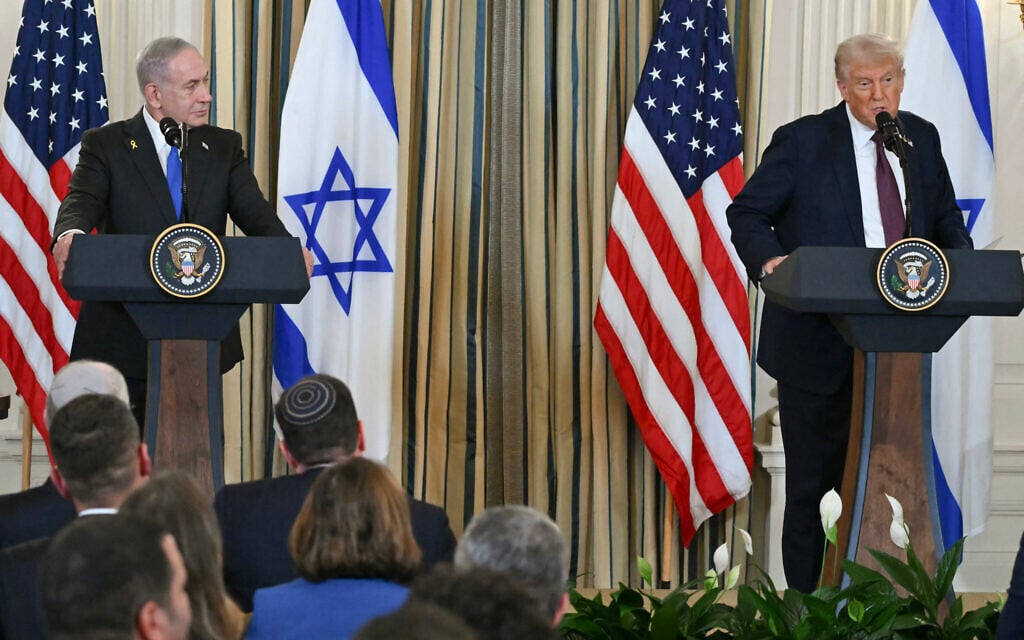
(THE TIMES OF ISRAEL) The US proposal for ending the war in Gaza encourages Palestinians to remain in the Strip and provides for the creation of a pathway to a future Palestinian state, according to a copy of the plan obtained by The Times of Israel.
The 21-point document shared by the US with a handful of Arab and Muslim countries earlier this week on the United Nations General Assembly sidelines also contains clauses that have been staples in various proposals crafted by different stakeholders in recent months — from the release of all hostages to Hamas’s removal from power.
But the decision to explicitly encourage Palestinians to remain in Gaza caps off a major evolution for Washington on the issue, given that US President Donald Trump in February shocked much of the world with talk of the US taking over Gaza and permanently relocating its entire population of roughly two million people.
Those remarks gave significant tailwind to the idea among Prime Minister Benjamin Netanyahu’s far-right coalition partners and even among more moderate Israeli political figures who have since worked actively to “encourage the voluntary migration” of Gazans, albeit with no success to date.
Moreover, the proposal’s envisioning of a potential pathway to a future Palestinian state, after Gaza’s redevelopment has advanced and the Palestinian Authority’s reform has been completed, also appears to be a major departure from the Trump administration’s policy to date, given that it has avoided expressing backing for a two-state solution.
The plan obtained by The Times of Israel — and authenticated by two sources familiar with the matter — even sees the US establishing a dialogue with Israel and the Palestinians to agree on a “political horizon” for “peaceful coexistence.”
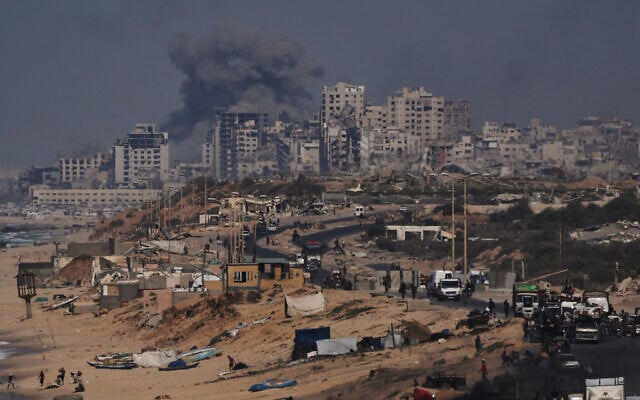
While those terms are major selling points for the Palestinians, the proposal, crafted largely by US special envoy Steve Witkoff — and poised to be fine-tuned in the coming days — also includes clauses that Israel has long demanded.
Those include a commitment for Hamas to disarm, the demilitarisation of Gaza and the establishment of a process to de-radicalise the population.
The exact sequencing for these steps isn’t specified, but it appears that they are intended to come into effect in parallel with the ending of the war.
Those requirements will likely make the proposal a difficult sell to Hamas, and the plan’s creation of a potential pathway to a future Palestinian state could well be a red line for Netanyahu, who has long campaigned on having prevented a two-state solution. The Israeli premier told the UN General Assembly on Friday: “Giving the Palestinians a state one mile from Jerusalem after October 7th is like giving Al-Qaeda a state one mile from New York City after September 11th. This is sheer madness. It’s insane, and we won’t do it… Israel will not allow you to shove a terror state down our throats.”
But Trump was optimistic on Friday about his chances for success, telling reporters earlier in the day that a deal may already be in place, before posting on Truth Social that “intense negotiations have been going on for four days and will continue for as long as necessary to get a successfully completed agreement.”
“All of the countries within the region are involved, Hamas is very much aware of these discussions, and Israel has been informed at all levels, including Bibi Netanyahu,” he added, referring to the premier by his nickname.
However, a source familiar with the matter told The Times of Israel that the proposal has not yet been presented in full to Hamas.
The US plan is rather light on details, and subsequent negotiations will likely be necessary, even if the sides agree to the plan.

What are the 21 points?
1. Gaza will be a de-radicalised, terror-free zone that does not pose a threat to its neighbours.
2. Gaza will be redeveloped for the benefit of its people.
3. If Israel and Hamas agree to the proposal, the war will immediately end, with the IDF halting all operations and gradually withdrawing from the Strip.
4. Within 48 hours of Israel publicly accepting the deal, all living and deceased hostages will be returned.
5. Once the hostages are returned, Israel will free several hundred Palestinian security prisoners serving life sentences and over 1,000 Gazans arrested since the start of the war, along with the bodies of several hundred Palestinians.

6. Once the hostages are returned, Hamas members who commit to peaceful coexistence will be granted amnesty, while members who wish to leave the Strip will be granted safe passage to receiving countries.
7. Once this agreement is reached, aid will surge into the Strip at rates no lower than the benchmarks set in the January 2025 hostage deal, which included 600 trucks of aid per day, along with the rehabilitation of critical infrastructure and the entry of equipment for removing rubble.
8. Aid will be distributed — without interference from either side — by the United Nations and the Red Crescent, along with other international organisations not associated with either Israel or Hamas.
9. Gaza will be administered by a temporary, transitional government of Palestinian technocrats who will be responsible for providing day-to-day services for the people of the Strip. The committee will be supervised by a new international body established by the US in consultation with Arab and European partners. It will establish a framework for funding the redevelopment of Gaza until the Palestinian Authority has completed its reform program.
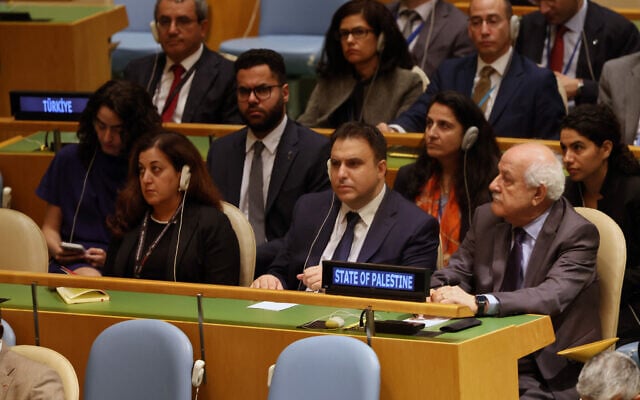
10. An economic plan will be created to rebuild Gaza through the convening of experts with experience in constructing modern Middle East cities and through the consideration of existing plans aimed at attracting investments and creating jobs.
11. An economic zone will be established, with reduced tariffs and access rates to be negotiated by participating countries.
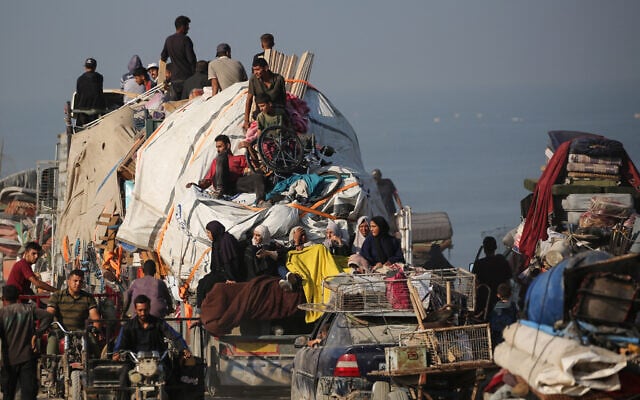
12. No one will be forced to leave Gaza, but those who choose to leave will be allowed to return. Moreover, Gazans will be encouraged to remain in the Strip and offered an opportunity to build a better future there.
13. Hamas will have no role in Gaza’s governance whatsoever. There will be a commitment to destroy and stop building any offensive military infrastructure, including tunnels. Gaza’s new leaders will commit to peaceful coexistence with their neighbours.
14. A security guarantee will be provided by regional partners to ensure that Hamas and other Gaza factions comply with their obligations and that Gaza ceases to pose a threat to Israel or its own people.
15. The US will work with Arab and other international partners to develop a temporary international stabilisation force that will immediately deploy in Gaza to oversee security in the Strip. The force will develop and train a Palestinian police force, which will serve as a long-term internal security body.
16. Israel will not occupy or annex Gaza, and the IDF will gradually hand over territory it currently occupies, as the replacement security forces establish control and stability in the Strip.
17. If Hamas delays or rejects this proposal, the above points will proceed in terror-free areas, which the IDF will gradually hand over to the international stabilisation force.
This is the first mention of the possibility that the deal could be at least partially implemented, even if Hamas doesn’t agree.

18. Israel agrees not to carry out future strikes in Qatar. The US and the international community acknowledge Doha’s important mediating role in the Gaza conflict.
19. A process will be established to de-radicalise the population. This will include an interfaith dialogue aimed at changing mindsets and narratives in Israel and Gaza.
20. When Gaza’s redevelopment has been advanced and the PA reform program has been implemented, the conditions may be in place for a credible pathway to Palestinian statehood, which is recognised as the aspiration of the Palestinian people.
21. The US will establish a dialogue between Israel and the Palestinians to agree on a political horizon for peaceful coexistence.
comments