



US, Israel try to bridge Persian gulf
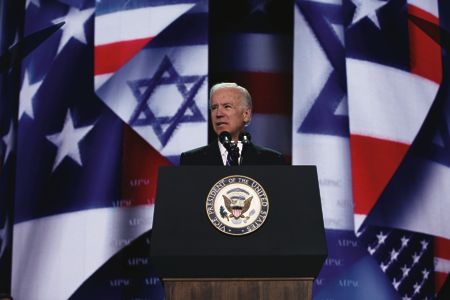
America and Israel this week tried to heal months of tension and present their positions on the Iranian threat as similar.
As the Iranians’ nuclear project has progressed, Washington has been angered by Israeli Prime Minister Benjamin Netanyahu’s apparent preparedness for a universal strike. Meanwhile, Jerusalem has been infuriated by what it sees as a lack of clear commitment by US President Barack Obama to use force if necessary.
But on Monday, US Vice-President Joe Biden sought to reassure Israel. “President Barack Obama is not bluffing,” he said. “We are not looking for war. We are looking to, and ready to, negotiate peacefully, but all options, including military force, are on the table.” The following day US Secretary of Defence Chuck Hagel reassured Israeli Defence Minister Ehud Barak that he will keep up US funding for Israeli defence.
Iran and representatives of the international community held negotiations last week regarding Tehran’s nuclear program. The six world powers at the meeting presented a deal that would restrict Tehran in return for an easing of sanctions, and both sides say that the proposal is under consideration.
Biden, who made his comments in a speech at the American Israel Public Affairs Committee (AIPAC) conference in Washington, said that a diplomatic solution could still be possible but the “window is closing”.
He declared that America’s existence is not under threat, but “if Israel makes a mistake, it could be a threat to its very existence.”
The bottom line of Netanyahu’s comments, delivered in Jerusalem and screened at the Washington conference, was the same: “Sanctions must be coupled with a clear and credible military threat if diplomacy and sanctions fail.”
However, Netanyahu was far more sceptical than Biden about talks and sanctions. He said that Iran “has used negotiations, including the most recent ones, to buy time to press ahead with its nuclear program”. He added: “Thus far, the sanctions have not stopped the nuclear program either. The sanctions have hit the Iranian economy hard. That is true. But Iran’s leaders just grit their teeth and move forward.”
While Netanyahu’s speech was conciliatory, he did not rule out unilateral action, even giving an interpretation of Biden’s speech that okayed going it alone. “I deeply appreciate something that President Obama has said repeatedly. You’ve just heard Vice-President Biden say it again: Israel must always be able to defend itself by itself against any threat to its existence.” The phrase “itself by itself” was not Biden’s, but sums up Netanyahu’ understanding of Israel’s defence rights.
And though Biden’s speech was warm and his words gentle, he spoke against unilateral Israeli action before the US thinks the time is right. “If, God forbid, the need to act occurs, it is critically important for the whole world to know we did everything in our power, we did everything that reasonably could have been expected to avoid any confrontation,” he insisted. “And that matters. Because God forbid, if we have to act, it’s important that the rest of the world is with us.”
NATHAN JEFFAY
comments