



Weizmann helps map Moon’s icy poles
Study maps lunar ‘cold traps’ that could provide future water source for space missions.
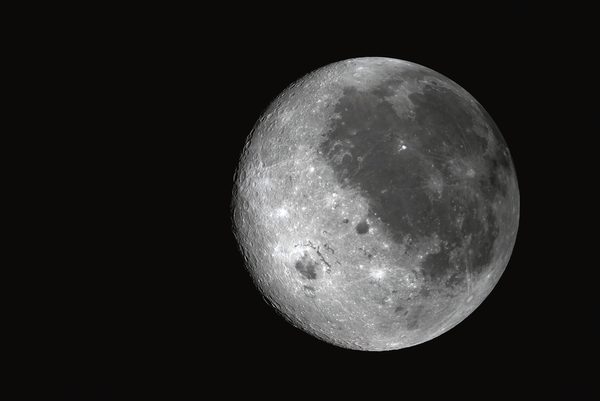
With the Artemis II crew having completed its historic lunar fly-by and returned to Earth, a new study is providing a roadmap for the next generation of explorers.
Researchers from the Rehovot-based Weizmann Institute of Science, in collaboration with the University of Colorado Boulder and the Planetary Science Institute in Honolulu, have identified ancient “cold traps” at the permanently shadowed lunar poles that have been accumulating ice for billions of years and could, one day, provide a source of water.
The study, published earlier this month in Nature Astronomy, suggests that lunar water is the result of a nearly continuous buildup. It proposes that the source of that water could be volcanic activity, solar wind, or cosmic impacts.
As ice reflects more ultraviolet light at certain wavelengths than the Moon’s rocky surface does, Professor Oded Aharonson and his collaborators, Professor Paul Hayne from Boulder and Norbert Schörghofer from Honolulu, used ultraviolet data from NASA’s Lunar Reconnaissance Orbiter to map craters with the most ice.
They then combined the findings with geometric calculations.
comments