



Western Wall egalitarian plaza plan frozen
“The Western Wall compromise has become a focus for incitement and hatred” - MK Matan Kahana
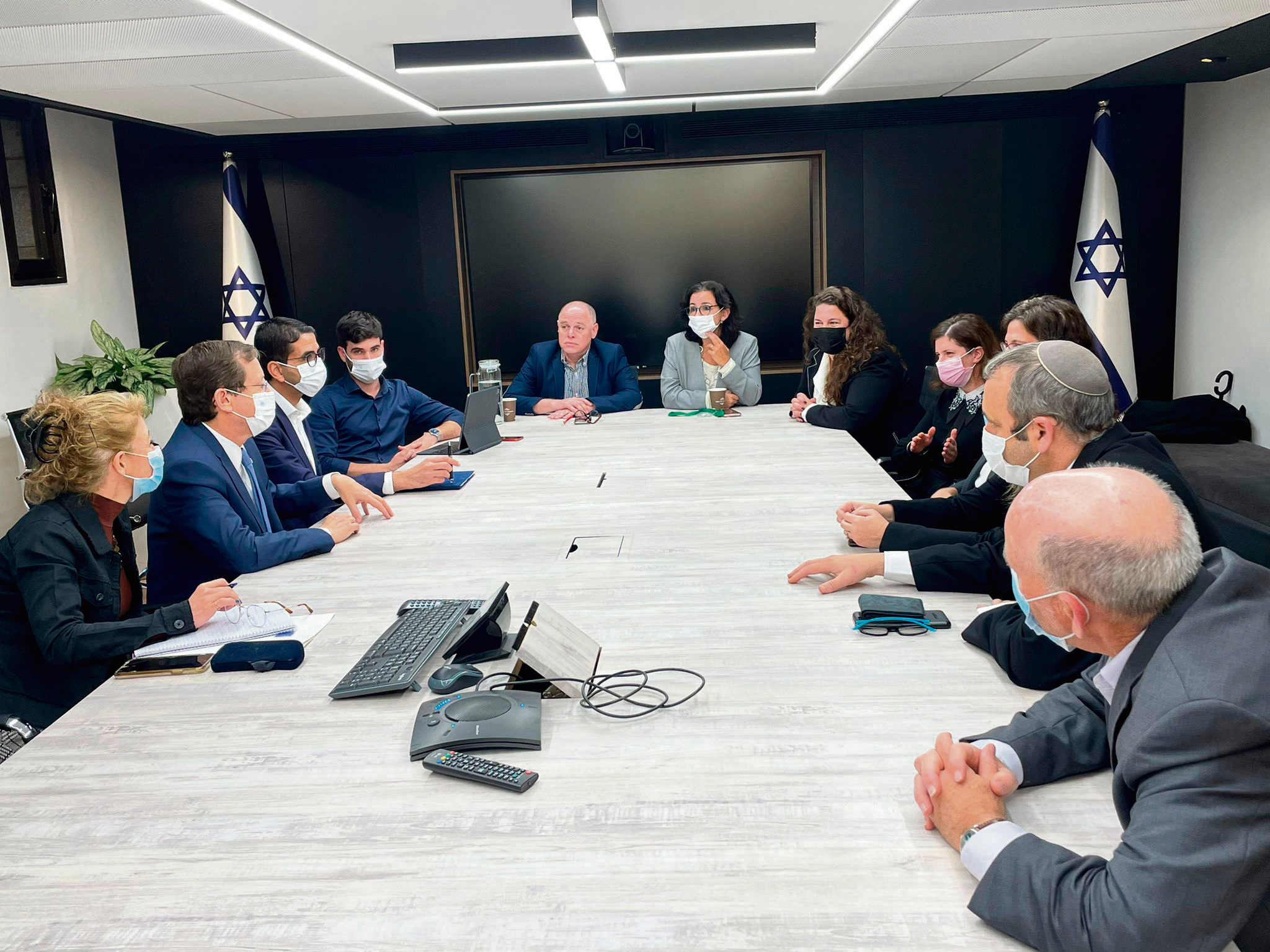
Israeli Prime Minister Naftali Bennett and Religious Affairs Minister Matan Kahana have decided to freeze plans to implement the so-called Western Wall compromise deal that would accommodate mixed-gender prayer at Jerusalem’s holy site.
The deal, long a point of contention between Israel’s government and Diaspora Jewry, would create a permanent pluralistic prayer pavilion at the Western Wall, with representatives of non-Orthodox streams of Judaism sharing an oversight role.
The arrangement, negotiated between Israel and Diaspora leaders over more than three years, was approved by the Benjamin Netanyahu-led government in 2016, but was indefinitely suspended by Netanyahu in 2017, under pressure from his ultra-
Orthodox coalition partners.
The reason for the dramatic decision to freeze the plan is recent violent confrontations at the Western Wall between ultra-
Orthodox protesters and would-be reformers, and efforts by the right wing to use the as-yet unimplemented deal to fuel incitement in Israeli society and against the government.
“The Western Wall compromise has become a focus for incitement and hatred, especially by people from Likud, who are latching onto it. We cannot play into their hands,” said Kahana.
In response to the report, sources close to Kahana said: “The minister is not currently dealing with the issue. The matter is on the desks of Cabinet Secretary Shalom Shlomo and President Isaac Herzog.”
Bennett and Kahana’s decision goes against commitments made by party leaders in their governing coalition, including recent ones.
In early November, soon after the coalition passed the crucial state budget, Foreign Minister Yair Lapid said: “The Western Wall compromise is the right thing to do from the religious point of view, and also for everything connected to our relationship with the Diaspora. It has the support of the majority of the government and I hope we will be able to do it with the current attorney general, Avichai Mandelblit.”
Transportation Minister Merav Michaeli has also voiced support for the plan, and Finance Minister Avigdor Liberman said both the compromise and a change in law for conversions were “very important to us”.
Lapid, Michaeli and Liberman all lead secular parties in Bennett’s governing coalition, and he needs their backing to keep his coalition in power.
Implementing the compromise was also an important condition in the centrist Blue and White party’s agreement for joining the coalition.
The compromise had been dead in the water since Netanyahu suspended it in 2017, but was brought back to life when the current government came into power, and again prompted fierce opposition from the ultra-Orthodox.
In the coalition agreement that was signed in June, the parties committed to advancing the deal that was cancelled by the Netanyahu government.
Labor lawmaker Gilad Kariv was tasked with implementing the plan and made it his focus in the Knesset. Kariv, the first ordained Reform rabbi to serve in the Knesset, is the director of the Reform movement in Israel.
Kariv and his allies in the Reform movement used to go to the Western Wall to hold prayers each Rosh Chodesh, and demanded a new egalitarian prayer area.
The events sparked fury in the ultra-Orthodox public.
The head of the ultra-Orthodox Shas party, Aryeh Deri, said: “This is a declaration of war on the country’s Jewish identity.”
Last month, President Isaac Herzog intervened and asked Kariv to not attend a Rosh Chodesh event at the Western Wall to lower the temperature ahead of expected violence. Kariv agreed to forgo the ceremony.
Kahana also opposed the monthly demonstrations by the Reform movement leaders, seeing the events as a provocation, and said the community could pray at a separate area set up near the main Western Wall plaza.
He initially backed the compromise, before appearing to walk back that support last month.
Kahana, a strictly religious Orthodox Jew from Bennett’s Yamina party, is advancing controversial reforms including changes to Israel’s kosher certification system and conversions.
The Western Wall compromise was seen by the ultra-Orthodox, who already fiercely opposed the other reforms, as a step too far.
Kahana has been assigned additional security in recent weeks due to threats against him.
The right-wing parties in the coalition found the compromise to be the most inflammatory issue in the field. At every event, protest and conference there is a bellicose Likud member claiming that the government is anti-Jewish and harming the holy site.
Netanyahu’s Likud party has claimed that a well-run campaign focused on the Western Wall compromise could get hundreds of thousands to take to the streets and join giant protests already planned by the ultra-Orthodox.
Last month, Likud stalwart Miri Regev delivered a fiery speech in the Knesset against the compromise, even though she had supported it in 2016.
“If we don’t take to the streets over the cost of living, over their lies, over their tricks, we’ll take to the streets – and I’ll lead – to protect our Western Wall, for what protected the Jewish people, for our soul,” said Regev.
The political minefield presented by the compromise caused Kahana and Bennett to shelve the proposal. The move was also a political calculation. Bennett and Kahana do not want to be identified too closely with the Reform movement, which is spearheading the effort.
Kahana has lately tried to fuse down the issue. At first, he wanted to revive the proposal. “But now I decided that we cannot do that. We cannot be a source of conflict,” he told aides.
Times of Israel
comments