



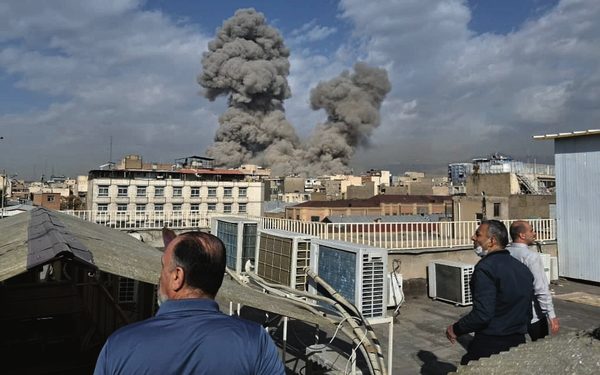
When the US and Israel acted together against the Iranian regime on February 28, killing Iran’s Supreme Leader Ayatollah Ali Khamenei and other leaders of the Islamic Republic, as well as destroying military sites, the Iranian diaspora flooded the streets in celebration. Many had been in despair after the Iranian regime reportedly killed over 30,000 Iranians protesting for their freedom, between December and February, and now they felt help was on the way.
Khamenei was appointed Supreme Leader in 1989, after the father of the 1979 Iranian revolution Ayatollah Ruhollah Khomeini died and he continued its goals – a Shia Islamist agenda repressing women’s freedoms and seeking the destruction of Israel – which had replaced the secular monarchy of Shah Mohammad Reza Pahlavi. Since the revolution, there had been several large protests against the regime, but they were brutally snuffed out. When mass protests rallied again in December/January, Khamenei had brought Iran to its weakest point and the US and Israel decided to act.
Goals of the military campaign
The US and Israel have stated the goals of the military campaign include removing Iran as a regional threat, reducing its ballistic missiles, and dismantling its nuclear weapons program.
Discussing the success of the operation, Israeli journalist and analyst Maayan Hoffman told The AJN, “The intelligence Israel had on Iran, in collaboration with the CIA, is unprecedented. It should be clear to everyone that Israel had planned this mission for a long time. You can also add the effectiveness of Israel’s actions in Lebanon to that. By striking the head of the octopus, we will hopefully see a full reduction of Hezbollah’s power once and for all.
“Israel has done great work during the last two and a half years of war, but clearly more was needed. Now, with this war, there is a chance to finish the job.”
University lecturer and analyst Dr Ran Porat agrees the operation has so far been successful militarily.
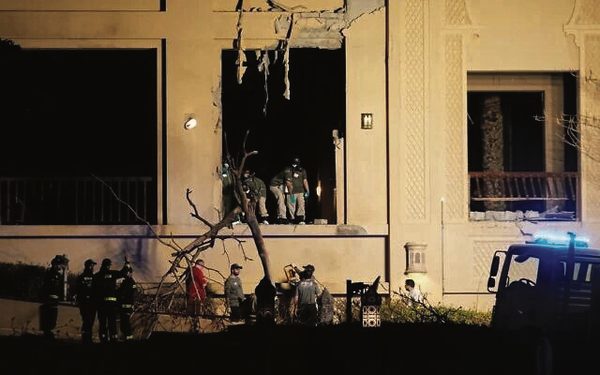
The Palm Hotel in Dubai. Photo: AP Photo/Altaf Qadri
“It’s been going very well for Israel and the US, because they have been able to hit the three main stages. The first one … was decapitation of leaders, and that was very successful. And part of the first stage is … enabling free action over Iran by dismantling or neutralising the anti-aircraft systems.
“The second stage was hitting the missile launchers and the missile depots and more nuclear sites and more military sites … There is a lot of success in reducing the number of missiles that have been fired at Israel and at neighbouring countries, but still Iran has capabilities to hit, and they’re doing that again, again, both at Israel … but more importantly, its Gulf neighbours have been suffering immensely from drones and missiles, so that second stage of the war is still ongoing.
“America is also hitting military complexes and weapons production sites, sending in the heavy airplanes that can do immense bombing … It seems the ability of Iran to rebuild its military capacity has been severely limited.”
Regime change for Iran?
It is clear regime change would be the preference for US President Donald Trump and Israeli Prime Minister Benjamin Netanyahu who both said they hoped the military action would enable the Iranian people to take over their nation.
When Trump announced the military operation on February 28 he said: “To the great proud people of Iran, I say tonight that the hour of your freedom is at hand. Stay sheltered … When we are finished, take over your government. It will be yours to take. This will be probably your only chance for generations.”
Netanyahu stated on February 28, “I wish to address the citizens of Iran: You, the people of Iran, and the honourable Iranian army, are not our enemies, and we are not your enemies. We have a common enemy – the murderous clique of ayatollahs that seized control of you through the oppressive forces of the Revolutionary Guards and the Basij … this is your opportunity to establish a new and free Iran. Take your destiny into your own hands.”
Israel and the US have targeted the regime, striking the Islamic Revolutionary Guard Corps (IRGC) and Basij (volunteer paramilitary force under the IRGC), but ultimately as Netanyahu and Trump have indicated in more recent statements, regime change is not inevitable and will depend on the Iranian people.
“Regime change will need to come from both the top and the bottom,” Hoffman remarked. “The US holding to its word and following through with ‘help is on the way’ sends a message to the Iranian people. For now, as Trump instructed, they are being asked to stay home and stay safe. The goal is that once the work is done from the top, the people will take to the streets and show the regime that it is no longer wanted. That combination could bring about regime change. I think there is a strong chance that you will see change.” Porat, however, believes that the goal of achieving regime change is currently unclear.
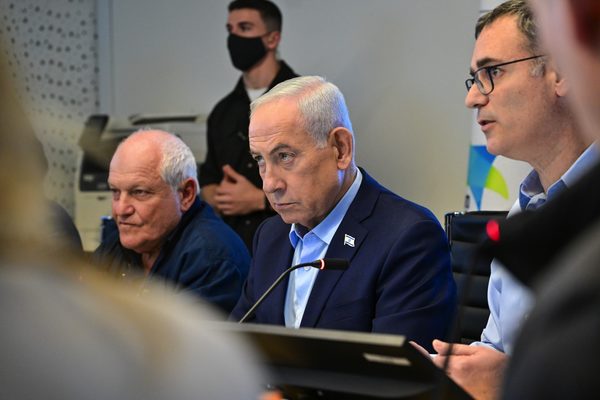
“Netanyahu described it as setting the stage for regime change by the Iranian people”, but Porat notes that the US, Israel and the son of the deposed Shah, Crown Prince Reza Pahlavi, have all been telling Iranians opposed to the regime to wait while the US and Israel strike regime targets. There is also a concern at the lack of armed Iranian opposition with a leadership that can unite. Pahlavi is seen as a possible leader who has offered to facilitate peaceful democratic transition, however, his ability to be effective is being questioned.
Porat said that to achieve regime change you need “massive desertion” and a siege on the IRGC, which is not happening yet, or he said you need “boots on the ground” – either from US soldiers or from opposition forces who are widely seen as currently weak and peripheral. He adds that while many Iranians dislike the regime, “millions are also dependent on the regime. Some of them actually support it.”
Porat believes this creates three scenarios: “One, a successful toppling of the regime. Another option is reduced capacity, an existing regime that cannot control the periphery … then it’s going to be a process of 10 years, like what happened in Syria [when the Assad regime collapsed].”
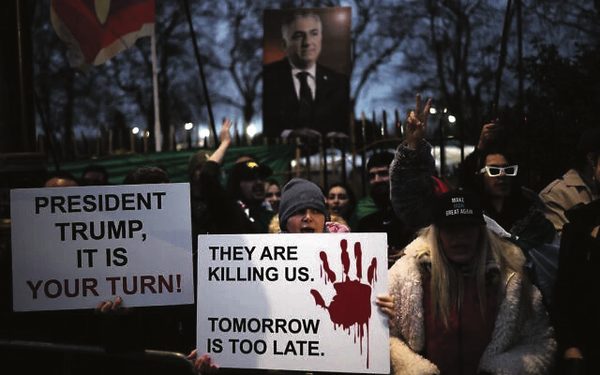
January 12. Photo: Henry Nicholls/AFP
The third option is civil war between forces loyal to the regime and those opposed. “I do read the assessments that regime change at least, seems less likely to be immediate,” Porat said.
Meanwhile, the Islamic Republic appointed a new Supreme Leader, Ayatollah Mojtaba Khamenei, the son of the previous Supreme Leader Ayatollah Ali Khamenei. He is viewed as a hardliner with close ties to the IRGC. Mojtaba Khamenei’s wife and mother were also killed at the onset of the war, and he is believed to have been injured. Trump lamented not being able to have picked the new leader, like he claimed he did in Venezuela when the US removed Nicolás Maduro as president.
If the military campaign ends with the IRGC in power and a new Ayatollah – it may be viewed by many as a failure. This could have political ramifications for Trump and Netanyahu as both countries are facing elections – the US Congress in November, and Israeli elections later this year.
Iran’s response
Responding to the US-Israel military campaign, Iran has lashed out – striking Israel, as well as its Gulf neighbours, and is blocking the flow of oil through the Strait of Hormuz.
Israelis are again running to bomb shelters as Iran and its proxy in Lebanon, Hezbollah, attack Israel in strikes which have killed at least 17 in Israel and four in the West Bank.
The AJN asked Hoffman how she was faring in Israel at the onset of the war, she said, “In many ways, the situation feels easier than it did in June. People seem more relaxed and optimistic about the Israeli and US victory in Iran, especially after the assassination of Khamenei and so many other key leaders. There is an interesting balance right now between fear and tension … and a sense of excitement that there may be a better future for all of us.”
The Palm Hotel in Dubai. Photo: AP Photo/Altaf Qadri
Iran and its proxies have fired on several neighbours including Jordan, Iraq, the UAE, Qatar, Kuwait, Saudi Arabia, Azerbaijan, Syria, Bahrain – as well as Turkey and Cyprus, both NATO members. These attacks appear aimed at putting pressure on the US to stop the campaign but it is also isolating Iran.
Meanwhile, Iran has blocked the Strait of Hormuz leading to increased oil prices globally, and there is concern that without “boots on the ground”, its enriched uranium could be used towards nuclear weapons.
US testing allies
Trump has criticised NATO nations as well as Australia for not offering more support. In a Truth Social post on March 18, Trump said his country had been informed by “most” NATO allies that “they don’t want to get involved”. He added, “Because of the fact that we have had such Military Success, we no longer ‘need,’ or desire, the NATO Countries’ assistance – WE NEVER DID! Likewise, Japan, Australia, or South Korea.”
The President told reporters, “I’ve long said that I wonder whether or not NATO would ever be there for us. So this was a great test.”
Twenty-two countries including NATO nations and Australia signalled on Monday that they will provide assistance to help secure the Strait of Hormuz. NATO Secretary-General Mark Rutte said, “I understand the President’s frustration that it takes some time, but, again, I also ask for some understanding, because nations had to prepare for this not knowing, and for good reasons, about the initial attack on Iran.”
Trump specifically criticised Australia on March 17, saying, “They [Australia] should get involved, and I was a little bit surprised that they said no, because we always say yes to them.”
Prime Minister Anthony Albanese rejected this was the case and said, “We continue to provide the support that we have been asked to provide.”
Australia has voiced support for the US-Israel military action on Iran and sent military assets to the UAE to protect against drones. Three Royal Australian Navy personnel were on board a US submarine that sank an Iranian warship, but the PM said Australian military personnel did not “participate in any offensive action” against Iran.
Quick exit?
On March 17, US counter-terrorism official Joe Kent resigned, posting, “Iran posed no imminent threat to our nation, and it is clear that we started this war due to pressure from Israel and its powerful American lobby.”
The resignation reflects a split in Trump’s MAGA base between those who feel betrayed by Trump’s promise of no more Middle East wars, and those Republicans who view Iran as a threat to US national security, as well as surging antisemitism as the “Israel lobby” is blamed for the conflict.
If the war becomes unpopular amongst Trump’s MAGA base, particularly as the price of oil increases, there is the possibility that he will seek a quick exit. Trump told reporters last Thursday, “It will soon be over.”
On Monday, Trump announced his administration was engaged in discussions to make a deal with Iran for a “complete and total resolution”. He said under a proposed deal, Iran would agree not to seek nuclear weapons and would give up enrichment.
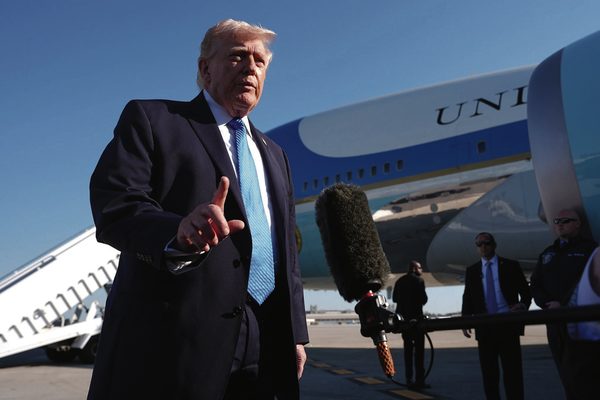
Netanyahu said he spoke to Trump and that what is being proposed “protects our vital interests”.
The US has sent its 15-point proposal to Iran, which Iran has rejected. Mediators from Turkey, Egypt and Pakistan are seeking to organise an urgent “peace summit” between US and Iran.
Despite attempts at diplomacy, the US is reported to be sending thousands of troops from the elite 82nd Airborne Division to the Middle East
Even if a deal were reached, it may not be honoured. If a weakened Iranian regime remained intact, it could be even more dangerous, as Behnam Ben Taleblu wrote in The Free Press: “A sense of humiliation rather than humility will permeate and Tehran’s deep state will emerge paranoid, vengeful and intent on rebuilding. In a world where the regime’s proxy terror network is neutered and has lost its conventional and hybrid military capabilities, interest in nuclear weapons will not diminish. It intensifies. A cornered autocracy will have every incentive to avoid eyes on anything left of its atomic enterprise or fissile material stocks and sprint towards the bomb through whatever covert pathway remains available.”
When the US-Israel military operation ends, the future of Iran will truly rest with the Iranian people. It could lead to revolution or devolution – and while regime change faces many obstacles, it may be the only path to freedom for Iranians and to peaceful relations with Israel and the West.
comments