



Why Iranians wanted military intervention
I've seen thousands of posts from Iranian activists sharing the few cries for help that have squeezed through the internet blackout.
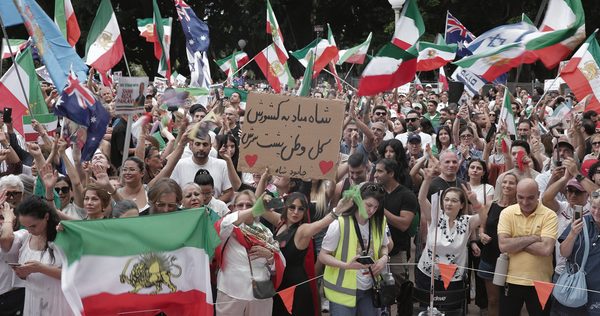
It’s hard to believe that the Iranian people actually want their country to be attacked, to have thousands of bombs rain down on them, to wonder if they or their loved ones will be struck and killed.
This sounds utterly unappealing and the instinct to reject the claim that anyone could want such a thing makes total sense.
Perhaps, though, those who reject the notion haven’t used their imaginations quite strongly enough. Author David Foster Wallace, who suffered from chronic depression and ultimately took his own life, shared a profound metaphor in regard to suicide. Abridged, it goes: “Make no mistake about people who leap from burning windows. Their terror of falling from a great height is still just as great as it would be for you or me.
“But when the flames get close enough, falling to death becomes the slightly less terrible of two terrors. It’s not desiring the fall; it’s terror of the flames.”
This analogy first came to my mind at the beginning of the year when millions of protesters flooded Iran’s streets calling for the end of the Islamic Republic regime – a regime which has a long history of imprisoning, torturing, raping and murdering dissidents. Iran indeed has the dubious honour of the highest execution rate per capita in the world.
I try to imagine how terrifying life under the regime must be for the Iranian people to feel that knowingly risking their lives protesting on the streets is a better choice than just staying home, but to be honest, my own imagination fails. What might compel me to protest in a country known for torturing and killing protesters, I truly can’t fathom.
And then I watched how the regime responded to the protests.
Time reported 30,000 deaths. Iran International reported 36,500. Foreign jihadi militias were brought in with machine guns, sniper rifles, machetes and even, according to BBC Persian, weapons “intended to defeat structures”. Protesters were hunted down and shot dead in hospitals. Surgeons who treated the injured were murdered, nurses were gang raped. Most of these horrors took place over just two days. Regime forces then arrested tens of thousands of protesters, executing many.
It’s at this point I can start to imagine how the fall of the US-led attacks is less terrifying than the flames of the Islamic Republic’s survival. What kind of life are you living in which women could be beaten or killed for failing to wear their mandatory hijabs correctly? Where men could be accused of spying and hanged from cranes after sham trials? Where your government has squandered the wealth of your country bankrolling terrorist armies and waging wars against your neighbours? Where dissent equals death?
After 47 years and many failed attempts by the people to shake this regime, designated as terrorists by Australia, Canada, the European Union and others, military intervention starts to make sense. I’ve attended a dozen rallies led by the Iranian diaspora in Sydney and heard firsthand their stories of loved ones being murdered, of not knowing if relatives are alive, of friends witnessing beheadings on the streets. They have repeatedly chanted “SOS for Iran” and “military support for Iran”.
I’ve seen thousands of posts from Iranian activists sharing the few cries for help that have squeezed through the internet blackout. Many express their heartbreak that uninvested, uninformed Western voices shout over the top of their own long-oppressed cries.
I want to echo some of the words from Iranian friends, activists and speakers from the rallies: “We are not asking for our country to be bombed. We are asking for the enemies of our country to be bombed.”
“Bombs are scary. The regime is scarier than bombs.”
“The only thing we fear is the war ending while the Islamic regime survives.” This sentiment is everywhere if you look at what ordinary Iranian people are saying.
Before you point out that Iranians are also speaking out against the military strikes, it’s worth noting that the anti-intervention protesters were mostly silent when tens of thousands of Iranians were massacred in the streets, and that their rallies are attracting the presence of those who wave the Islamic regime’s flag, not the lion and sun flag of the Iranian people.
Are those who watched Iranians being massacred in silence or those who openly support a mass-murdering regime truly representative of wider Iranian society?
It’s easy to agree that Iranians are scared they or loved ones might be killed by American or Israeli bombs. It’s easy to argue that destructive military action won’t solve anything, because it rarely has and it might not work again this time.
But if you listen closely to the voices of everyday Iranian people, you will hear that they are far more terrified of the inferno of the status quo than the fall of the bombs. Iran is a burning building they can no longer bear to live in until the Islamic Republic of Iran is finally gone.
Pete Malicki is an Australian playwright, producer and business leader. He is not Jewish.
comments