



At a time when Jewish representation in the arts faces what JIFF artistic director Eddie Tamir calls “an unofficial boycott”, and when Jewish creatives in Australia and abroad are navigating a landscape that has shifted dramatically since October 7, the 2026 Jewish International Film Festival arrives as something the community both wants and needs.
“The community definitely wants to share experiences, and everybody wants to discuss and think, and obviously communally feel safe,” Tamir told The AJN. “But these films are great films, and they should be seen by the wider world.”
It is a tension that runs through this year’s program. The films themselves are outstanding, but many of them are struggling to find audiences beyond Jewish festival circuits.
Tell Me Everything, which earned a record 16 nominations at this year’s Ophir Awards and secured a slot at Sundance, could not land international sales in any territory. Despite its LGBTQI themes, which would normally guarantee invitations to queer festivals worldwide, “it didn’t get one invite”, Tamir said.
The Sea, winner of the Ophir Award for Best Film and Israel’s official submission to the Academy Awards, faced a similar fate.
“Hopefully we’ve managed to present the variations in the best way possible to reflect the diversity of Jewish life and perspective on the world…”
“As soon as there’s Israeli film fund money in something, even if it is absolutely the most diverse perspective, you still can’t sell it,” Tamir said. Noga, the Tribeca-selected documentary about Israeli singer Noga Erez, has similarly been limited to Jewish film festival sales.
“It saddens me that the Jewish voice and Jewish representation is being squashed,” Tamir said, candid about what the broader trend is causing, describing it as “the ghettoisation of Jews by choice or by necessity”.
“We’re closing in on ourselves and feeling safe and comfortable with each other.”
But he is quick to note that despite the difficulties filmmakers are facing, the films are still getting made.
And, the role of festivals like JIFF’s in showcasing them has never been more important.

“We’re very excited about what we have ultimately got, despite this landscape,” Tamir said.
And what they’ve got is a program of more than 40 features and documentaries spanning 13 countries, world premieres, numerous Australian premieres, and a seven-film Mel Brooks retrospective celebrating the comedy legend’s 100th birthday.
“I don’t think anyone’s ever done it in the world,” Tamir said. “He’s the master satirist, a seeking missile against hypocrisy.” Tamir noted that many of the films, including The Twelve Chairs and History of the World, Part 1, are no longer in circulation.
“Your 20- and 30-year-old has not seen these films, I can assure you,” he pointed out.
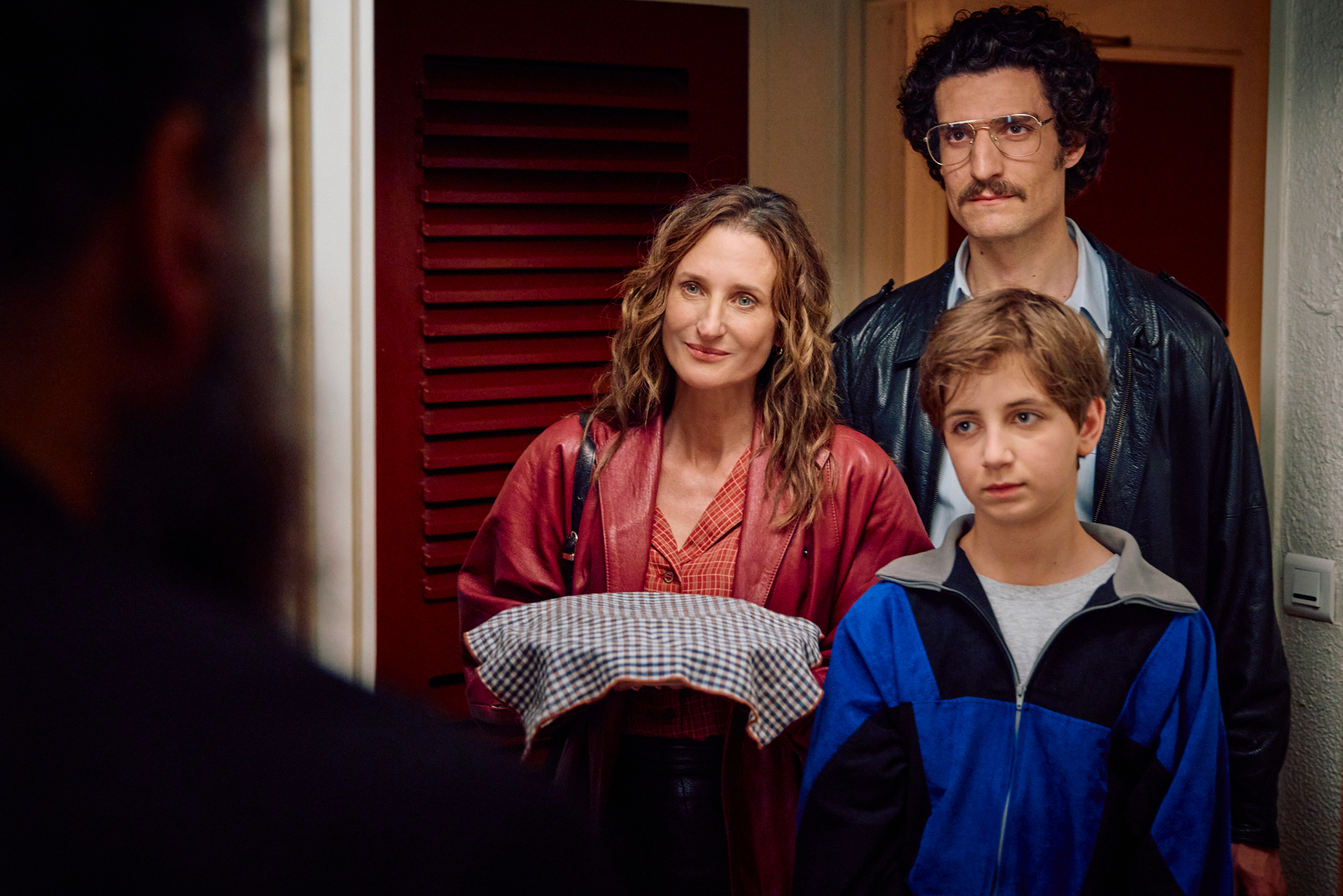
The opening night film, Just an Illusion, is a warm, nostalgic comedy from the directing duo behind The Intouchables. Set in 1985 and starring Louis Garrel and Camille Cottin, it follows a boy on the cusp of his bar mitzvah navigating identity, friendship and a family that is very much out of sync. It was one of France’s biggest box office hits this year.
Closing the festival is Paper Tiger, James Gray’s taut crime drama starring Miles Teller, Scarlett Johansson and Adam Driver, which premiered in competition at Cannes and follows a Jewish-American family in 1980s New York who find themselves entangled with the Russian mafia.
The Australian content is particularly strong.
Cancelled, directed by Danny Ben-Moshe, examines the experience of Jewish creatives following October 7 and makes its world premiere at JIFF. Tamir noted the film carries a layer of meta-commentary. “It is about cancelled Jewish artists, and the meta is the film itself has been cancelled in Australia.”
Freedom Rides, also a world premiere, tells the story of the 1965 bus ride that challenged racial discrimination against First Nations peoples in regional New South Wales, with many of the original riders being Jewish.
Then there is Who Are We, a documentary about Melbourne’s AJAX Football Club that traces 70 years of the club’s history and its deep ties to the Jewish community.
“I got emotional watching it,” Tamir admitted. “Everyone’s totally behind it because it is such a centrifugal force, bringing everything together.”
Among the international highlights, The Heroes of the Louvre tells the true story of an Algerian-Jewish night watchman at the Louvre entrusted with transporting the museum’s masterpieces out of Paris during the Nazi invasion. Directed by the protagonist’s real-life grandson, Tamir called it “one of our biggies”.
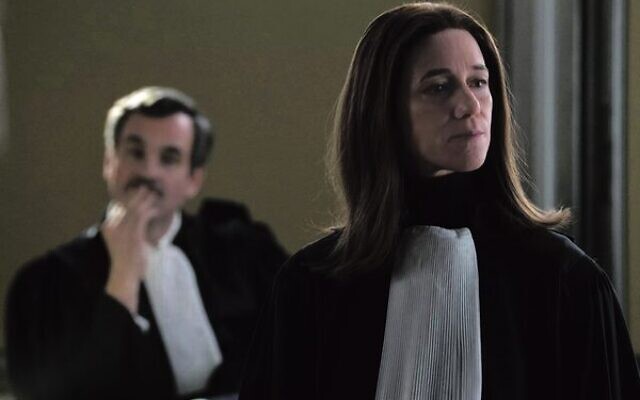
Women on Trial, starring Charlotte Gainsbourg, tells the true story of Sephardi-Jewish lawyer Gisele Halimi, who took on a landmark French abortion case in 1972 in which women faced jail for having illegal abortions. Halimi not only defended them but used the case to challenge France’s abortion laws entirely.
“She was the pace-setter for the change in abortion law, which Simone Veil then took up,” Tamir explained.
Other Cannes entries include A Man of His Time, winner of Best Screenplay, and Visitation, a sweeping 20th-century epic from Oscar-winning director Volker Schlondorff.

The documentary slate is equally rich.
Dust Bowls and Jewish Souls explores folk legend Woody Guthrie’s deep connection to Jewish culture, and is one of Tamir’s personal favourites. He described it as “the most uplifting, beautiful film”.
We Met at Grossinger’s revisits the Borscht Belt resort that inspired Dirty Dancing, sparking a sense of nostalgia across generations; those who lived through the height of the Borscht Belt success and those who lived vicariously with Dirty Dancing.
Find Me, Okay? follows the family of Eden Yerushalmi, kidnapped from the Nova Festival on October 7, and their public and private journey through uncertainty and devastating loss. Tamir said the film offers a perspective not seen elsewhere, including the story of the Israeli soldier who breaks the news to the family and stays with them throughout their ordeal.
“You don’t see that character in any other film. [It’s] amazing, what she goes through,” he said. “I’m a bit emotional talking about it.”
The Choice weaves together the stories of Holocaust survivor Dr Edith Eger and Israeli mother Iris Haim. Tamir said the festival was selective about its October 7 content.
“The community definitely wants to share experiences, and everybody wants to discuss and think, and obviously communally feel safe. But these films are great films, and they should be seen by the wider world…”
“We could have had an October 7 film festival,” he said, but explained that the JIFF team “look for a way that helps you come out with some way to move forward, rather than just telling the story that is so difficult and unforgiving, and leaves you in a place of despair”.
Among the other documentaries, To Kill a Nazi tells the story of Holocaust survivor Michel Cojot, who despite having the opportunity to kill the Gestapo officer he believes is responsible for his father’s deportation to Auschwitz, but he couldn’t pull the trigger. Cojot went on to become a hero of the Entebbe hostage rescue.
“You can’t even believe that story,” Tamir laughed. “[He] didn’t shoot, and then ends up in Entebbe and becomes a hero.”
The Mad Dog of Europe explores how Herman J. Mankiewicz, the Oscar-winning screenwriter of Citizen Kane, wrote a groundbreaking anti-Nazi film a decade earlier that was never produced.
“He wanted to make this film warning the world about Hitler, and didn’t get the money to make it,” Tamir explained.
The program also features documentaries on Tovah Feldshuh, whom Tamir called “an amazing pocket rocket performer”, Hannah Arendt, Henrietta Szold and Meyer Lansky.
On the varied nature of the 2026 program, Tamir was emphatic.
The festival must reflect the community.
“Jews,” he said, “are varied. And hopefully we’ve managed to present the variations in the best way possible to reflect the diversity of Jewish life and perspective on the world.”
The 2026 JIFF program officially launches next week. Keep an eye out for it in The AJN. For more information and tickets, visit jiff.com.au
comments