After 35 years, a new Progressive siddur
THE first new Progressive siddur in a generation will come into use in 2010. Mishkan T'filah (Tabernacle of Prayer), written for Australasia, will be available early next year, Union for Progressive Judaism (UPJ) president David Robinson announced.
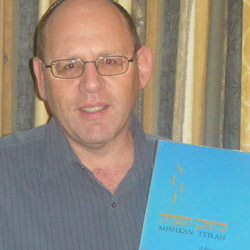
PETER KOHN
THE first new Progressive siddur in a generation will come into use in 2010. Mishkan T’filah (Tabernacle of Prayer), written for Australasia, will be available early next year, Union for Progressive Judaism (UPJ) president David Robinson announced.
The new siddur, which will be adopted by most UPJ congregations, reflects Progressive Judaism’s commitment to women’s equality, he said.
“The World Union edition of Mishkan T’filah is both inclusive and accessible to all, as it features full line-by-line transliterations and translations from Hebrew,” Robinson said.
After extensive preparation by an editorial committee of UPJ rabbis,¬† Mishkan T’filah will replace Sha’arei T’filah (Gates of Prayer), which was published in 1975 for North American Reform congregations, and has been used by Australian Progressive congregations for almost 35 years.
The new siddur will be used by congregations in Australia, New Zealand, South-East Asia and South Africa.
Melbourne-based Rabbi Gersh Zylberman, a member of the editorial committee, described¬† Mishkan T’filah as a watershed.
There are “differences of emphasis” between the North American and World Union editions, he told The AJN this week.
The World Union edition will follow more traditional liturgies, including a more detailed Birkat Hamazon (Grace After Meals) and Rosh Chodesh (prayers for the beginning of the month).
Mishkan T’filah is written for the Southern Hemisphere, where festivals are in the opposite season. “We’ve grown accustomed to rearranging things in our minds, but for newcomers to the prayer book and the Jewish calendar, it can be confusing, so we’ve made it clear we’re referring to a season in Israel.”
Rabbi Zylberman said year-round prayers for rain acknowledge the current drought. The text also observes “gender neutrality” for God and “gender sensitivity” for humans.