Budapest’s Jewish quarter at risk
BEN HARRIS
BUDAPEST — On Kazinczy Street, in the heart of this city’s old Jewish quarter, a transformation is afoot.
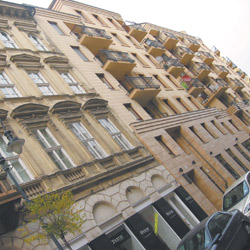
Amid formerly residential buildings constructed in typical Budapest fashion -— several floors of apartments arranged around a rectangular open-air courtyard -— a growing number of trendy new establishments have sprung up, changing the historic neighbourhood into a lively urban enclave.
The courtyards are now covered, and the old residences are filled with contemporary art and a young clientele sipping cocktails and puffing on cigarettes.
“I never believed I would see this trend change and I would see young people coming back here,” Janos Ladanyi, an urban sociologist at Corvinus University in Budapest, said over dinner at Cafe Spinoza, one of the new restaurants.
But on a post-dinner stroll through the neighbourhood, as Ladanyi surveyed other changes in the area, his astonishment turned to anger. Over the past decade, he explained, developers have knocked down scores of old buildings and built contemporary mixed-use complexes, arousing concern from both historians and preservationists, as well many in the Jewish community.
Through decades of tyranny, “the neighbourhood survived -— with terrible losses, but it survived”, Ladanyi lamented, “and now we have this so-called free world, this multicultural world, and we are losing it. Isn’t that unbelievable?”
Elsewhere in Eastern Europe, rehabilitated Jewish quarters have become beloved historic districts, visited annually by thousands of tourists, even as their Jewish populations have dwindled.
But in Budapest, where some 100,000 Jews live, the Jewish quarter is under a siege of development. In the process, experts say, a vital part of the capital city’s Jewish history is disappearing.
Around the neighbourhood, signs of the changes are everywhere. Construction can be seen on Wesselenyi Street, on Kiraly Street, and next door to the Dohany Synagogue, the sound of hammers echo through Herzl Passage.
Most of the buildings in the area date from the early 19th century. The United Nations has declared part of the area a world heritage site, and several of the buildings are protected as historic landmarks. But activists say the measures are insufficient, and that development of the neighbourhood has continued anyway.
Since 2004, a coalition of artists and intellectuals known as Ovas! (Veto!) have been fighting to preserve the unique character of the area.
By the time Ovas! became active, municipal authorities were saying their ability to protect properties was limited because they had already been sold off, according to Anna Perczel, a founder of the group.
Though its primary targets are government agencies it claims have failed to protect the district, Ovas! reserves no small amount of scorn for the developers, many of whom ironically happen to be Israeli. Companies from the Jewish State are said to be responsible for up to 70 per cent of new real estate development in Budapest.
“I do appreciate the past and I think that there are monuments that should be preserved,” said Eliav Maimon, the CEO of Autoker, one of the largest Israeli-owned development firms active in the district.
“But I don’t think the preservation should be fanatic. In many places in this city, the new developments are also creating life, not just destroying it.”
For her part, Perczel is optimistic that new legislation being drafted may make a difference.
But Ladanyi sees the situation as more dire.
“There is a point you are not able to turn back,” Ladanyi said. “And I think this is a neighbourhood where we are very close, if not behind, that point.”
JTA