



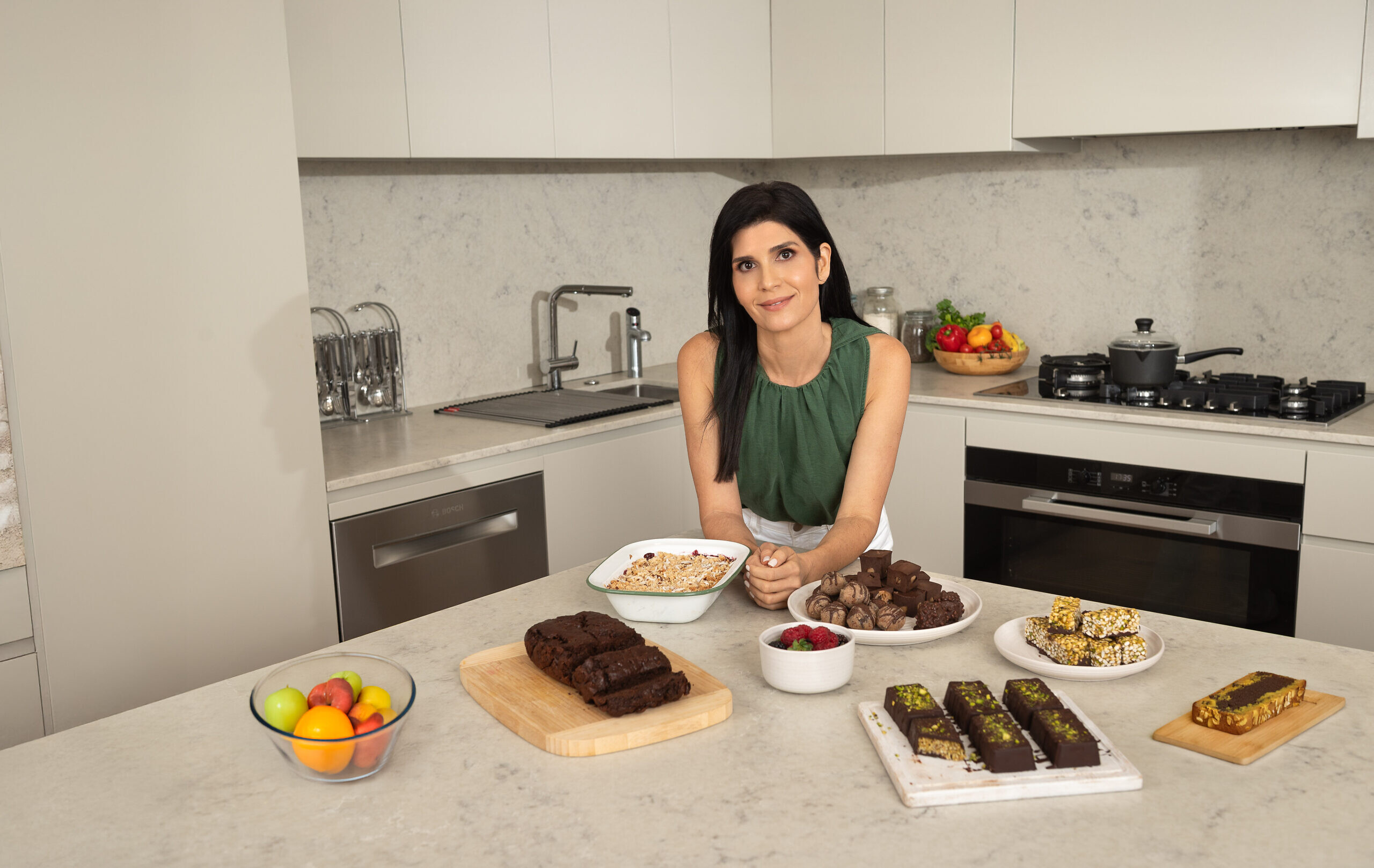
Mandy Sacher will be the first to tell you that her path into paediatric nutrition was not exactly linear. The Sydney-based nutritionist, author, and mother has spent the better part of two decades sitting at the intersection of nutritional science and the messy, beautiful chaos of family life. And it’s that tension, she said, that drives everything she does.
“Feeding my own children taught me things no textbook ever could,” she told The AJN. “I saw firsthand how wide the gap is between ideal nutrition advice and the reality of a busy family kitchen — and that gap is what drives everything I do today.”
That gap, it turns out, has given Sacher a career of remarkable breadth. Sacher has worked across large-scale health programmes, national education initiatives, and clinical practice. She was part of the globally recognised MEND programme (a childhood obesity intervention developed in partnership with leading dietitians and behavioural specialists), and later made history as Australia’s first Chief Nutrition Officer in the childcare sector. More recently, she founded Real Food Rating, an independent, science-backed food rating system designed to cut through the marketing noise that surrounds so much of what families eat.
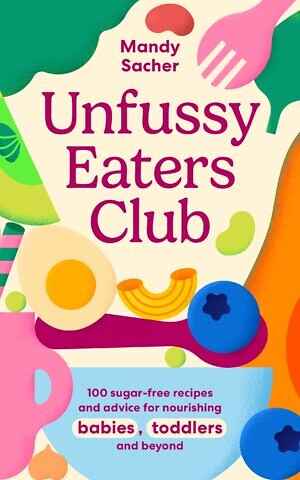
And now she has a new book, The Unfussy Eaters Club.
The book, Sacher said, was inspired by frustration and a deep conviction that parents deserved better. Ultra-processed foods, she explained, are not simply unhealthy options sitting on a supermarket shelf. They are engineered products, formulated by food scientists to be, in her words, “hyper-palatable”, designed to override the natural hunger and fullness cues that children are born with. They are cheap, convenient, and marketed with a sophistication that most families are wholly unequipped to counter.

“When a product is designed to be more appealing than anything you could make at home, what chance does a busy parent really have at the dinner table?” she questioned.
According to Sacher, the problem starts earlier than most families realise. Parents navigating the introduction of solids are surrounded by products that look wholesome including earthy packaging, words like “natural” and “nourishing”, while the ingredient list tells an entirely different story. That early window, Sacher stressed, is critical for palate development, yet many families are being steered off course without even realising it.
Then comes fussy eating, which is more prevalent now than in any previous generation. Parents blame themselves. They search for answers and feel like they are getting it wrong. The Unfussy Eaters Club is Sacher’s response. It’s a practical, step-by-step guide from starting solids through to feeding the whole family, designed so that parents can “stop second-guessing and start feeling confident.”
What sets Sacher apart from the crowded world of nutrition advice is her insistence on locating the problem in the right place, placing the blame firmly on the system.
“Parents are navigating a system designed by a multi-billion-dollar industry that understands food psychology extremely well,” she said. “That is not a level playing field, and pretending it is does families a disservice.”

“So many parents feel like they are failing,” she continued. “Whether it is starting solids, managing fussy eating, or trying to limit ultra-processed foods in a world where they are almost impossible to avoid. That is not a parenting failure. It is a systemic one. And I want families to understand that distinction.”
Alongside the book, Sacher has been building the Real Food Rating, which she described as Australia’s first independent, science-backed food rating system. The project came out of a gap she kept seeing families fall into, created, in part, by the rating systems already in existence.
“Existing rating systems have a fundamental blind spot,” she explained. “They score foods based on isolated nutrients, not on what the food actually is. That means a highly processed product, even one loaded with additives, can score well, while a wholefood may score lower. For parents trying to do the right thing, that’s genuinely confusing.”
Real Food Rating looks at three things – how processed a food is, the types of ingredients and additives it contains, and its overall nutritional quality. Foods closer to their natural state rate highly. With an app launching soon, families will be able to scan a product at the supermarket shelf and get an immediate, honest answer about what they are actually buying.
If there is one thing Sacher wants families to take away, from the book, the app, or any of her work, it is that real change does not require a complete overhaul. Her one tip for parents is simple.
 “Focus on what you can add, not what you need to take away,” she suggested. “Add an extra vegetable, include fruit with snacks, or introduce one new wholefood alongside familiar favourites. Small, consistent changes are what create lasting habits.”
It is a message calibrated for real life, which is, after all, the whole point.
“Most parents are doing an incredible job in a very challenging food landscape,” Sacher said.
“And I want them to know that real change does not require an overhaul. It requires a starting point.”
The Unfussy Eaters Club is that starting point.
The Unfussy Eaters Club is published by Murdoch Books, $45 rrp. For signed copies, visit buy.stripe.com/bJeaEXafng7f7Yt9xl53O04
Visit realfoodrating.com for free resources
Follow Mandy at @mandy_sacher and @realfoodrating
comments